loading icon

Figures and Rucksack with Ears
George
Lappas
Figures and Rucksack with Ears
May 19, 2017 - July 11, 2017
Poros

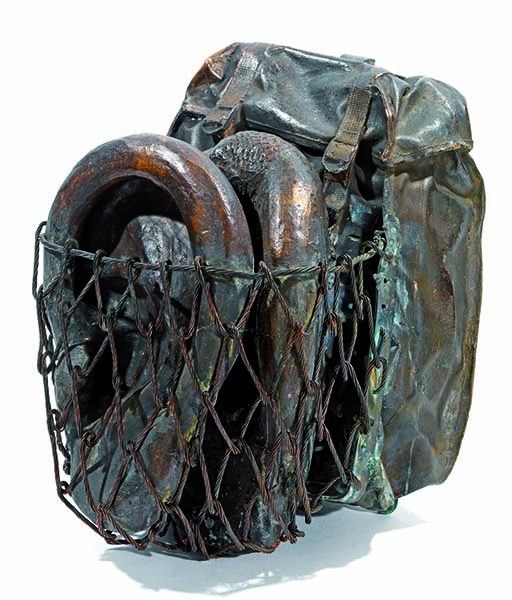
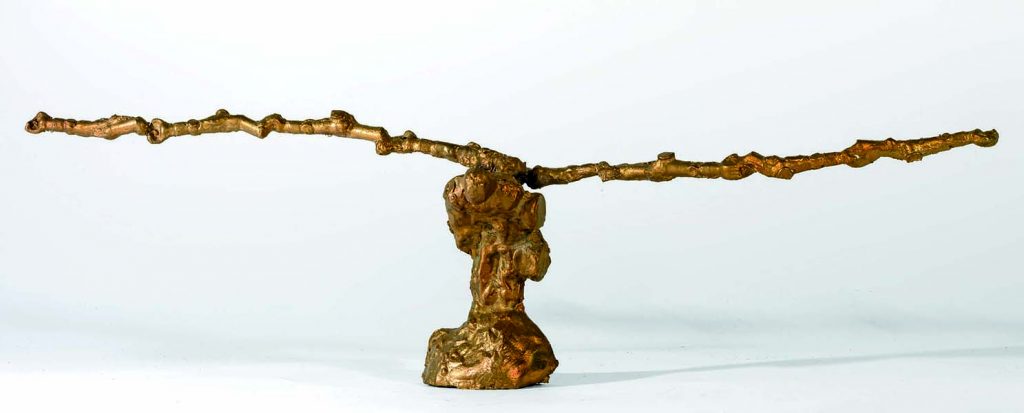
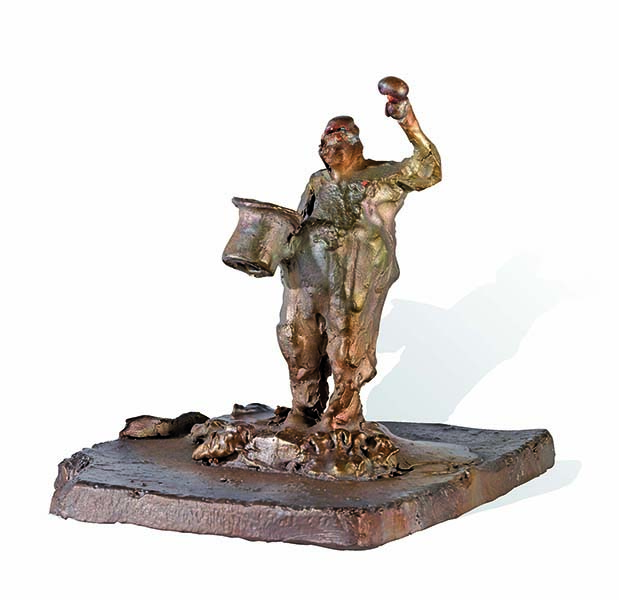
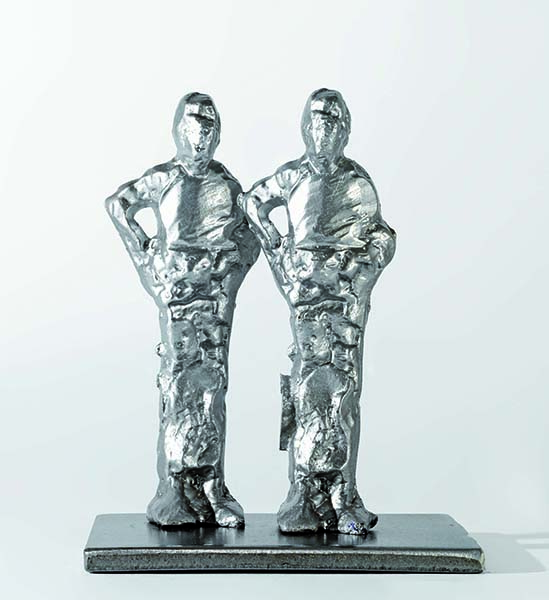
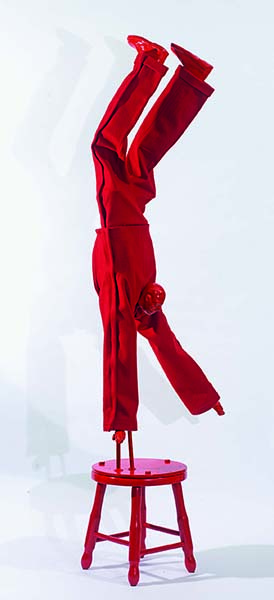
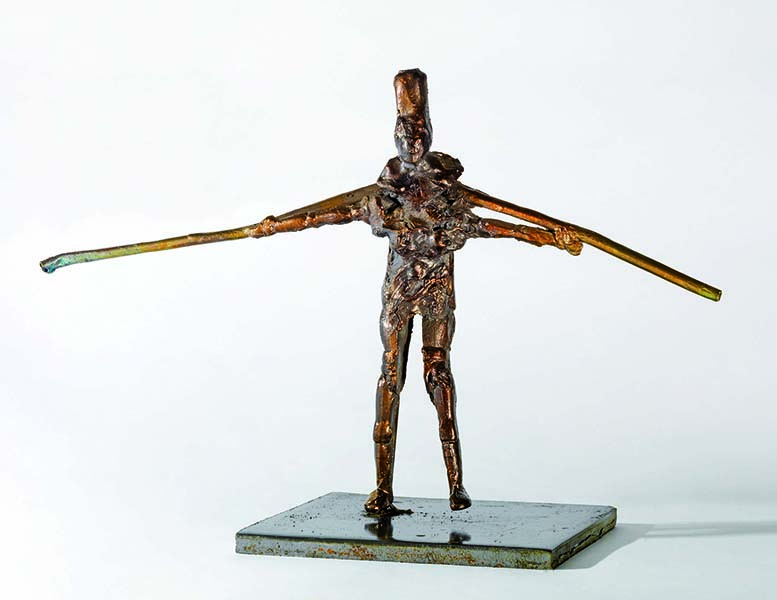
George Lappas’ posthumous one-man show presents thirty four works, sculptures, studies, and drawings covering the period 1977-2016. These works comprise a unity that focusses first and foremost on the human figure, the principal theme of his creation as a whole. The unity is disrupted or even elaborated by seemingly exogenous elements, which however signal a functional peculiarity of the artist: George Lappas’ starting point and idiosyncrasy are those of a traveller, a voyager. His trajectory has no boundaries, geographic, cultural or national; in similar fashion his resulting artistic creations transcend sensory reality. The trademark of this search to the ends of the known or conceivable world is the emblematic ‘rucksack with ears’, an indispensable accessory that enables the traveller to hear the merest sound in the human universe.

Large and small-size figures of bronze, aluminium, fabric, plastic, neon lights, make up the sculptural world of George Lappas. They are framed by the exhibition space, which serves as part of a traditional local house. There the ‘Artist with his Thoughts’ converses with shamans, tightrope walkers, jugglers, magicians, divinities. These figures are ‘in motion’ or stationary at the edges of reality, oblivious of the laws of physics and equilibrium. The natural body is abolished; thought, memory, and narration work according to an inner logic, without perceptible consequences. Unexpected materials create a sense of paradox, of the uncanny, recalling unconscious dream connections, undecipherable associations. The dialogue between the Egyptianised Solon relaxing on the banks of the Nile and the figures of his fellow travellers is unpredictable for the viewer, and is based on thematic references that go back to the multiple recognisable starting points of the artist.

East and West operate artistically with distinct traits, though in an original, archetypal composition. The sculptures fetch to mind Egypt and hieroglyphics, India and Brahman temples; they bring out the paradoxical and hint at magic—indications perhaps of nostalgia for the ‘metaphysical’ past at work in the countries of the East. The West, on the contrary, imposes a rationalist tyranny that causes the artist ‘grief of space’. The only antidote for this is the work of Art, the only way to bridge antitheses, to appropriate the unfamiliar—that is, to bring to completion the ‘foreign world’. Not only the shamans and conjurors, the tightrope walkers and acrobats, but also the one- legged men and the hanging gardeners narrate through performance the perpetual desire of man to surpass each time his frontiers, whether of the physical world surrounding him or of finite intelligence and knowledge. Under the same transcendental attitude a seat or a star may balance over the head of a figure, extending the borders and the resilience of the body and freely reinterpreting the visible symbiosis of human being and object.

This exhibition attempts to give the most complete picture possible of the complex personality of George Lappas and his long and painful search. He was an artist who ‘saw many cities of men and learned their way of thinking’ (Odyssey 1.3). He gained this experience and conveyed it with mastery and insight throughout his entire artistic journey.
Artworks

Aegean: Identities + Journeys

Aegean:
Identities + Journeys
Group Exhibition
June 25, 2016 - September 17, 2016
Poros

Yiannis Adamakos
Michalis Katzourakis
Demosthenis Kokkinidis
Alekos Kyrarinis
Tassos Mantzavinos
Emmanouil Bitsakis
Constantin Xenakis
Sotiris Sorogas
Jannis Psychopedis

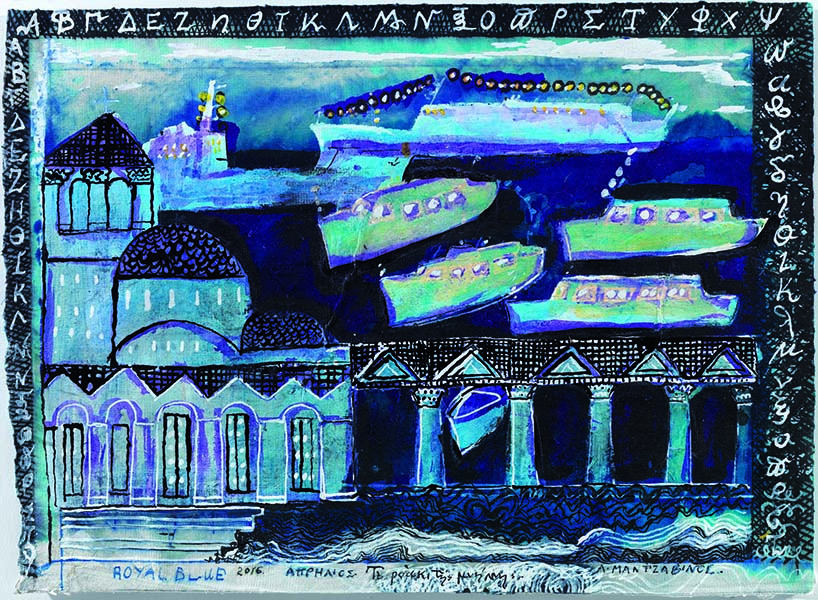
The social and historical reality of today is raising questions and creating acute concerns which we do not fully comprehend or do not comprehend at all. The times we are living through as individuals and as citizens force us to examine issues beyond our experience, and frequently our awareness. In this country, the need for answers, for an analysis, is palpable and increasingly urgent. The transcendent intervention of Art is of the greatest importance.

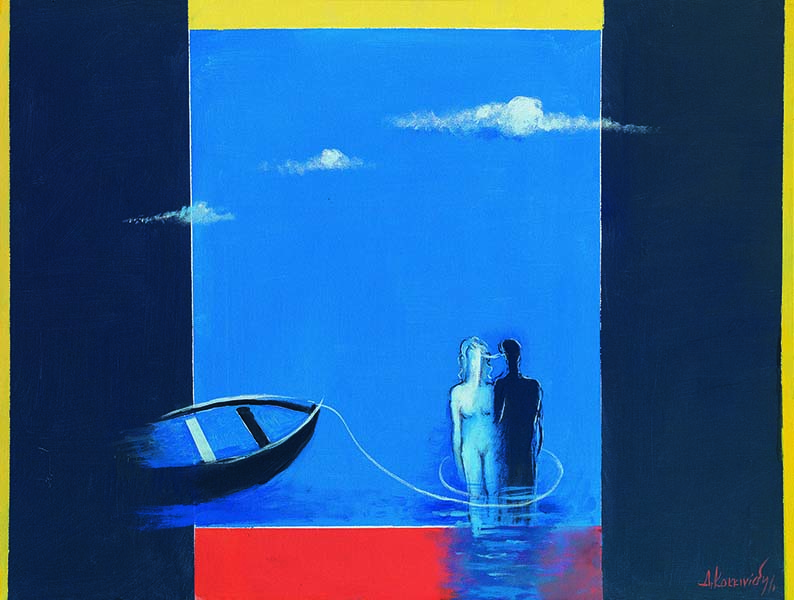
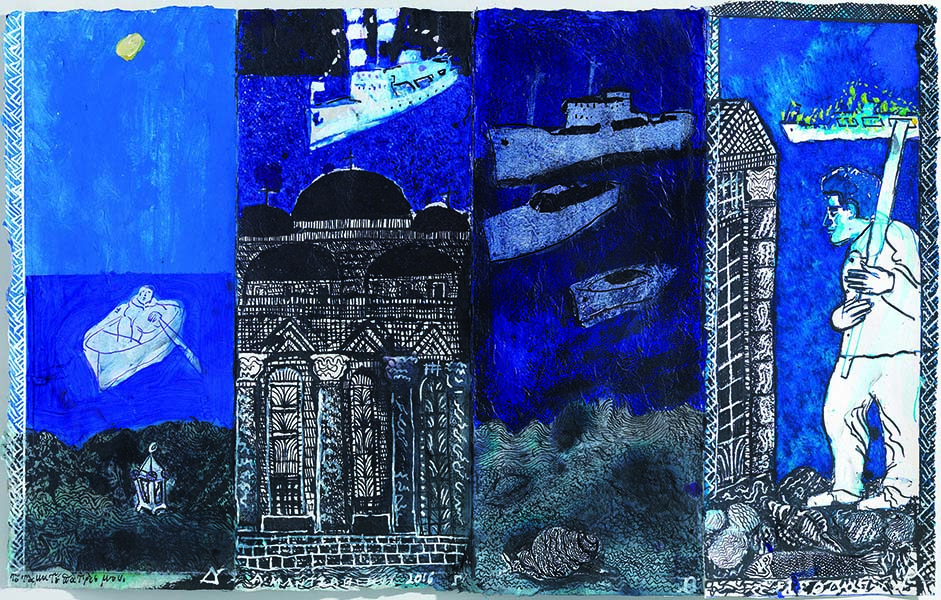
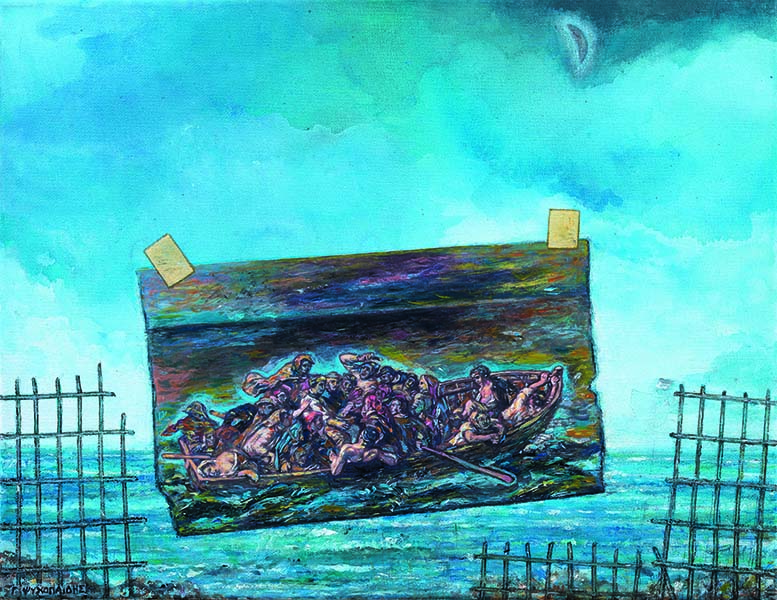
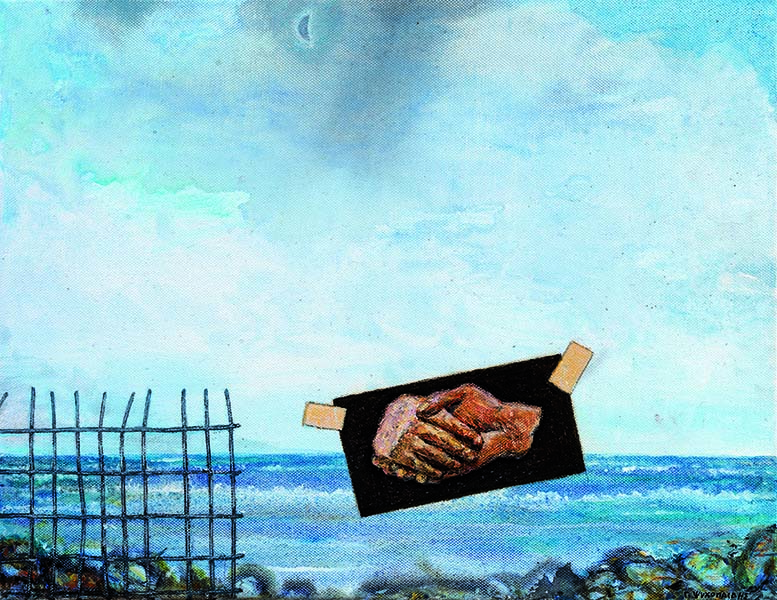
As an agent in cultural management, Citronne Gallery aims to function as a forum for the exchange of artistic ideas and views. With this in mind, this year we chose a theme, always current, recently enlarged and magnified. The Aegean, our sea, has a long history of life and movement, peace and wars, survival and voyage, work and experience. The exhibition “Aegean: Identities + Journeys” brings together artistic viewpoints on this subject, expressed by nine contemporary artists called upon to provide commentary: Yiannis Adamakos, Michalis Katzourakis, Demosthenis Kokkinidis, Alekos Kyrarinis, Tasos Mantzavinos, Emmanouil Bitsakis, Constantin Xenakis, Sotiris Sorogas, and Jannis Psychopedis.

The artistic works exhibited are accompanied by poems, or extracts of texts, chosen by the artists as an additional representation of reality. At the same time, the poems are independent of the artistic work: that is, they are not the inspiration for the art, but the artists’ stream of conscious commentary on their varied memories and responses to the Aegean. The artistic and the poetic function as a diptych which highlights the crucial significance of the Aegean to the history and the definition of the Greek identity.

Artworks

NO WAY OUT – Visual Records: Maps and Codes

Constantin
Xenakis
NO WAY OUT - Visual Records: Maps and Codes
August 2, 2014 - September 15, 2014
Poros

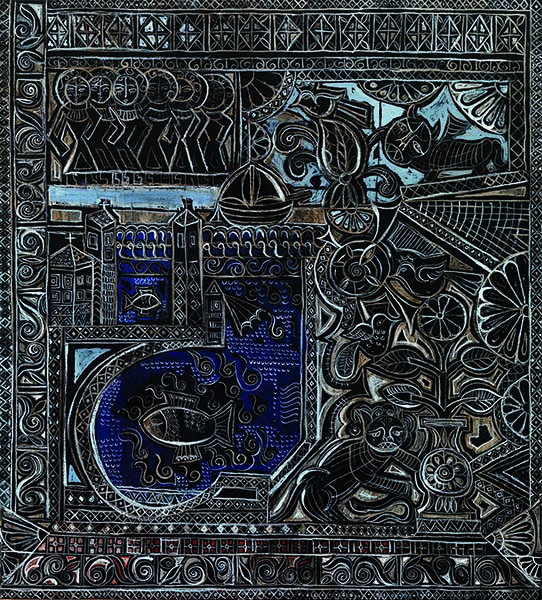
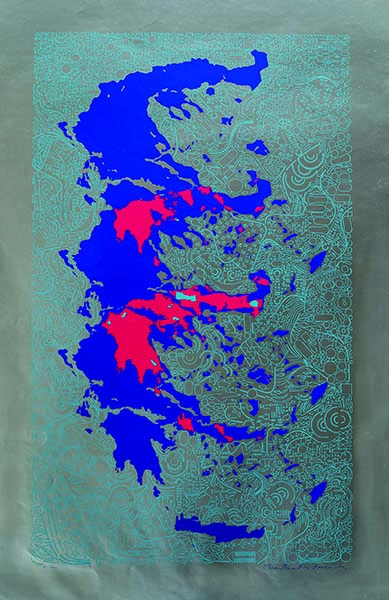
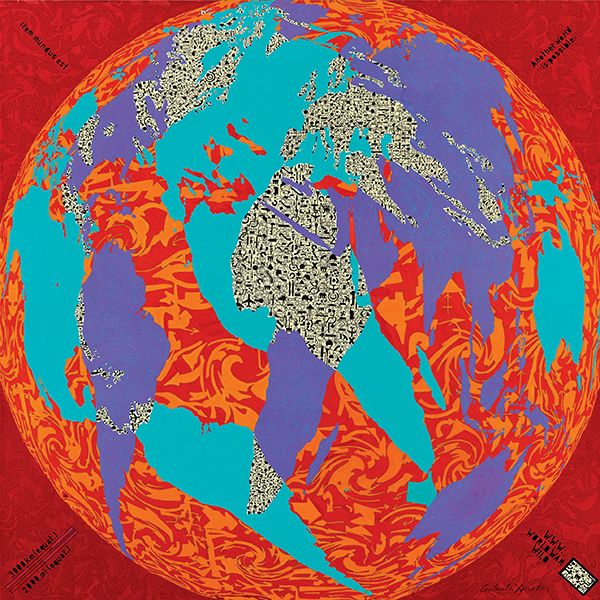
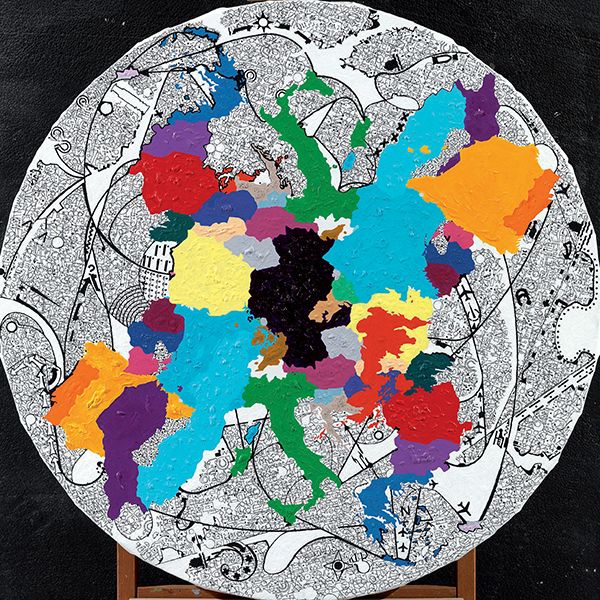
Constantin Xenakis is a nonconforming artist, intensely engaged in questioning and exploring the role of art and the artist’s responsibility towards the social whole. His work arises out of the contemporary socio-political reality he has experienced firsthand. Xenakis is a citizen of the world: he was born in Cairo and has lived in Athens and Paris. As such, he has a Greek identity and a triple cultural background: Greek, Egyptian and French.

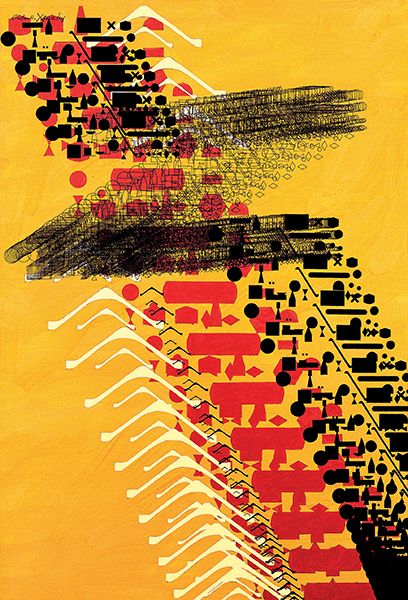
This composite personality allows him artistically to approach the Greek situation from inside and outside. He has developed an abstract, yet at the same time, deeply meaningful visual idiom. He maps things out by constructing and deconstructing schemes, words, and concepts. He has invented a personal representational and visual alphabet. His figurative language makes varied allusions across time. He begins with ancient Greek and Egyptian civilization and progresses to contemporary everyday elements, such as international driving signs. He deconstructs all these references by transmuting them, recomposing them and creating new codes and images which reflect current reality- historical, social, and political.

Among the dead ends (NO WAY OUT) are paintings, collages, maps, and books-as-objects. These works are organised along an axis of Repetition / Juxtaposition / Superposition As such, they offer a codified image of contemporary civilization: “The symbols-codes interlock and meet in a chaotic manner and, by dialoguing with form and colour and concepts, attempt to coexist in the painting’s framework.” The work of art becomes, in the end, a means for ideological criticism of the existing socio- political system.

Artworks

Broken planks from journeys that never ended…

Sotiris
Sorogas
Broken planks from journeys that never ended...
June 21, 2014 - July 30, 2014
Poros

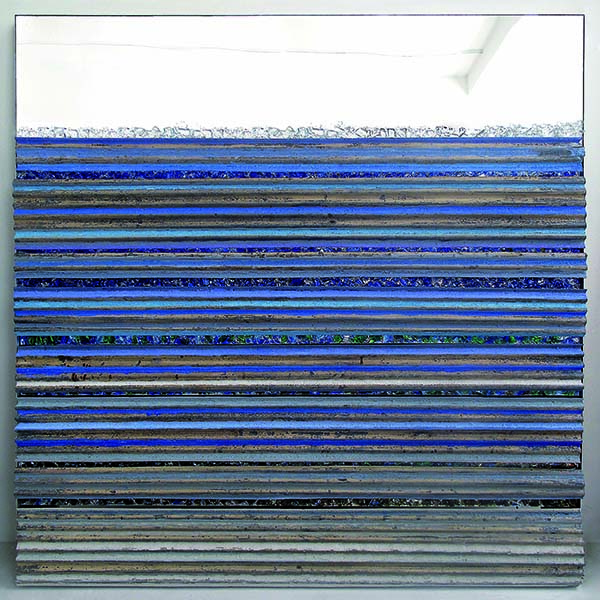
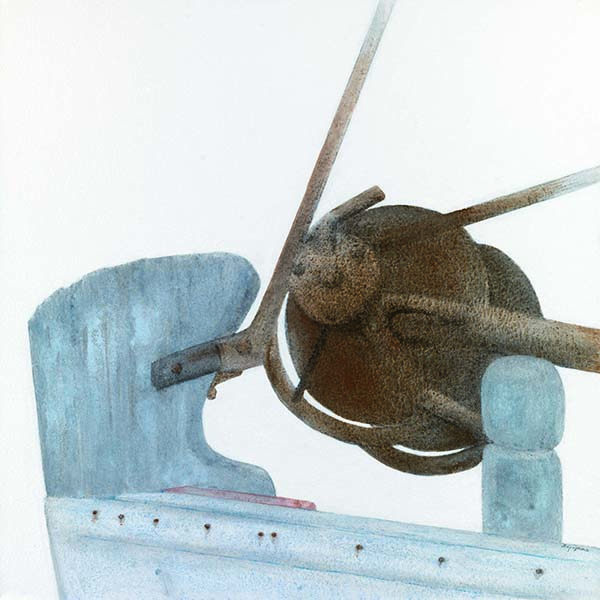
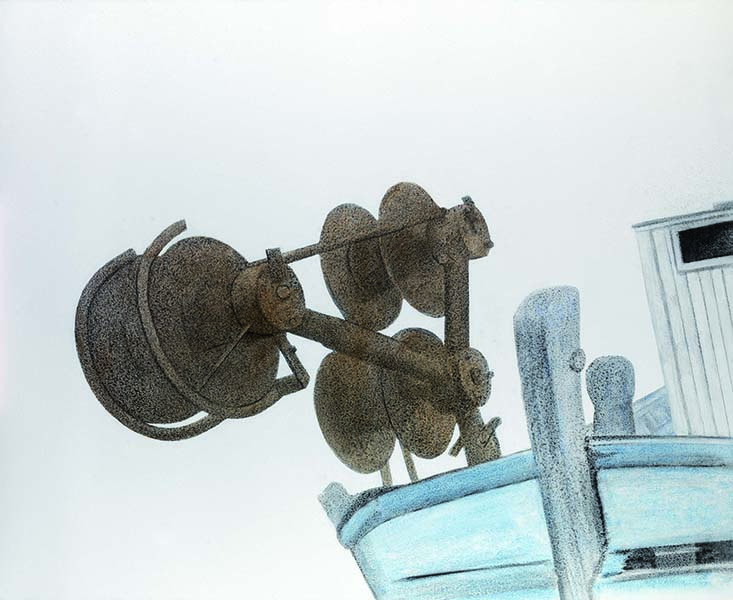
Since his student years, Sotiris Sorogas has been concerned with the idea of decay; ruins, rust, ruined fishing boats are the cherished permanent subject matter of his work, particularly over the last years.

The exhibition at Citronne Gallery focuses on his most recent work. The artist renders driftwood, wrecked boats, broken planks placed in the sand, or on rocks at boatyards - always near water. The palpable decay and deterioration of the materials symbolise time that passes and life that decays.

The scattered, useless, broken and worn fragments come out of their environment and are placed in the centre, on large canvases. They are presented emphatically, close up, as the result of meticulous observation and detailed rendering. The range of colours is limited: black, grey, rusty brown in contrast to the blinding white background. In addition, the traces of blue between the objects and the background suggest the presence of the sea. The photographic realism and characteristic spotless style of the canvas add to the image the feel of a document which intensifies with the literal descriptive nature of the title. These elements contrast with the poetic nature of the works and transform the represented objects into symbols. A moulded feeling of melancholy, a deep silence dominate as the monumental objects function as references to the passing of time - even to death. This dreamlike atmosphere gives them a metaphysical dimension.

Sorogas’ first exhibition in 1972 was dedicated to the poet Giorgos Seferis as his “poetry is spare, charged, and has a rare conceptual and expressive density... coexistence of grandeur and poverty, the eternal and the perishable, the timeless and the boundless, with the suffocatingly closed space of today...”.
Forty years later, Seferis comes back and marks this latest exhibition.

Artworks

Sculptural Palimpsests

Costa
Varotsos
Sculptural Palimpsests
May 31, 2014 - June 18, 2014
Poros

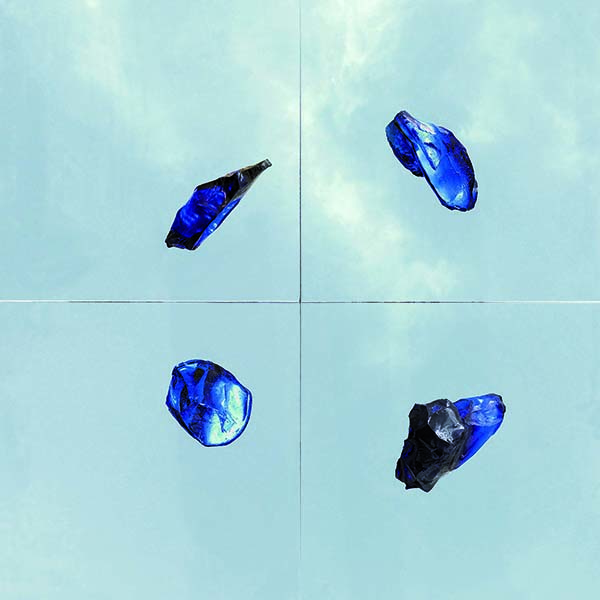
This exhibition endeavours to document Costas Varotsos’ work on an international level. The “Sculptural Palimpsests” exhibition presents archival material: photographs, drawings of applied interventions (Famagusta Gate, the archaeological site of Cuma in Naples, the Castle of Roccascalegna in Mortiza, Delphi, Geraki in Laconia) and three- dimensional proposals / studies (Augusto Imperatore square, Meteora, Epidaurus).

A gigantic cone of glass and metal is the core work / intervention by Costas Varotsos at the Greek theatre of ancient Cuma, the first Greek colony in the West. This sculpture connects the two parts of this exhibition in their complementary rationale.

Artworks

Vigilant Heart

Αlekos
Kyrarinis
Vigilant Heart
July 27, 2013 - September 9, 2013
Poros

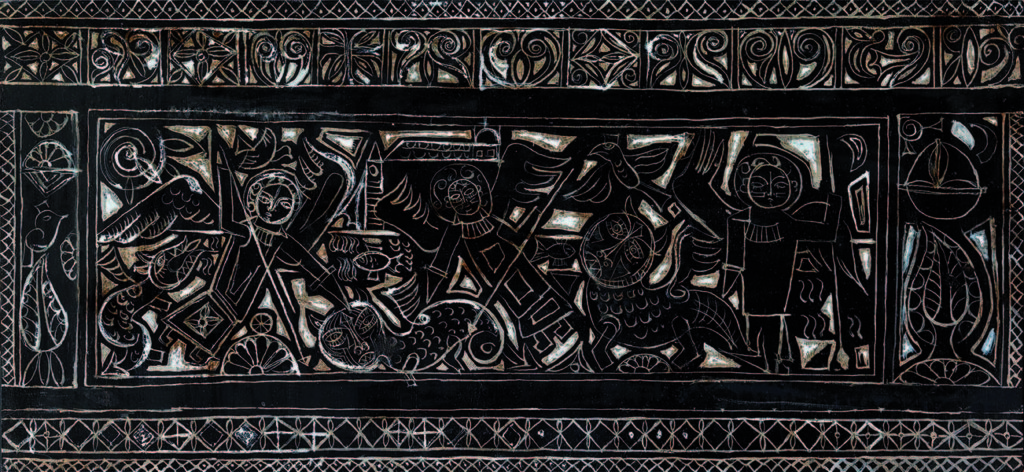
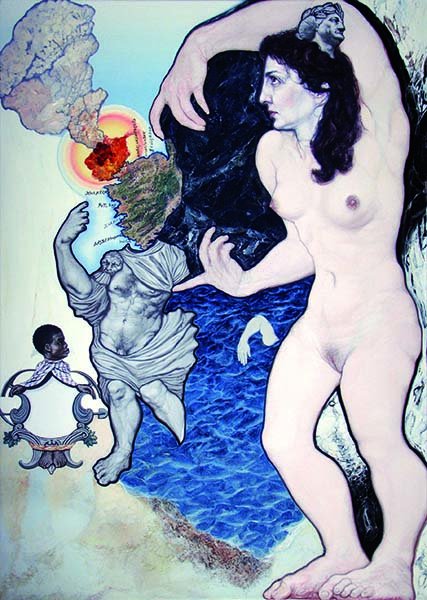
With a palimpsestic artistic style, with personal meanings and collective memories, Alekos Kyrarinis deals with a complex, strictly personal quest. The “dragon”, symbol of evil, dominates in his artistic language. From classical Greek mythology, dragons have frightened, threatened, and destroyed until they meet up with the redeemer, the liberator in the form of a hero, a bold man, a saint. The dragon is an allusion to ancient mythical beasts, the Medusa and the Lernaean Hydra; but also to the serpent of the original sin, the dragon-slaying Byzantine saints, the winged reptile-temptation of the hermit holy men and monks, the “accursed serpent” of Karaghiozis, the dragon of folk songs and tales.

“Vigilant Heart”, a wish, a prayer and an objective, is the achievement of the struggle against evil, cunning and wickedness. Faith, Orthodoxy, as a living experience, appears through recognisable symbols, all of them the product of experience, both spiritual and fleshly. The senses come alive with the iconography, the chants, the candles and frankincense, Holy Communion and the antidoron. The dragon is exiled through faith, virtue prevails, the soul becomes calm, the heart “becomes vigilant”.

Artworks