loading icon

Owls

Aphrodite
Liti
Owls
May 19, 2017 - October 31, 2017
Poros

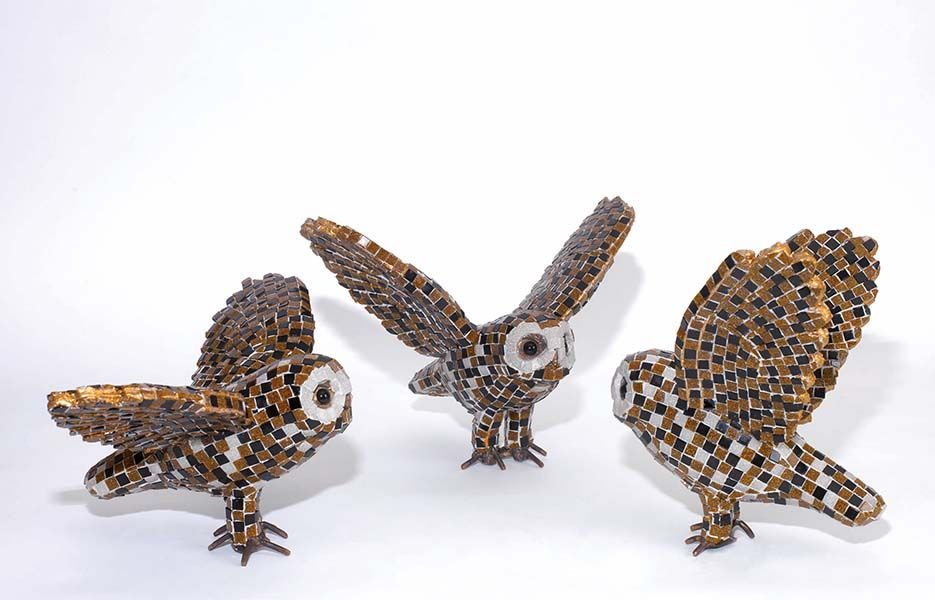
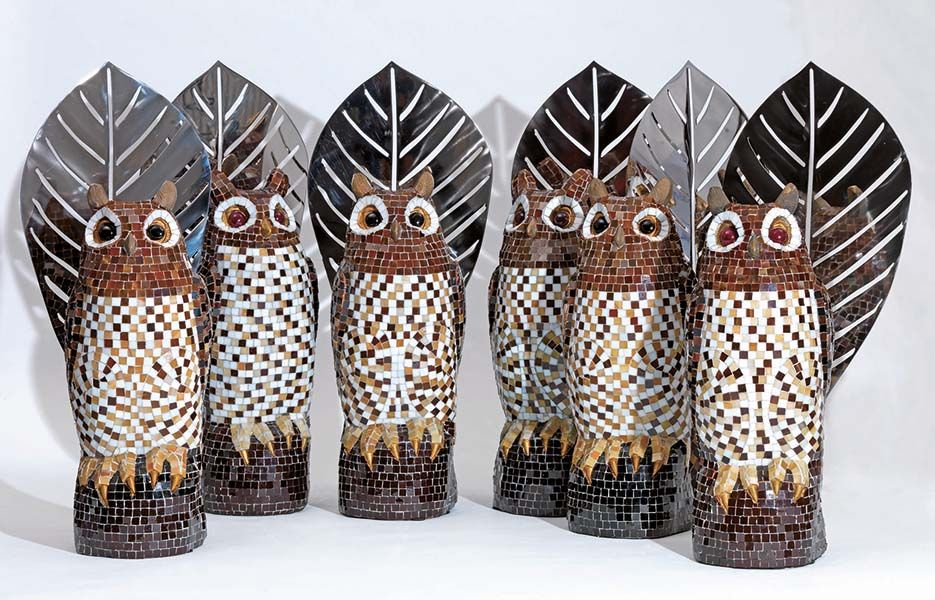
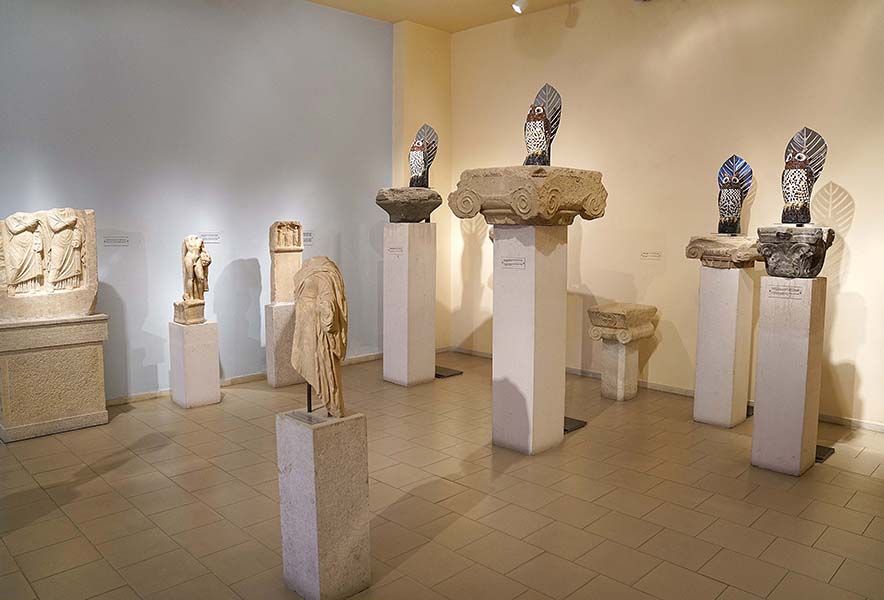
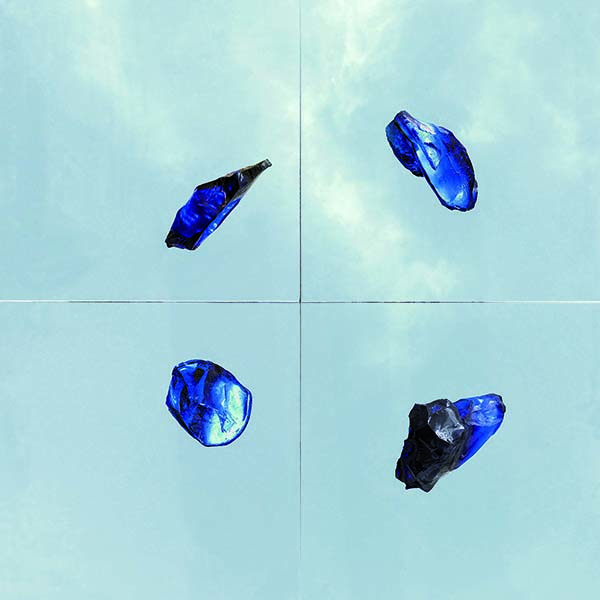
In her ‘Owls’, an installation on show at the Archaeological Museum of Poros, Aphrodite Liti connects mythic with museum time. She not only focusses on the Gaze as a defining characteristic of this bird of wisdom, but also treats it as an allegory of the artistic enterprise. The complex gaze of these birds results in a panoramic vision that unveils and deepens the ‘unseen side of things’. This gaze is not affected by phenomena, it is not misled by daily existence, and most important, it is not restricted by the dark. Linked across time by Nature, Aphrodite Liti’s ‘Owls’ dialogue with the museum’s exhibits in search of a transcendent reality.

The symbolism of the installation of ‘Owls’ stems from two thematic areas: the dialogue between the birds and their conversation with the displays in the museum. The elements— a gigantic leaf and thirteen owls—do not operate as mere figures of the plant and animal world. They become detached from their natural environment, change scale, are unexpectedly juxtaposed afresh, converse, and turn into symbols. Small or oversize, stationary amidst the column capitals or ready to fly off on wide wings from the vases discovered in the sea, these ‘owls’ penetrate space, and unify time.

The process of gazing as a transmitter and and receiver, the creation of an image, and its record in the mind of the viewer, moves on two levels.

The first level is defined by the mythological and ‘natural’ associations of the ‘owl’, its thematics: a nocturnal bird with sharp senses in the dark, with flying motions that are slow and noiseless, with persistence and devotion to aims visible and invisible to man. Night and darkness not only do not hinder its gaze, but on the contrary also eliminate the superfluous elements of luminous reality. This bird thus achieves transcendence, wisdom; elevated, it is suspended in the sphere of the metaphysical.

The second level is defined by the fragmentation of the image. The shattered surface results from a technique that uses the material of coloured tesserae of blown glass from Murano; it also employs a prism as the material for the leaf. The giagantic prism-leaf imports nature as the thematic framework in the museum’s space. At the same time it not only reflects, but also changes the image as ‘in a mirror, darkly’. The light falls, reflects and mirrors the environment creating psychedelic effects. The final impression is that of a fissured reflection that is composed and decomposed, an alternation of images: the museum displays and the contemporary sculpted owls.

The viewer is required to interpret and decode this reflection.
Artworks

Fragments

Αlexandra
Athanassiades
Fragments
September 9, 2017 - October 15, 2017
Poros

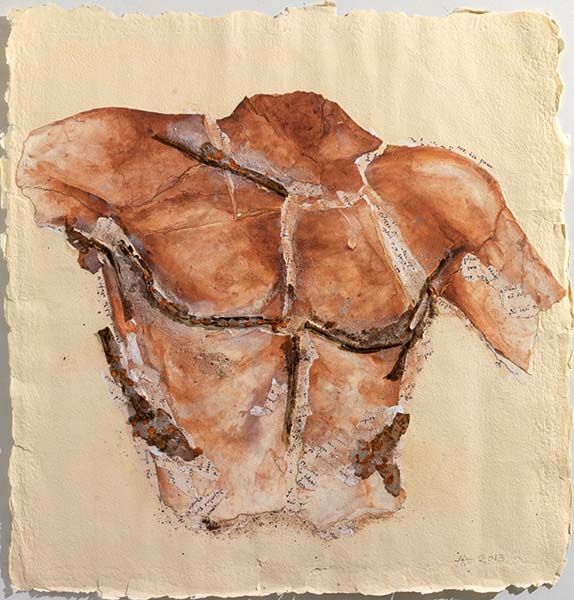
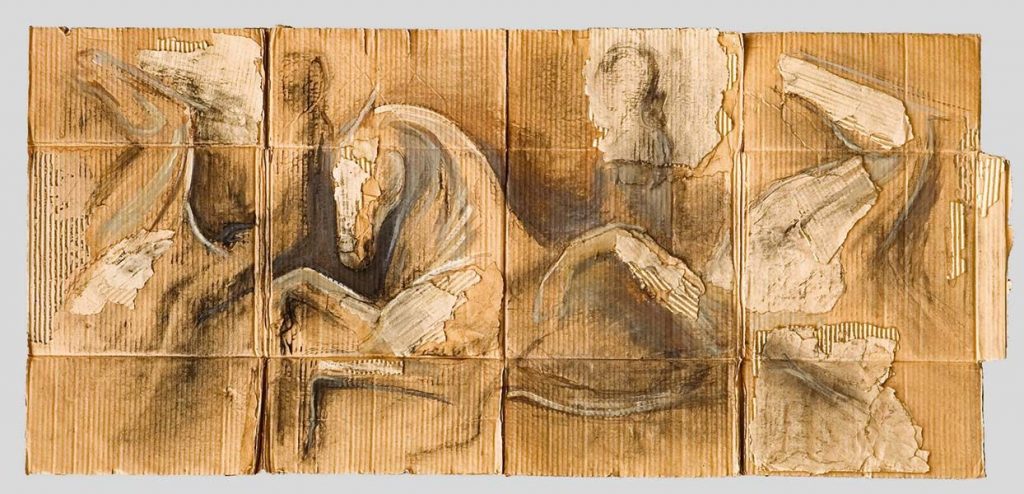
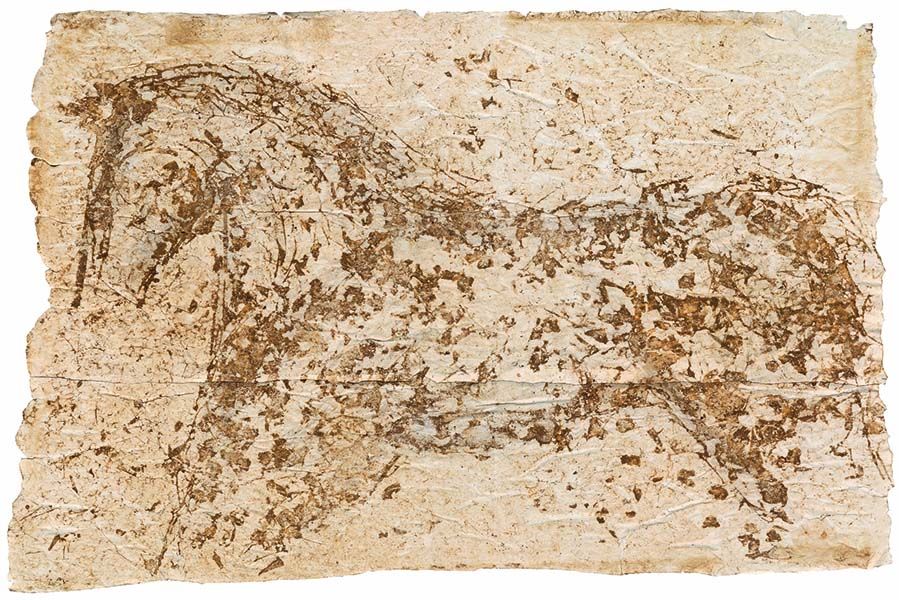
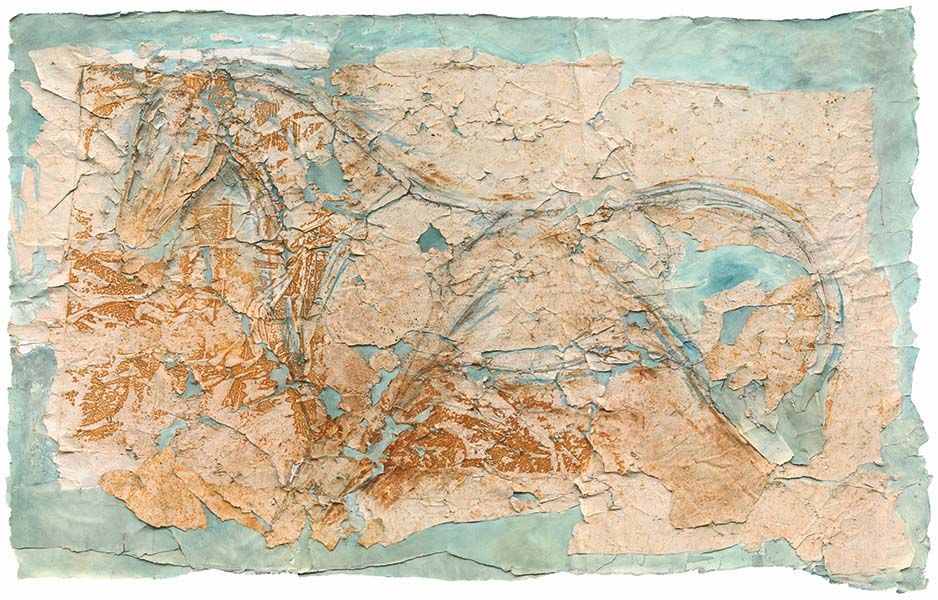
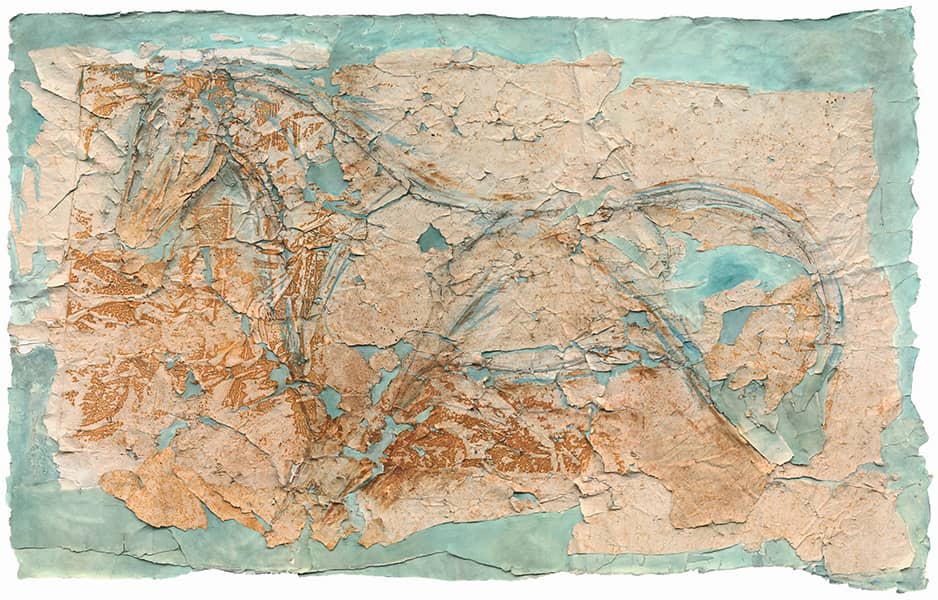
Memory combats decay. Alexandra Athanassiades seeks to introduce the ‘Boundaries of Decay’, to undo the critical effect of time and oblivion. She combines fragments, conjoins impressions, and evokes, gradually and sometimes imperceptibly, the resulting emotions. This exhibition presents for the first time new, two- dimensional works on paper. These are impressions, 'traces' of earlier sculptures. Through this parallel form Alexandra Athanassiades pursues a continual visual dialogue between the materials of Art and the phases of time.

Alexandra Athanassiades focusses on the fragmentary, the disconnected. Decaying matter provides her material: a piece of broken, decomposed wood, the stray part of an ancient sculpture, warped paper, the chance imprint of an older work. Her artistic creations emerge from these ingredients, which are remains or often fragments, in much the same way that human memory works—that is, disjointedly and selectively. The materials create layers and overlayers, like the phases and reminiscences of human life.

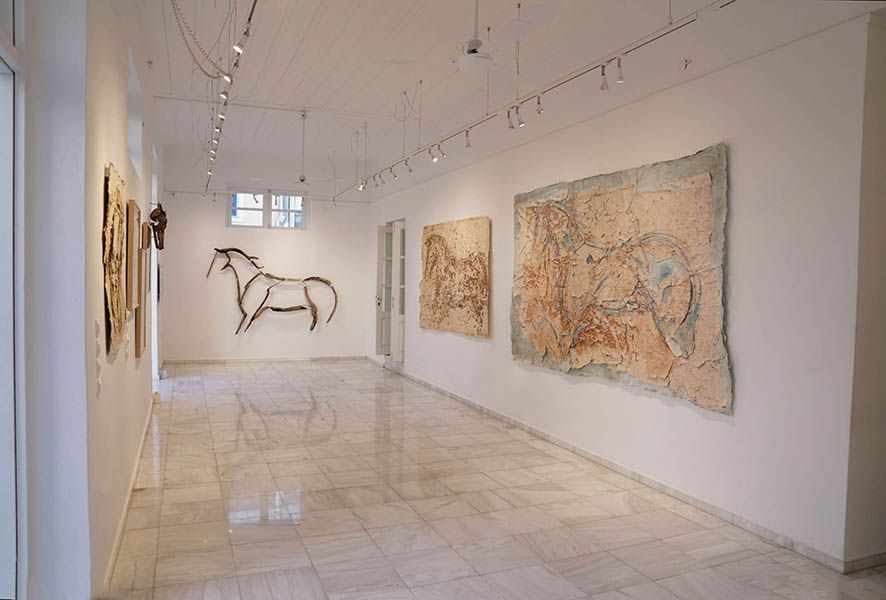
Horses and breastplates—two units—make up the basic theme of the exhibition. This coexistence almost necessarily recalls a diachronic heroic element. From the depths of antiquity, mythology, and history, from epic poetry to folk song it is possible to trace the role and symbolism of the horse: winged Pegasos, the Trojan Horse and so many others. Comrade-in-arms, fellow traveller, man’s helper and supporter, the horse expresses the harmony of body and spirit. Alexandra Athanassiades’ works record this entire trajectory, common or parallel, the coexistence of man and horse.
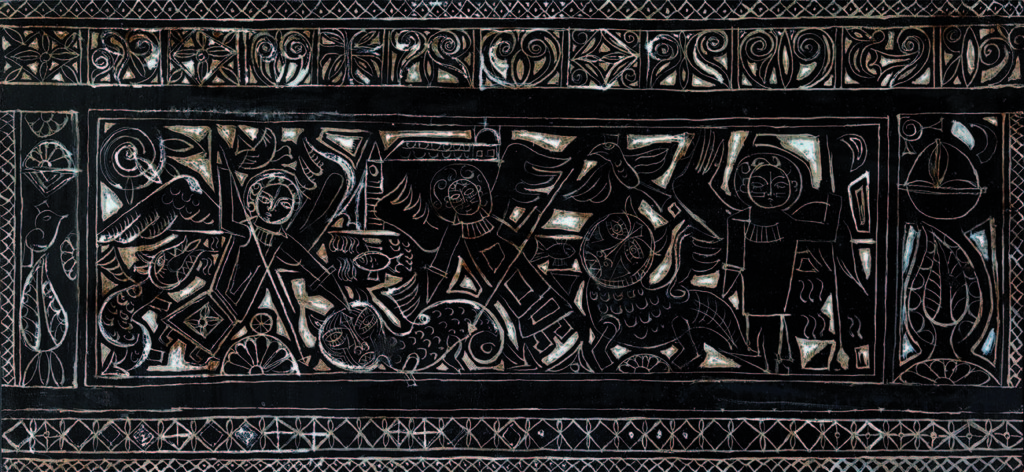
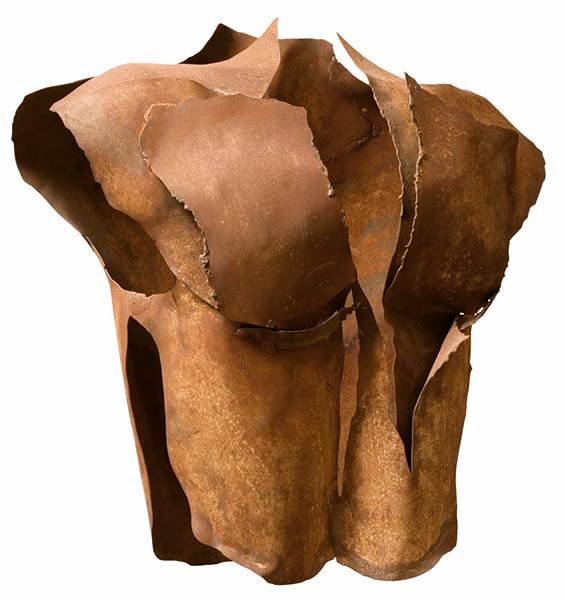
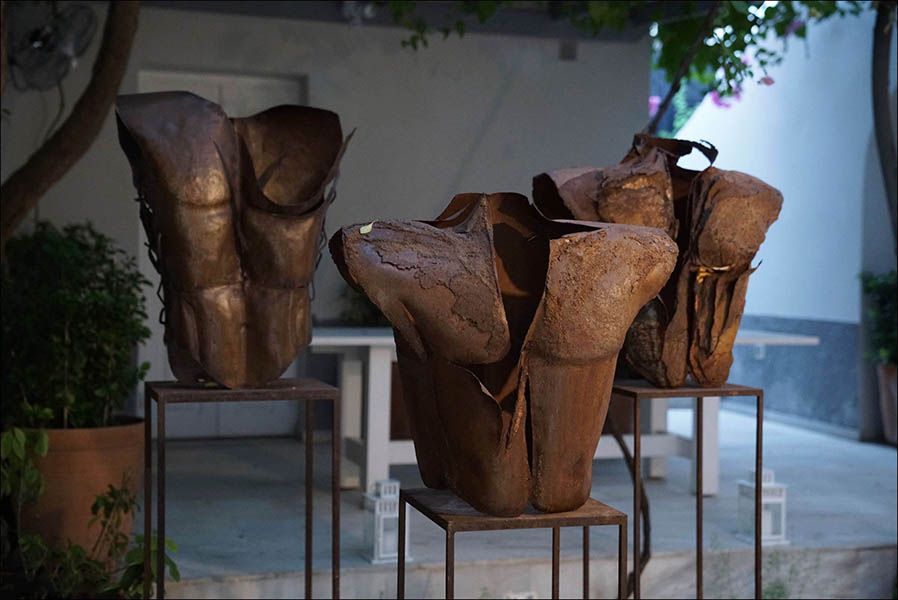
The breastplates are the second element that Alexandra Athanasssiades brings in from history. A defining part of the defensive arms of antiquity and the Middle Ages, the breastplate covers and protects the vital organs of the body, chiefly the heart. In these representations on paper or metal emphasis is placed on the inexorable passage of time, deterioration, inevitable closure. The human body is vulnerable; no ‘armour’, no external sheathing can protect it forever. Alexandra Athanassiades is dominated by this melancholy thought, which can be detected in the progressive evolution-transformation of the breastplate: the usual museum display, i.e. the closed, impenetrable breastplate, ‘opens up’, leaving human life exposed and unprotected.

This in fact is the basic idea behind all the works exhibited. The external covering, the shell, whether a drawing or sculpture, encases a perishable, assailable entity—personal and charged. Alexandra Athanassiades concentrates on this hidden dimension, on the inner element, which as a presence transcends the boundaries of sculpture.

Artworks

Re-emergence

Yiannis
Adamakos
Re-emergence
July 15, 2017 - September 4, 2017
Poros

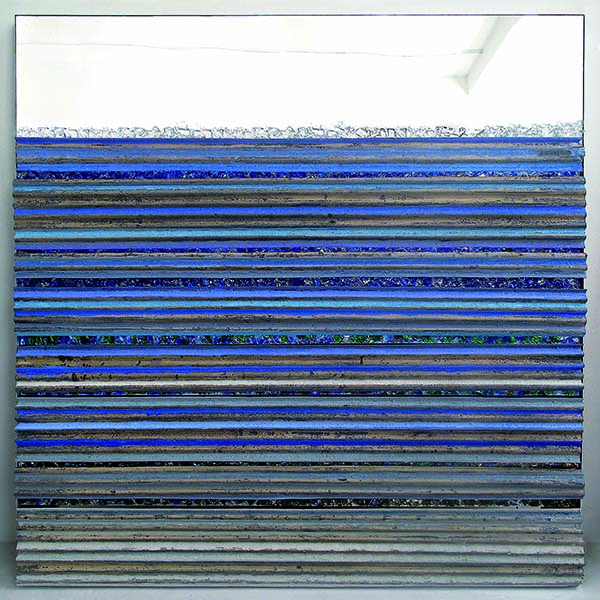
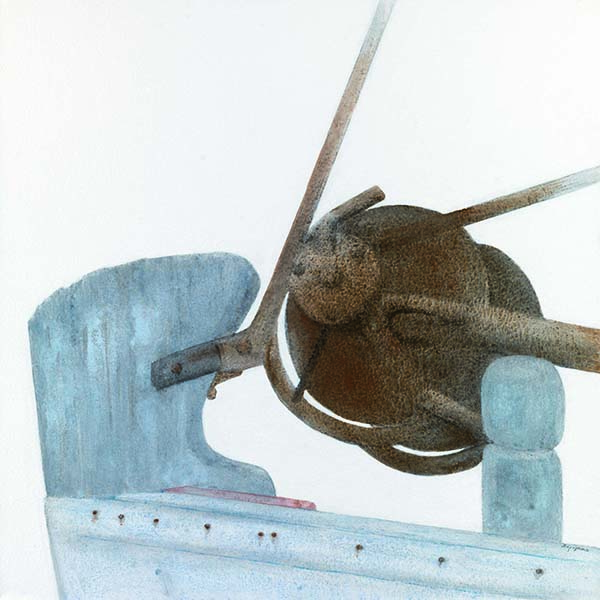
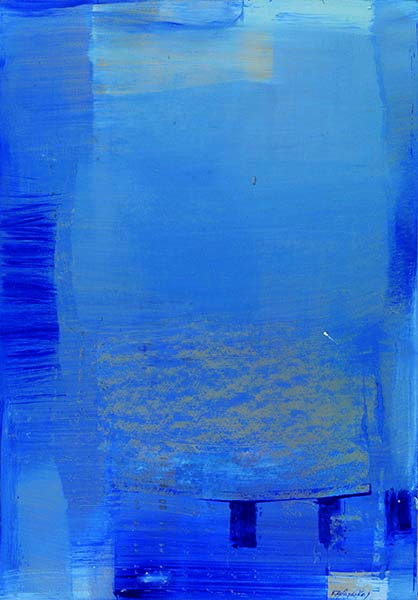
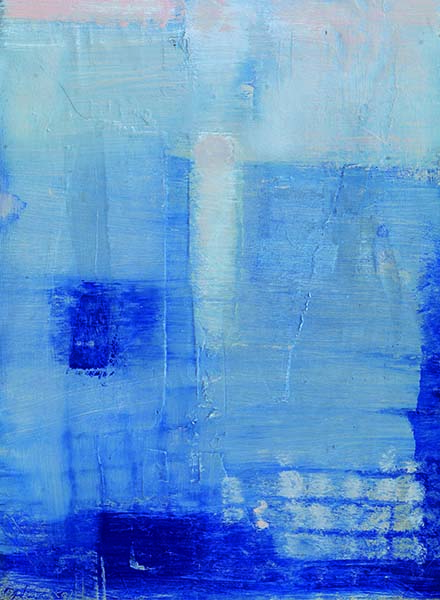
Starting from the same point of departure, Yiannis Adamakos always heads for the same destination. His ‘Frontier of Memory’ seeks to exhaust the boundaries between the sensible world and the subjective-subconscious reception of reality. It dredges up and explains the traces of memory. It describes surrounding nature and its basic element of the sea; not only because the liquid element is governed by a latent uniformity and is boundless, but also because it brings to mind primordial memories and various correlations.
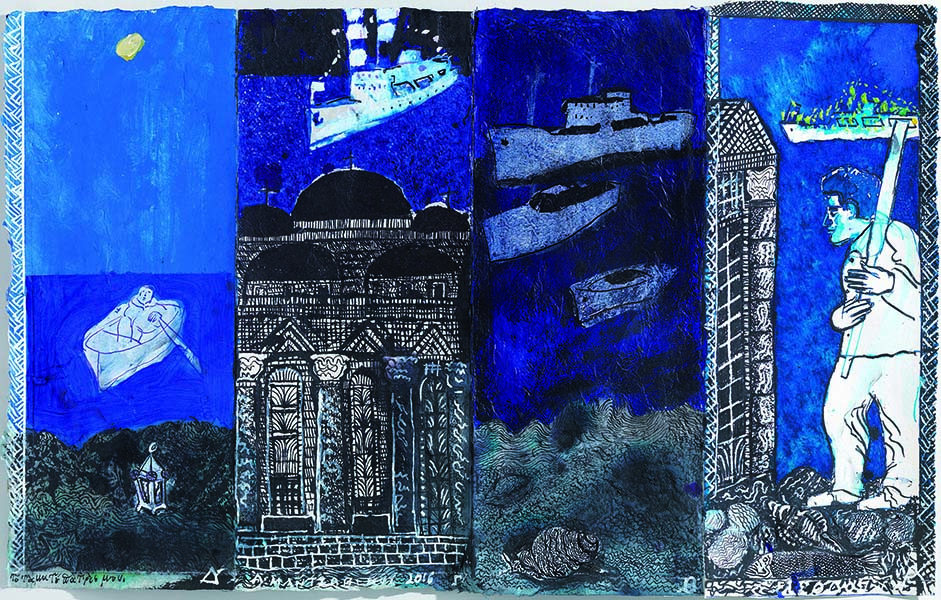
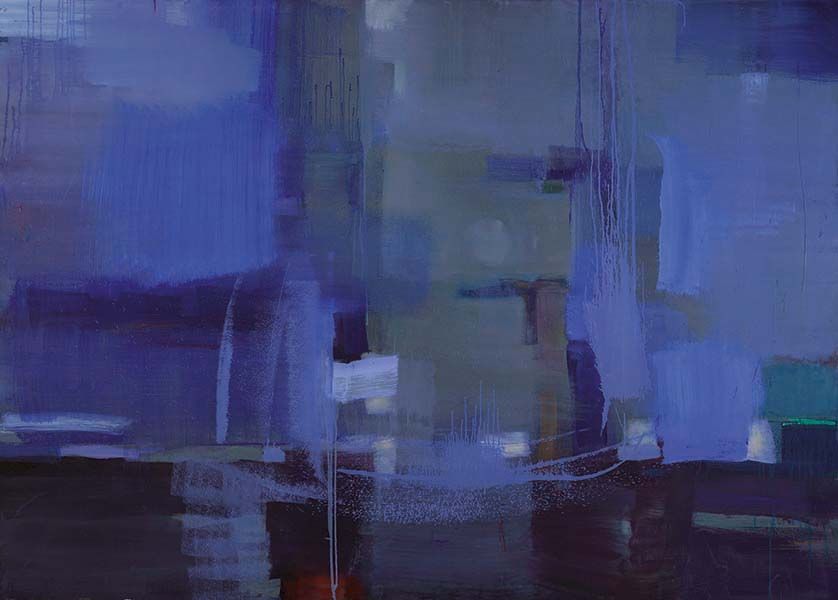
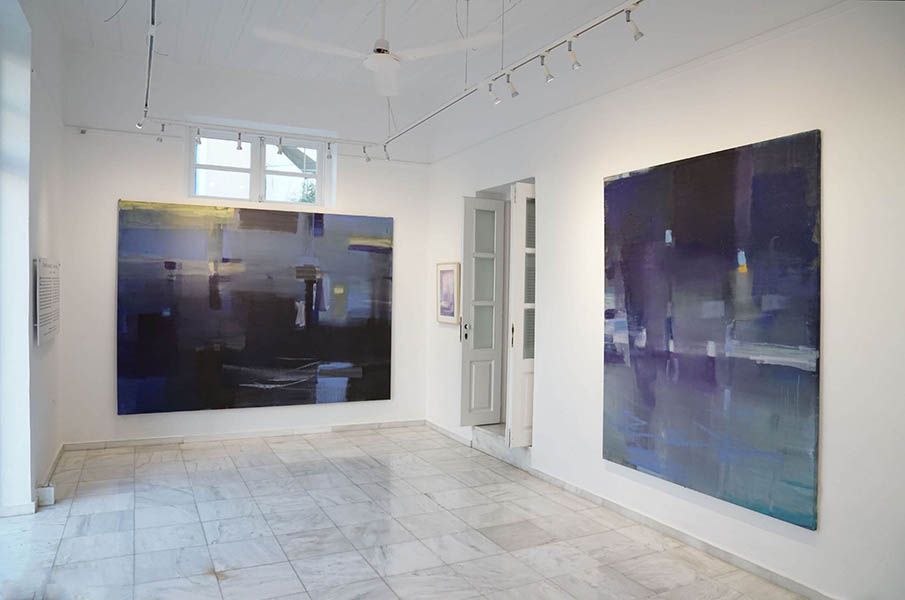
This years’ exhibition is made up of large-size oils and small aquarelles. The large works aim at extending into space, not allowing, that is, the viewer any latitude for being distracted from the painting, from the work. The small aquarelles function independently but at the same time as designs-studies for the large works, as if in security for the future. In his recent works Yiannis Adamakos also introduces a new element, the geometric organisation of pictorial space. Yet it is this element that belongs to the context of an abstract visual idiom: as always, the painter at first seeks to create an atmosphere freely, without being bound by realistic restrictions. This choice can be traced through time in all of his creations. The visual trajectory of the artist begins with expressionism, that is, with creations-cries and incrementally ends in dreamlike immobility, in silent creations. The works under display move on the notional frontier between muffled sound and ear-splitting silence.

Yiannis Adamakos defines himself and sets himself within the limits of landscape—a landscape however that is not necessarily recognisable. He passes from light to darkness and vice versa; the ‘frontier’ is the shadows. The same palindromic movement is represented between dream and experience, nature and fantasy. The sea, water, provides the artist with a valuable medium, since it reflects and simultaneously refracts the optical angle of the landscape. The night, even when (poorly) lighted, makes this sensation more pronounced, because it flutes the volume, homogenising heteroclite elements and beautifying the environment. Visually speaking, human beings are absent; but they exist by allusion since the landscape and atmosphere are products of the subconscious and associative memory. The midpoint, the ‘frontier’ between the existent and the fantastic is defined by colour, a deep blue with nuances that again recall memories, personal or collective.

The visual point of view, the interpretation of human reality is based in greatest measure on a series of associations and subjective references. The truth—aletheia—of Yiannis Adamakos fetches to mind its original meaning, namely the banning of forgetfulness, the triumph of memory.

Artworks

Figures and Rucksack with Ears

George
Lappas
Figures and Rucksack with Ears
May 19, 2017 - July 11, 2017
Poros

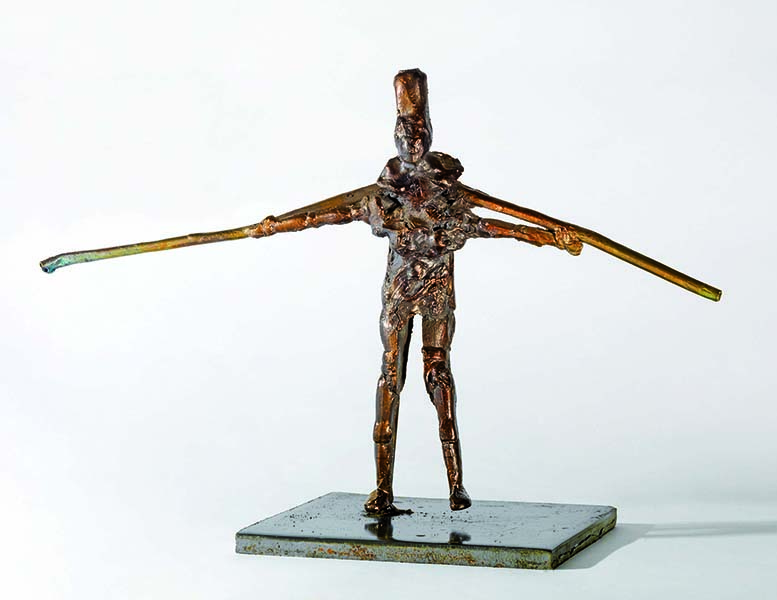
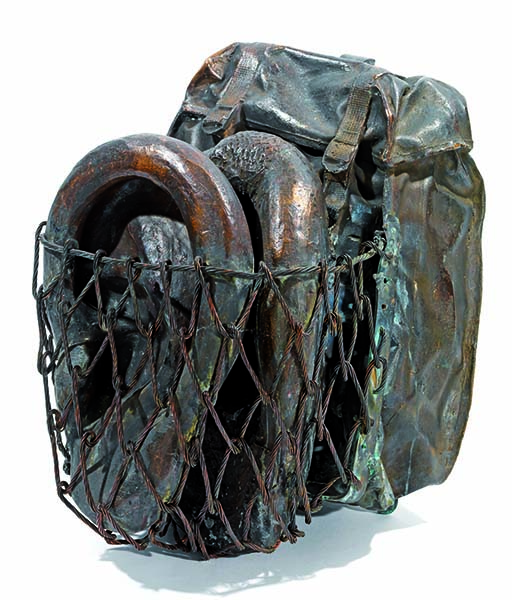
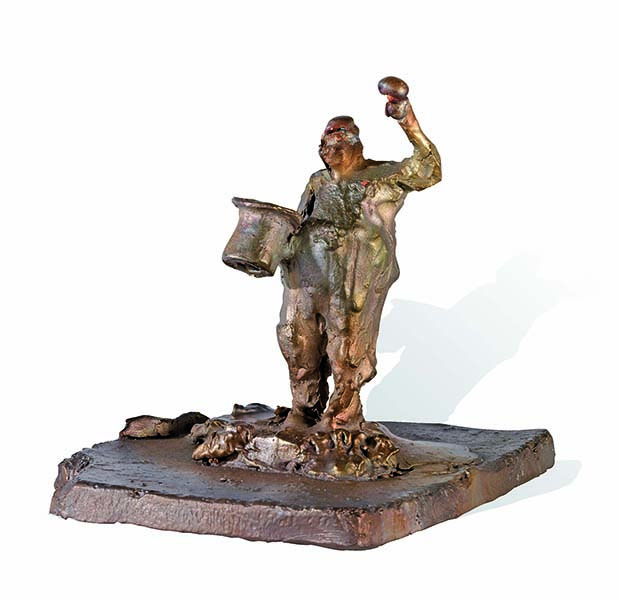
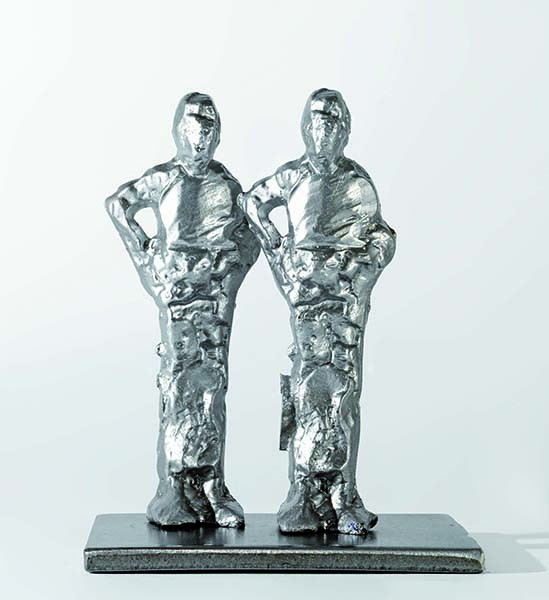
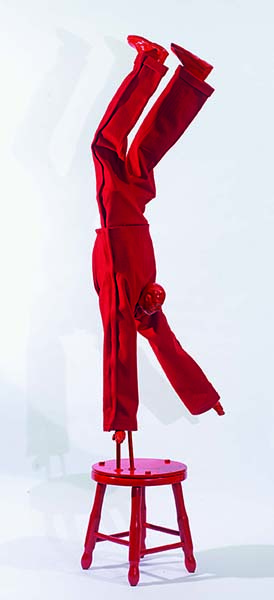
George Lappas’ posthumous one-man show presents thirty four works, sculptures, studies, and drawings covering the period 1977-2016. These works comprise a unity that focusses first and foremost on the human figure, the principal theme of his creation as a whole. The unity is disrupted or even elaborated by seemingly exogenous elements, which however signal a functional peculiarity of the artist: George Lappas’ starting point and idiosyncrasy are those of a traveller, a voyager. His trajectory has no boundaries, geographic, cultural or national; in similar fashion his resulting artistic creations transcend sensory reality. The trademark of this search to the ends of the known or conceivable world is the emblematic ‘rucksack with ears’, an indispensable accessory that enables the traveller to hear the merest sound in the human universe.

Large and small-size figures of bronze, aluminium, fabric, plastic, neon lights, make up the sculptural world of George Lappas. They are framed by the exhibition space, which serves as part of a traditional local house. There the ‘Artist with his Thoughts’ converses with shamans, tightrope walkers, jugglers, magicians, divinities. These figures are ‘in motion’ or stationary at the edges of reality, oblivious of the laws of physics and equilibrium. The natural body is abolished; thought, memory, and narration work according to an inner logic, without perceptible consequences. Unexpected materials create a sense of paradox, of the uncanny, recalling unconscious dream connections, undecipherable associations. The dialogue between the Egyptianised Solon relaxing on the banks of the Nile and the figures of his fellow travellers is unpredictable for the viewer, and is based on thematic references that go back to the multiple recognisable starting points of the artist.

East and West operate artistically with distinct traits, though in an original, archetypal composition. The sculptures fetch to mind Egypt and hieroglyphics, India and Brahman temples; they bring out the paradoxical and hint at magic—indications perhaps of nostalgia for the ‘metaphysical’ past at work in the countries of the East. The West, on the contrary, imposes a rationalist tyranny that causes the artist ‘grief of space’. The only antidote for this is the work of Art, the only way to bridge antitheses, to appropriate the unfamiliar—that is, to bring to completion the ‘foreign world’. Not only the shamans and conjurors, the tightrope walkers and acrobats, but also the one- legged men and the hanging gardeners narrate through performance the perpetual desire of man to surpass each time his frontiers, whether of the physical world surrounding him or of finite intelligence and knowledge. Under the same transcendental attitude a seat or a star may balance over the head of a figure, extending the borders and the resilience of the body and freely reinterpreting the visible symbiosis of human being and object.
This exhibition attempts to give the most complete picture possible of the complex personality of George Lappas and his long and painful search. He was an artist who ‘saw many cities of men and learned their way of thinking’ (Odyssey 1.3). He gained this experience and conveyed it with mastery and insight throughout his entire artistic journey.

Artworks

Aegean: Identities + Journeys

Aegean:
Identities + Journeys
Group Exhibition
June 25, 2016 - September 17, 2016
Poros

Yiannis Adamakos
Michalis Katzourakis
Demosthenis Kokkinidis
Alekos Kyrarinis
Tassos Mantzavinos
Emmanouil Bitsakis
Constantin Xenakis
Sotiris Sorogas
Jannis Psychopedis

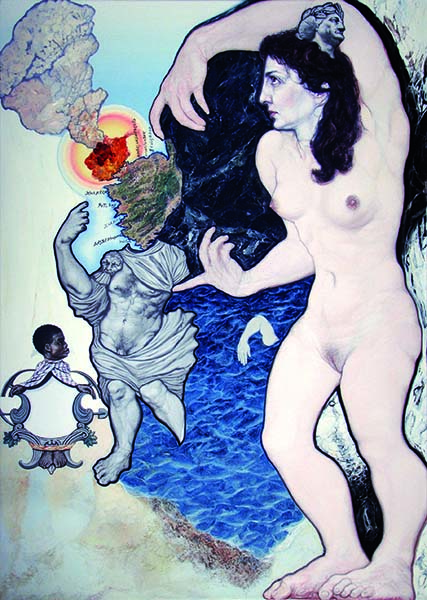
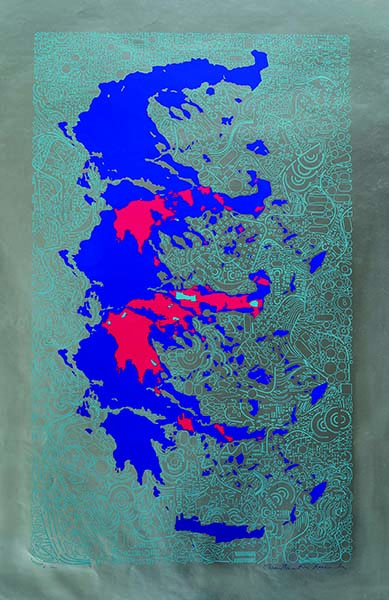
The social and historical reality of today is raising questions and creating acute concerns which we do not fully comprehend or do not comprehend at all. The times we are living through as individuals and as citizens force us to examine issues beyond our experience, and frequently our awareness. In this country, the need for answers, for an analysis, is palpable and increasingly urgent. The transcendent intervention of Art is of the greatest importance.

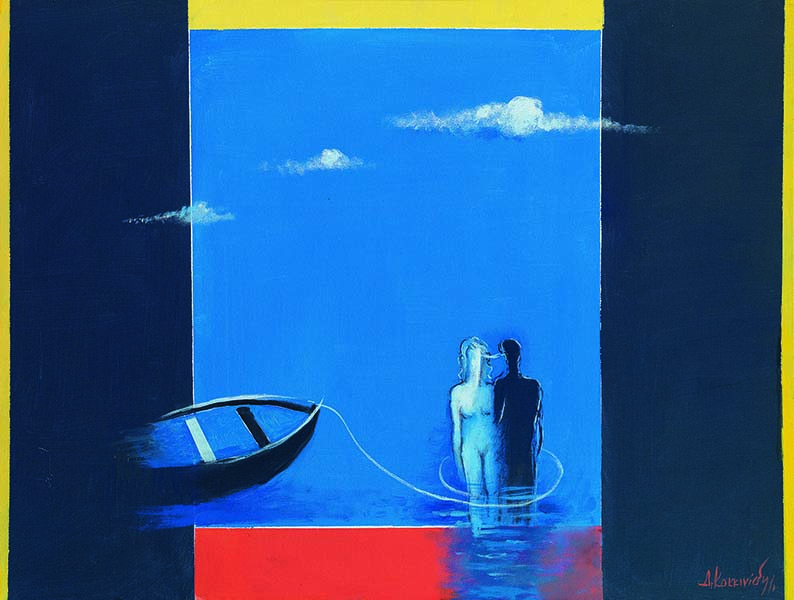
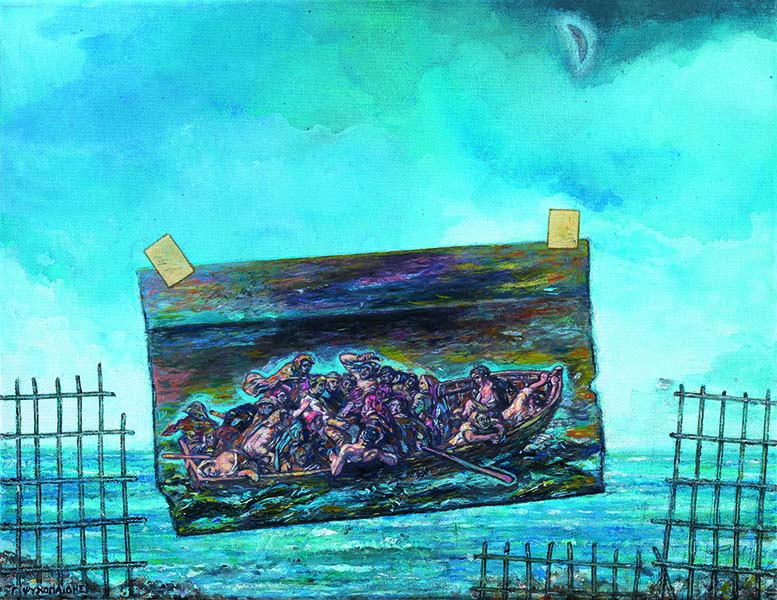
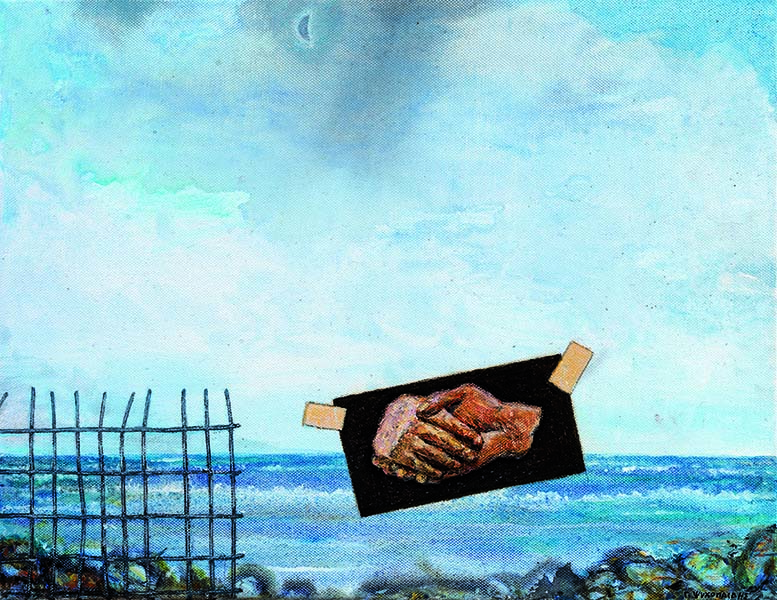
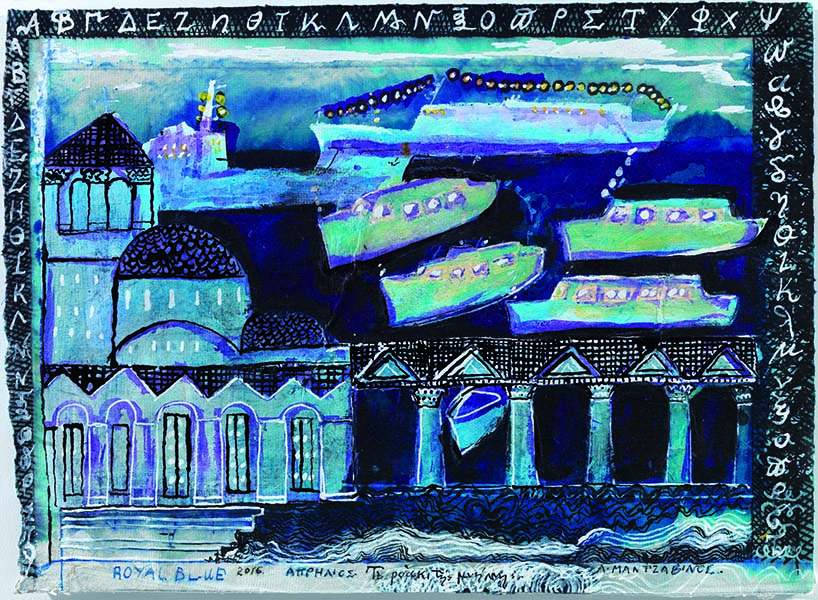
As an agent in cultural management, Citronne Gallery aims to function as a forum for the exchange of artistic ideas and views. With this in mind, this year we chose a theme, always current, recently enlarged and magnified. The Aegean, our sea, has a long history of life and movement, peace and wars, survival and voyage, work and experience. The exhibition “Aegean: Identities + Journeys” brings together artistic viewpoints on this subject, expressed by nine contemporary artists called upon to provide commentary: Yiannis Adamakos, Michalis Katzourakis, Demosthenis Kokkinidis, Alekos Kyrarinis, Tasos Mantzavinos, Emmanouil Bitsakis, Constantin Xenakis, Sotiris Sorogas, and Jannis Psychopedis.

The artistic works exhibited are accompanied by poems, or extracts of texts, chosen by the artists as an additional representation of reality. At the same time, the poems are independent of the artistic work: that is, they are not the inspiration for the art, but the artists’ stream of conscious commentary on their varied memories and responses to the Aegean. The artistic and the poetic function as a diptych which highlights the crucial significance of the Aegean to the history and the definition of the Greek identity.
Artworks

NO WAY OUT – Visual Records: Maps and Codes

Constantin
Xenakis
NO WAY OUT - Visual Records: Maps and Codes
August 2, 2014 - September 15, 2014
Poros

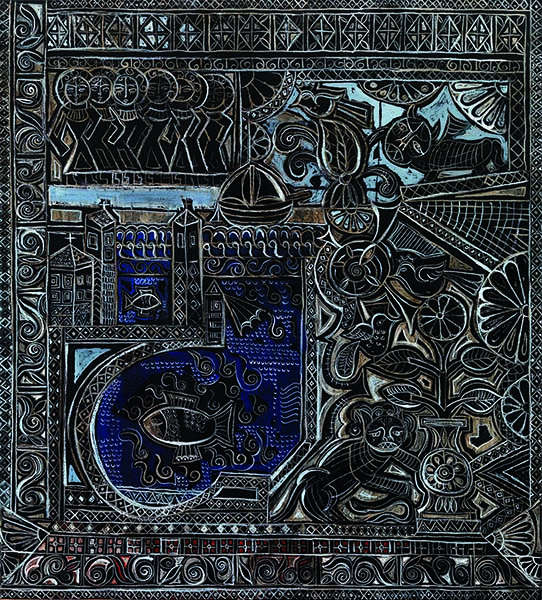
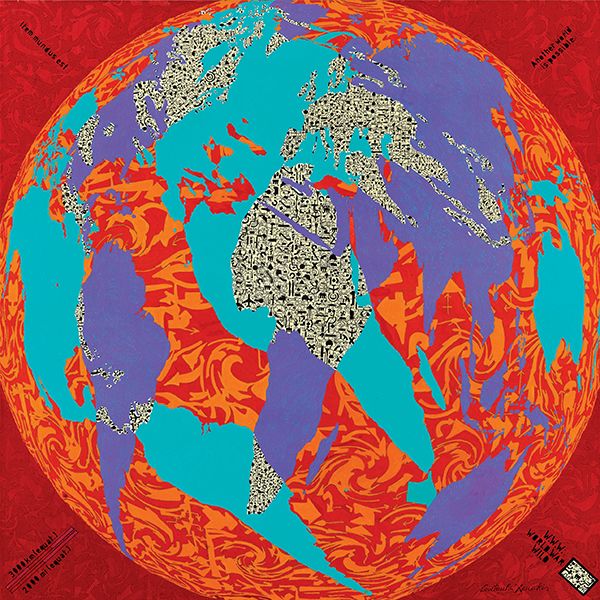
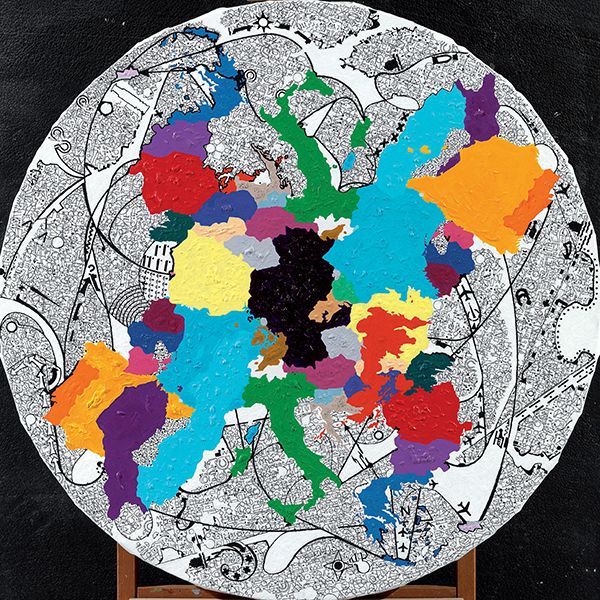
Constantin Xenakis is a nonconforming artist, intensely engaged in questioning and exploring the role of art and the artist’s responsibility towards the social whole. His work arises out of the contemporary socio-political reality he has experienced firsthand. Xenakis is a citizen of the world: he was born in Cairo and has lived in Athens and Paris. As such, he has a Greek identity and a triple cultural background: Greek, Egyptian and French.

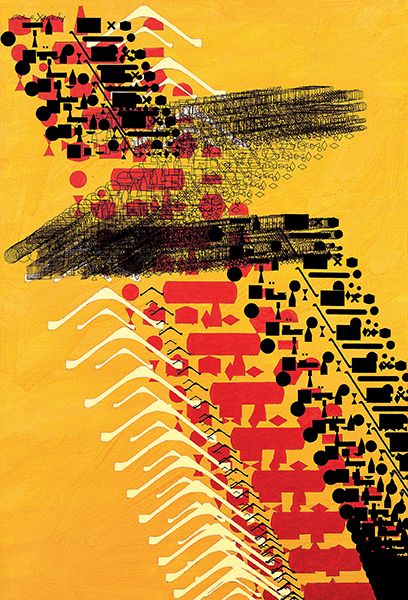
This composite personality allows him artistically to approach the Greek situation from inside and outside. He has developed an abstract, yet at the same time, deeply meaningful visual idiom. He maps things out by constructing and deconstructing schemes, words, and concepts. He has invented a personal representational and visual alphabet. His figurative language makes varied allusions across time. He begins with ancient Greek and Egyptian civilization and progresses to contemporary everyday elements, such as international driving signs. He deconstructs all these references by transmuting them, recomposing them and creating new codes and images which reflect current reality- historical, social, and political.

Among the dead ends (NO WAY OUT) are paintings, collages, maps, and books-as-objects. These works are organised along an axis of Repetition / Juxtaposition / Superposition As such, they offer a codified image of contemporary civilization: “The symbols-codes interlock and meet in a chaotic manner and, by dialoguing with form and colour and concepts, attempt to coexist in the painting’s framework.” The work of art becomes, in the end, a means for ideological criticism of the existing socio- political system.

Artworks