loading icon

The Space Between Us
Yiannis
Adamakos
The Space Between Us
July 16, 2011 - September 12, 2011
Poros

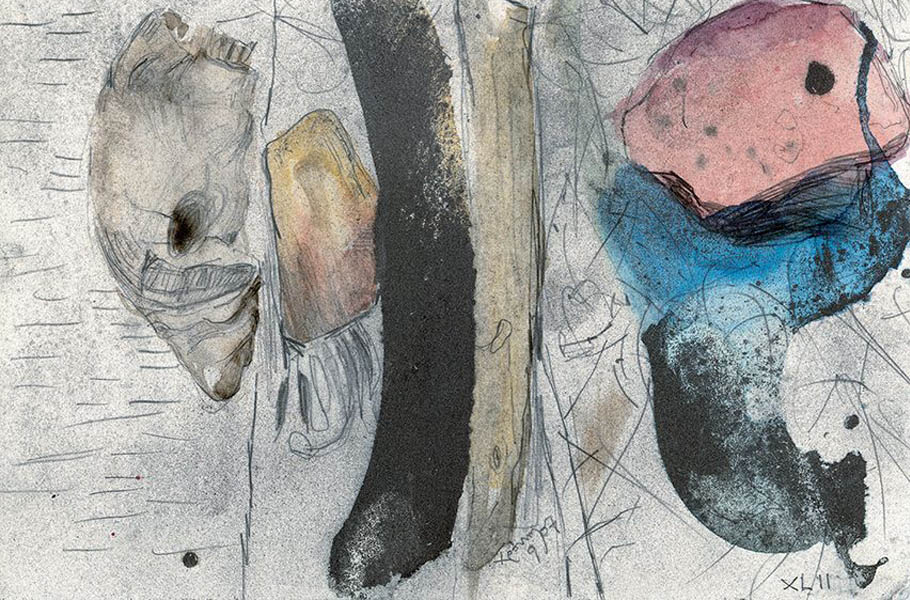
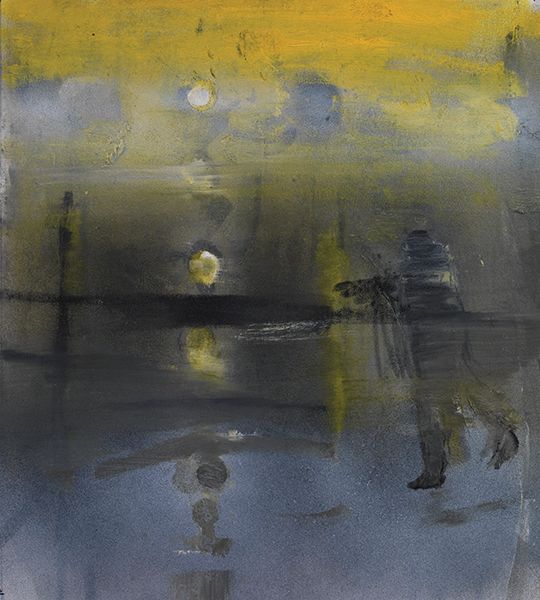
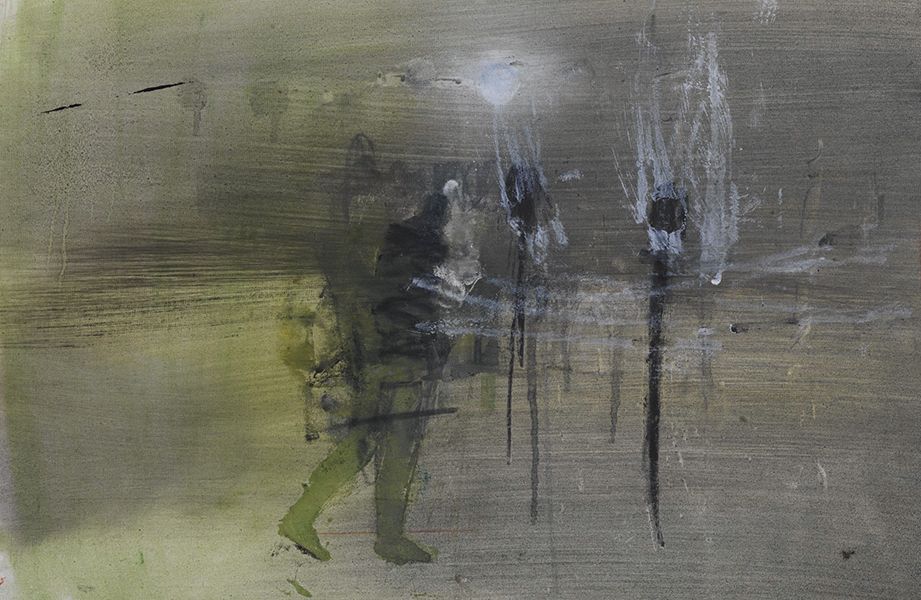
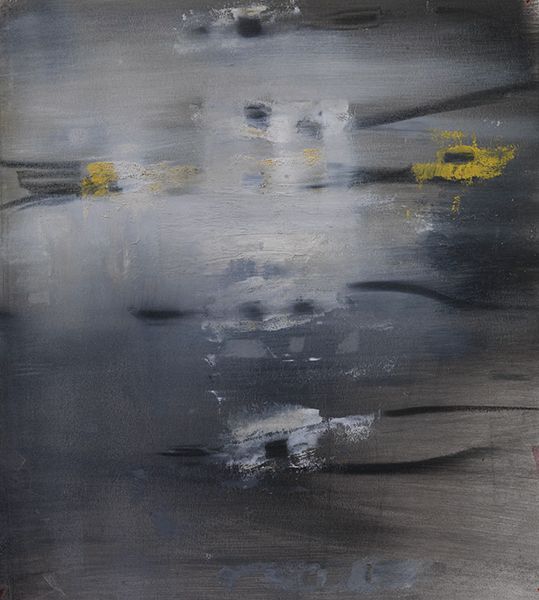
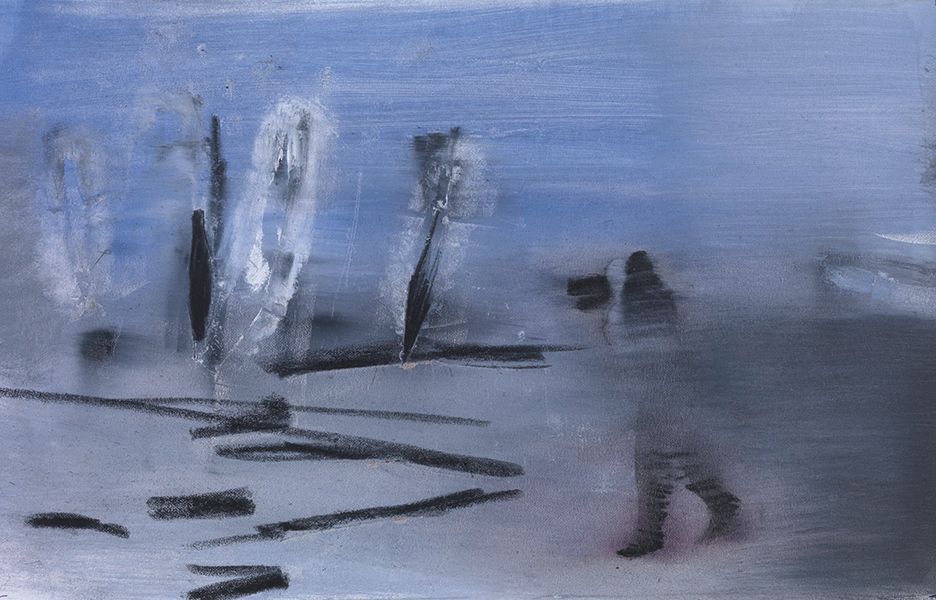
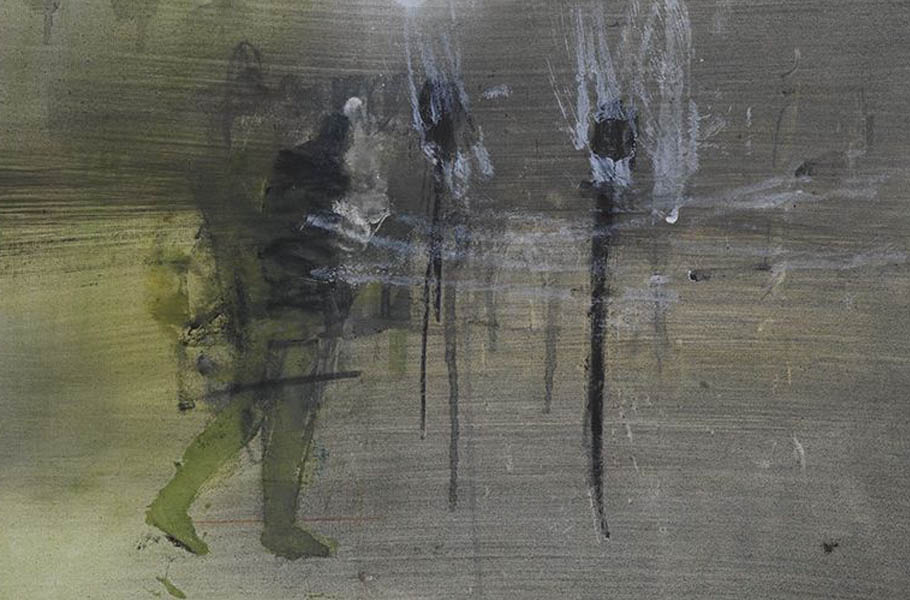
What is interesting about Adamakos' work these days is not the narration as such, but the manner in which he responds to the external world and to human nature, from which all particular forms of work arise. Naturally, one does not look for neo-expressionist elements in his work, but any expressionist painting elicits an almost physical reaction in the viewer. His works express emotional experiences which are rendered in non-realistic colors, with yellows and reds taken from fierce human passion. When one actually feels the physical reaction, this theory is confirmed.

Despite all the subtle alterations in the style of his painting, the images in Adamakos' works are capable of forcing memory to broaden the field of meaning, without obviously distorting the normal shape of the natural landscape. And this is artistic mastery. The perception of place has a psychological dimension as it is closely tied to every viewer's changing moods and that is why it is not a specific, objective technique. The artist adopts traditional forms and tries to use these to convey an objective expression of an inner affair and in this way to give it true existence.
Artworks

From Kesariani to Poros

Kostas
Papanikolaou
From Kesariani to Poros
May 21, 2011 - June 15, 2011
Poros

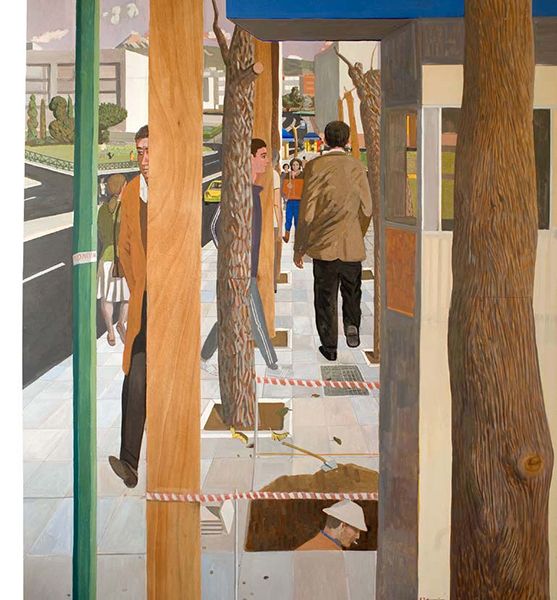
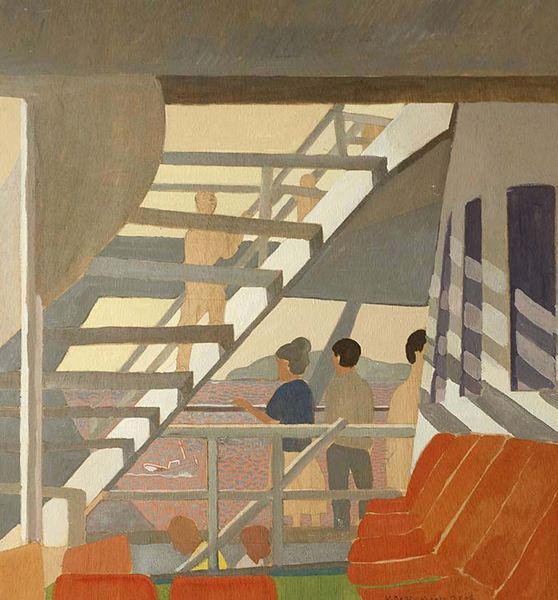
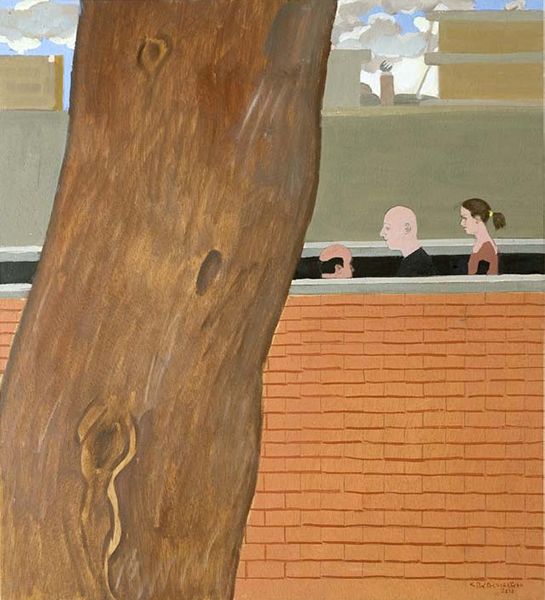
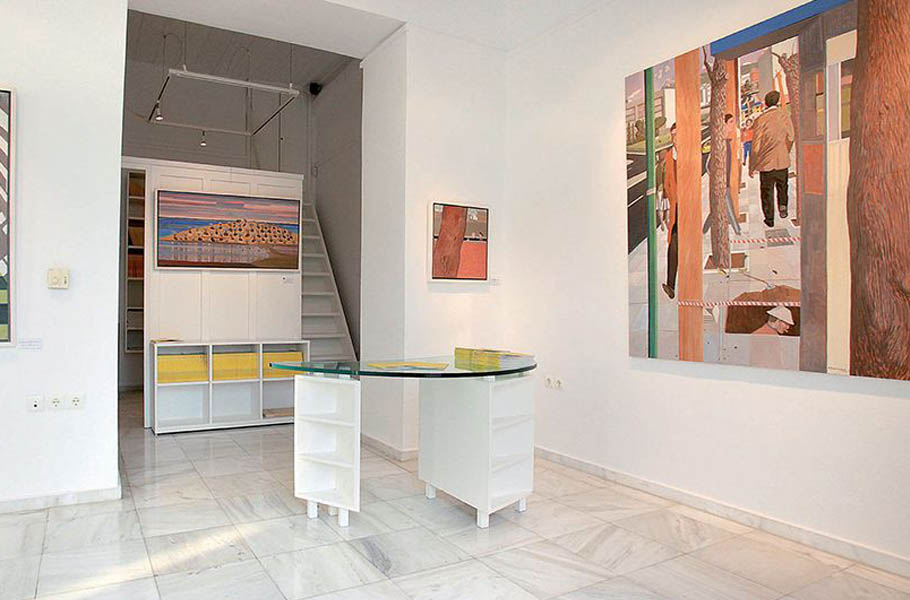
Kostas Papanikolaou takes a contemporary approach to his landscape paintings in his geometric staging of urban space and of the people moving within it, while in the apparently simple and straightforward narratives of his canvases, he remains elusive and reticent.

Papanikolaou paints the sea, the hills, the clouds, the landscapes of Poros and the mainland with a tendency towards abstraction, responding emotionally to what he sees and building his colors with clarity and precision. He confronts the physical scene with complete directness, translates the shapes and tones into an engaging visual language which is simple without simplifying. His landscape paintings recompose the scene in sequences of planes and in textures and shades of colors that strive to achieve volume, mass and structure. In his more recent work, Papanikolaou appears to be shifting towards a more abstract rendering of his subject and towards a more dynamic use of color tensions and volumes. The sky, for example of the Fuga, the hill with the olive trees, the red sea of Poros, such stylistic distancing from the actual, give to his work a timelessness, placing it somewhere between figuration and evocation.

Yet, people, in Papanikolaou’s paintings, usually, take center stage. They move within an urban setting, whether it is a street in Kessariani, the balcony of a lay apartment block, or a bank and the people are waiting, seated or standing in a queue, or on a boat, en route to or from Poros, idly looking out, looking in, looking at each other, chatting or just day dreaming... Papanikolaou is a figurative artist in the same way as Cremonini. His people are in motion, they walk down the streets of Athens, they come out of Metro stations, they climb up to the upper decks of a boat and cross others going down, or they are idle, sitting at a cafe. Structural elements like railings, bars, poles and staircases perform a dialectical counterpoint of in/out, below/above, in motion/still and create the scaffolding upon which his people move about. The composition is organized, geometric. The composition of his work uses the characteristically geometric repetition as a grid out of which a human narrative unfolds.

Artworks

Panayiotis Tetsis

Panayiotis
Tetsis
Panayiotis Tetsis
August 29, 2009 - September 20, 2009
Poros

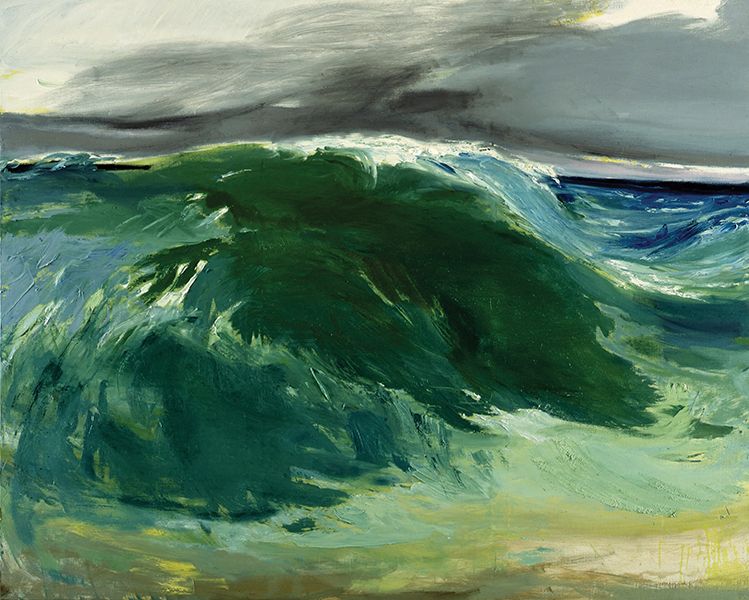
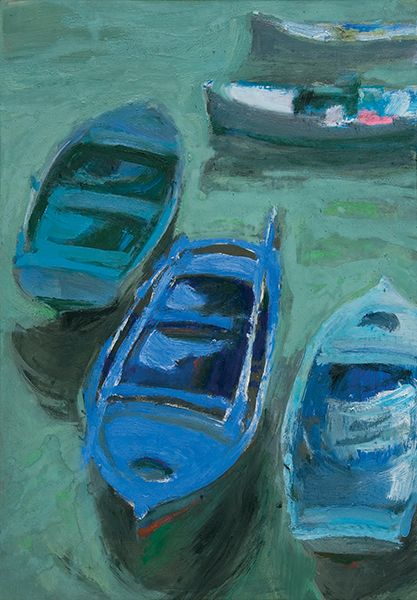
Tetsis’s seascapes are works inspired by the islands of Hydra and Poros. The title of the series is “Bypassing Tselevinia”. Tselevinia, the small inhabitable islands at the Peloponnese cape between Poros and Hydra, and famous for their rough seas, a divider between the calm Saronic Gulf and rocky Hydra, uniting and dividing the life of Poros and Hydra.

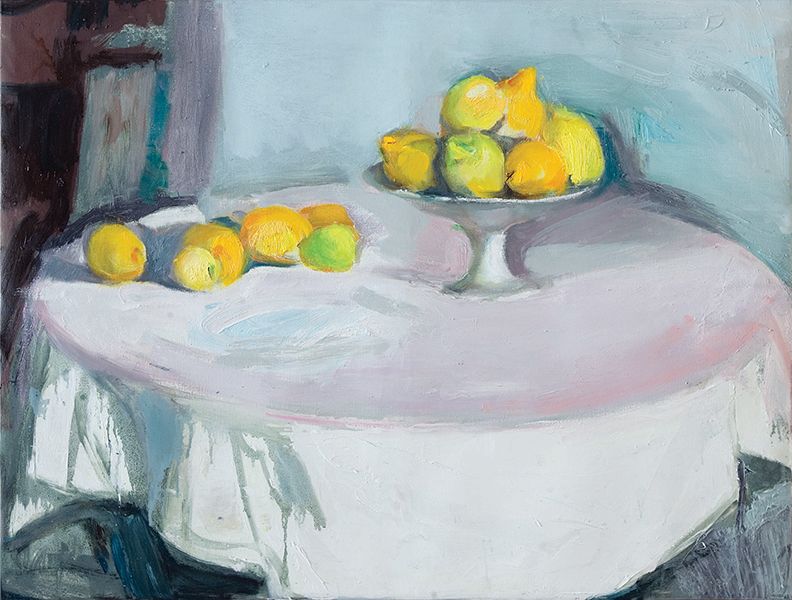
Tetsis’s paintings in the exhibition are mainly seascapes, with the exception of a still life of a bowl of lemons – a playful reference to both the lemon grove across in the coast of Peloponnesus as well as a playful reference to Citronne itself.

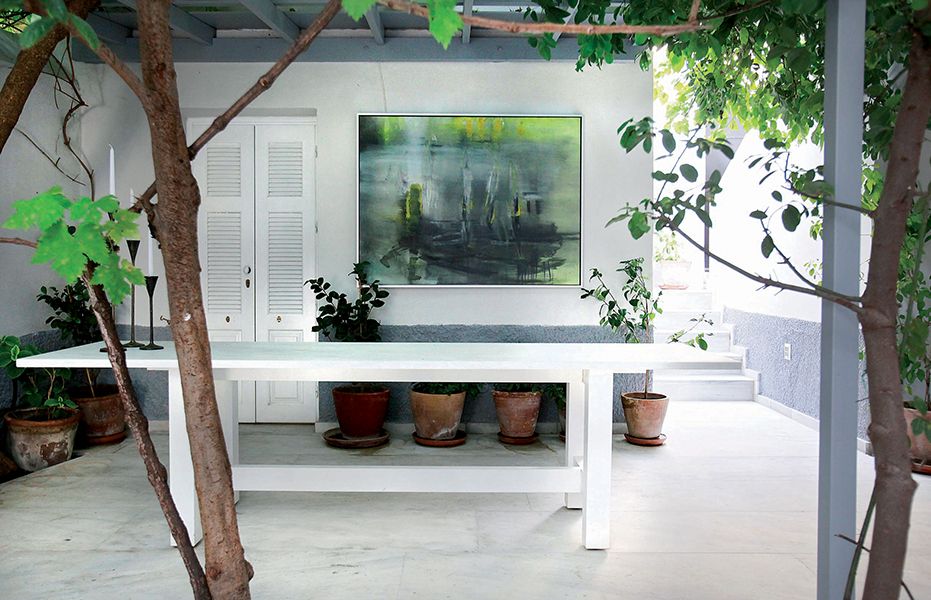
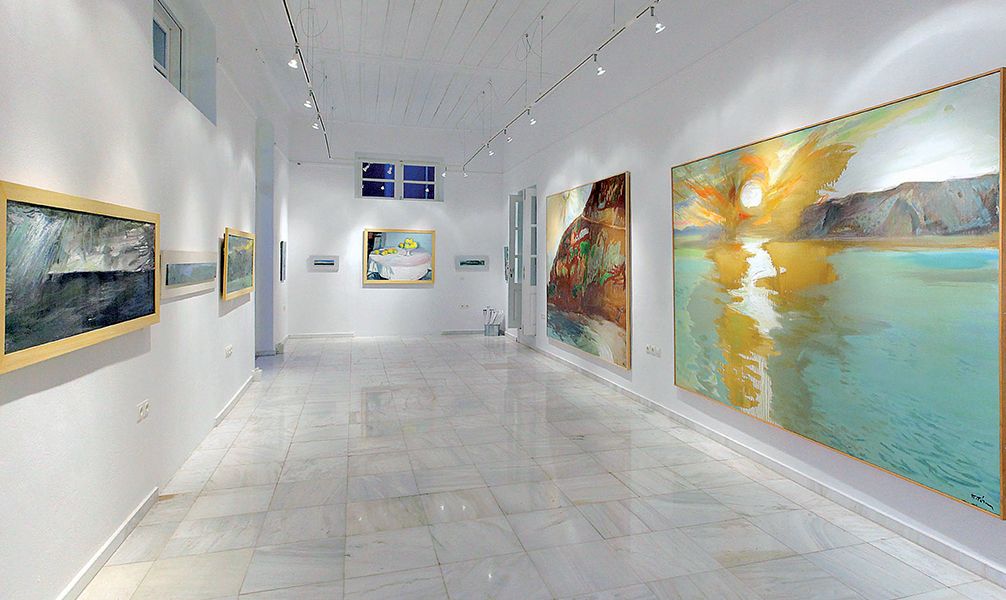
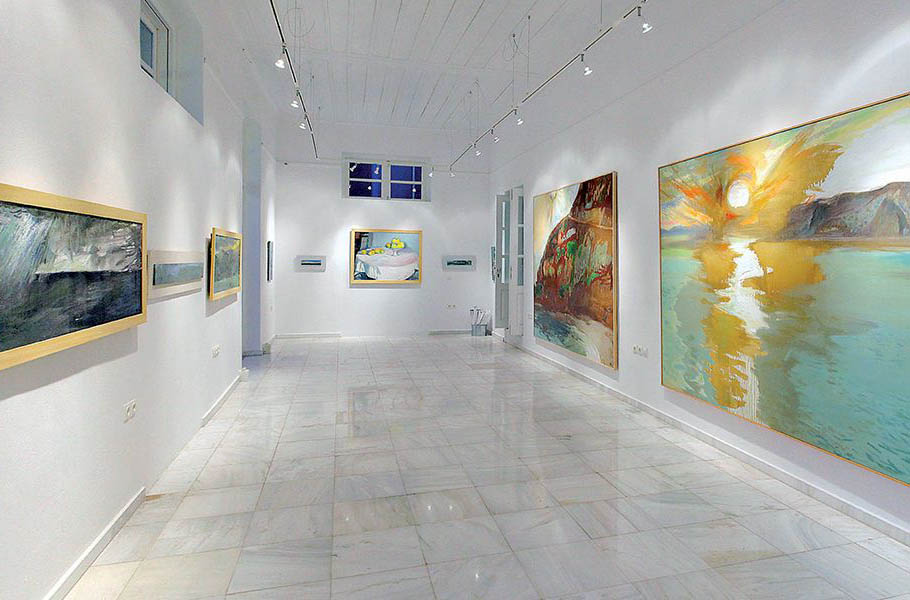
Tetsis’s seascapes show an imaginative and emotive interpretation of the sea. The sea has been always present in his life, his mind, his work. He was born in Hydra where he goes back often. The paintings are products of his memories, feelings and sense of the place. The view of the sea opens up as a wide horizon, in front of the viewer’s eyes. The sea in Tetsis’s paintings takes different colors, green, dark deep blue even black. In each painting, it takes a different presentation; deep sea with no land on view, turmoil and dark – deep green, very dark blue occasionally even black; where the spray of the sea extends to the clouds, where water and sky are different to be distinguished, like the wild sea outside Tselevinia in the winter time; light green with overtones of aquamarine blue and above it a blue or orangey summer sky where the rays of the gold sun are passing through and the inviting shore is in the middle ground between sea and sky – the shore painted with strong contrasting colors deep brown red against emerald greens or yellow and ochras contrasting grey or purplish blues.

A thick mass of color is placed on the canvas with the brush, with a knife, even with fingers. Light translates into color. The forms are drowned in flooding color obliterating the boundary between reality and imagination. The handling of form, space, and light transforms his subject into a harmonious construction of planes and spaces. The brush strokes have a rhythmic pattern that gives the canvas its shimmering texture. He is painting pure movement of masses of color, which brings to the finished painting the immediacy of the color sketch. In Tetsis’ paintings, the sky and the sea were brought into an almost abstract relation. Sea and sky together form a vortex of unbridled natural force.

Artworks

Chronis Botsoglou

Chronis
Botsoglou
Chronis Botsoglou
July 25, 2009 - August 26, 2009
Poros

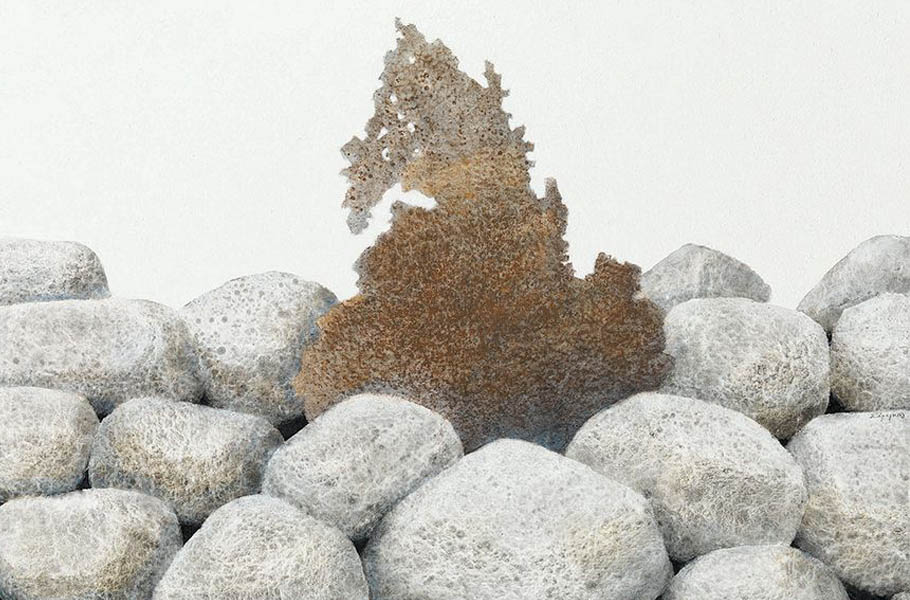
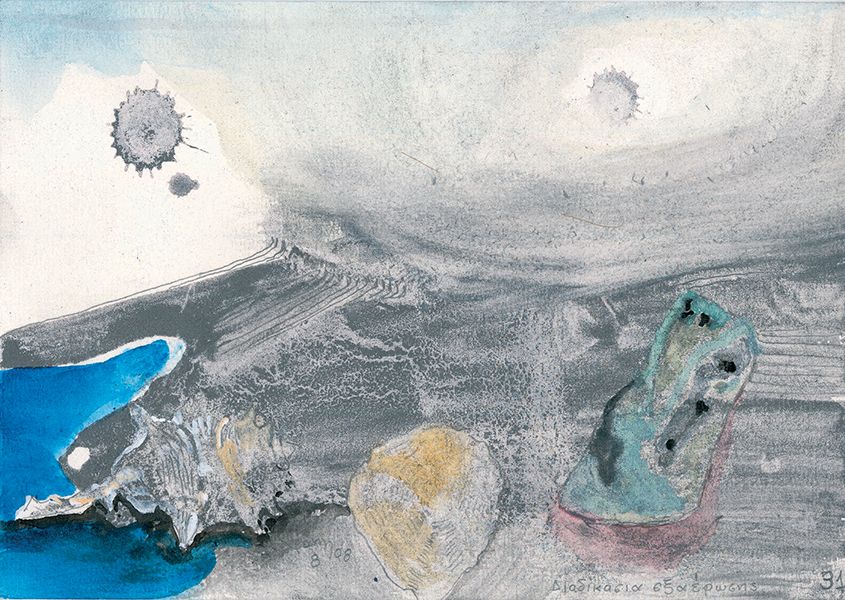
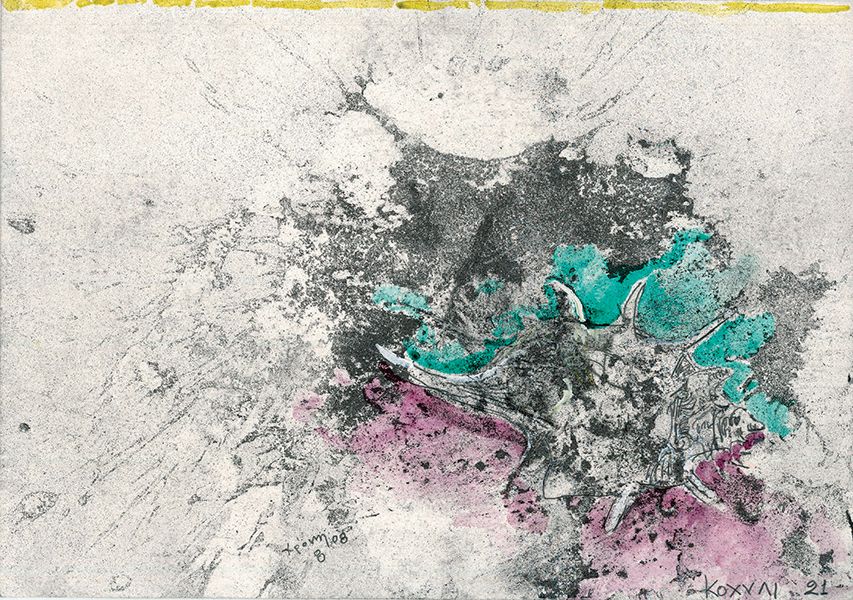
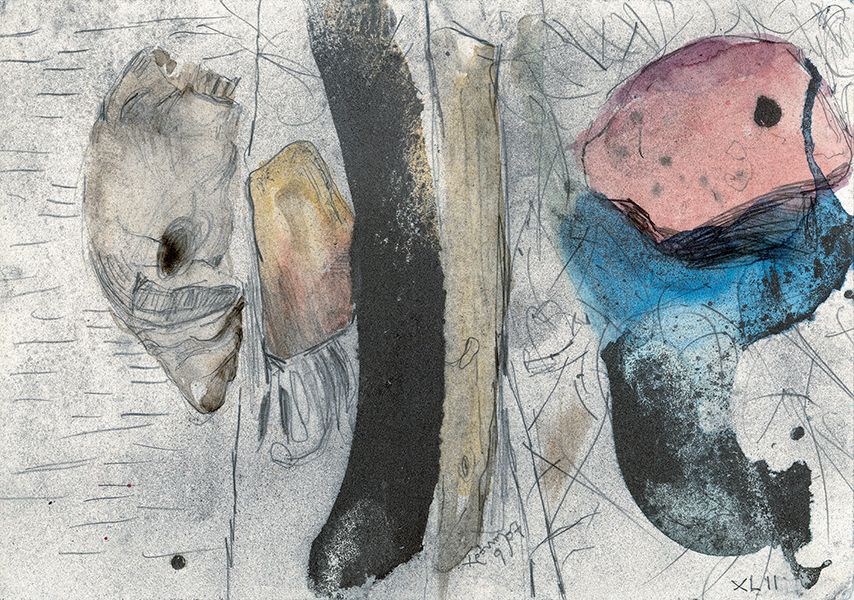
In 2005, Botsoglou started a series of watercolors and constructions, a kind of a ‘visual diary’ that he revisits every summer. The watercolors make a collection, a record of the moments spent next to the sea at Petri of Mytilini. He ‘focuses’ on details; few shells, small pieces of driftwood, small rock formations. The works start at the seashore and are finished in the studio. In a playful way, the artist captures with directness and freshness the small, momentary pleasurable moments of his summer vacation and appropriately gives them the title “Tou Yialou.”

The watercolors constitute a sequence in an almost archival way, reminiscent to the artist’s other thematic sequences. The works are numbered and dated to indicate their chronological succession. In a parallel way to more well-known series of his work – for example Liotrivia and self-portraits – their structure as a sequence as well as their autobiographical character is typical of Botsoglou’s work. The artist focuses and explores in the series “tou yialou”, his everyday life, his environment, his life context, his environment, his ‘experienced space’.

However, what distinguishes these watercolors from the other series is their playful character, which is often emphasised by the words written on the work itself. The light, translucent medium of the watercolor is appropriately used to record the unfiltered pleasure of the relaxing moments on the seashore, a celebration of the notion of the Greek summer that the artist shares with so many of the viewers of his work.

Artworks

Sotiris Sorogas

Sotiris
Sorogas
Sotiris Sorogas
June 20, 2009 - July 22, 2009
Poros

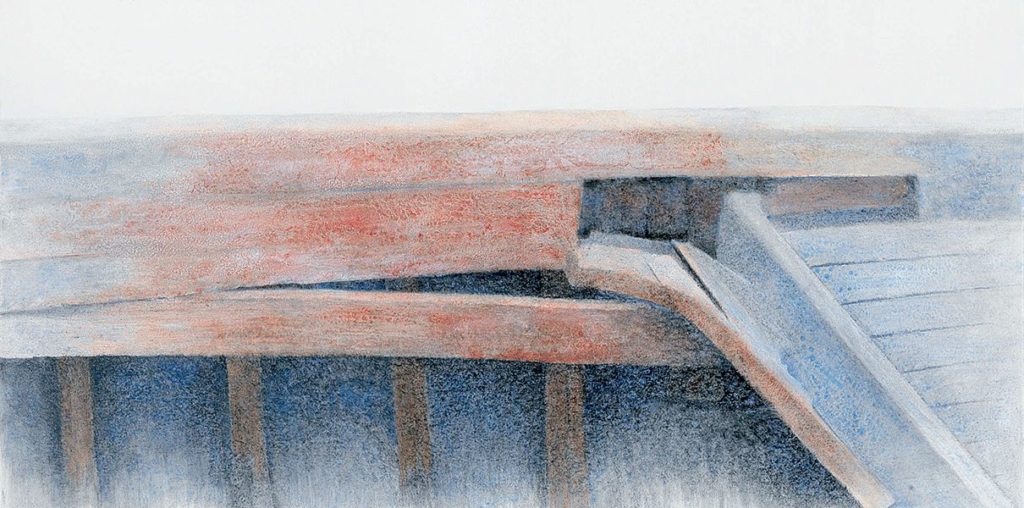
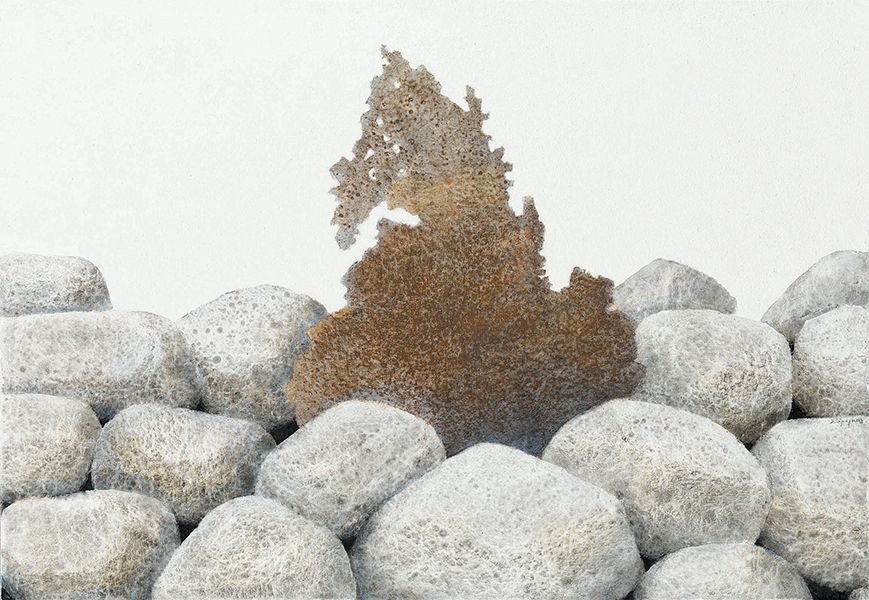
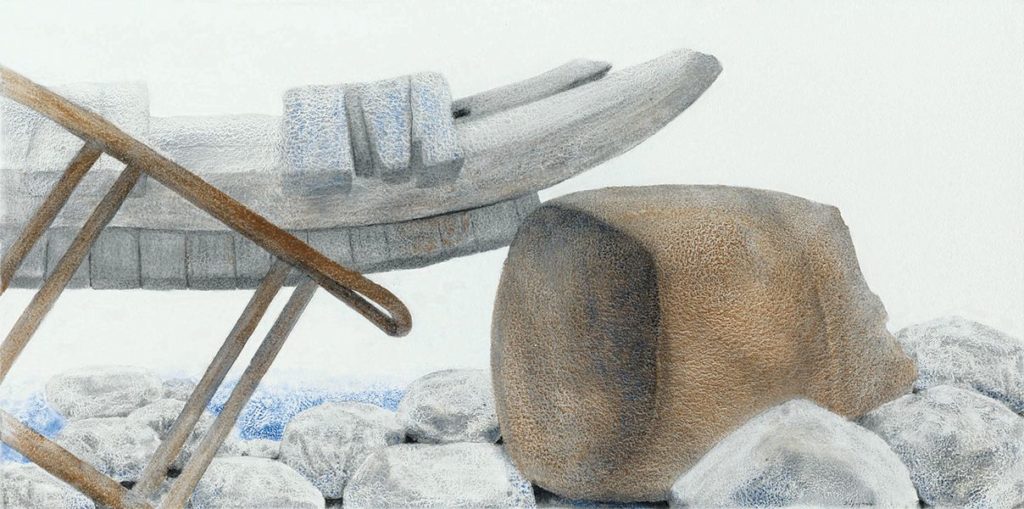
Old timber and rusted metal parts, are central to Sorogas’s iconography. The scattered, useless, broken, weathered fragments are taken out of context and placed in the center of large canvases, a product of meticulous observation and detailed drawing, emphatically presented in dramatic close ups. The color scheme is limited: black, grays, sepia/rusted browns and sometimes red stand against the bright white background. The hint of blue, among the objects and the background suggests the presence of the sea.

The photographic realism and the characteristic immaculate style of the canvas add a documentary aspect to the image, emphasized further by the ‘literal’ descriptive nature of the title. Those documentary aspects, strongly contradicted by the poetic aspect of Sorogas’ work, convert the depicted objects into symbols.

Artworks

Cris Gianakos

Cris
Gianakos
Cris Gianakos
August 9, 2008 - September 14, 2008
Poros

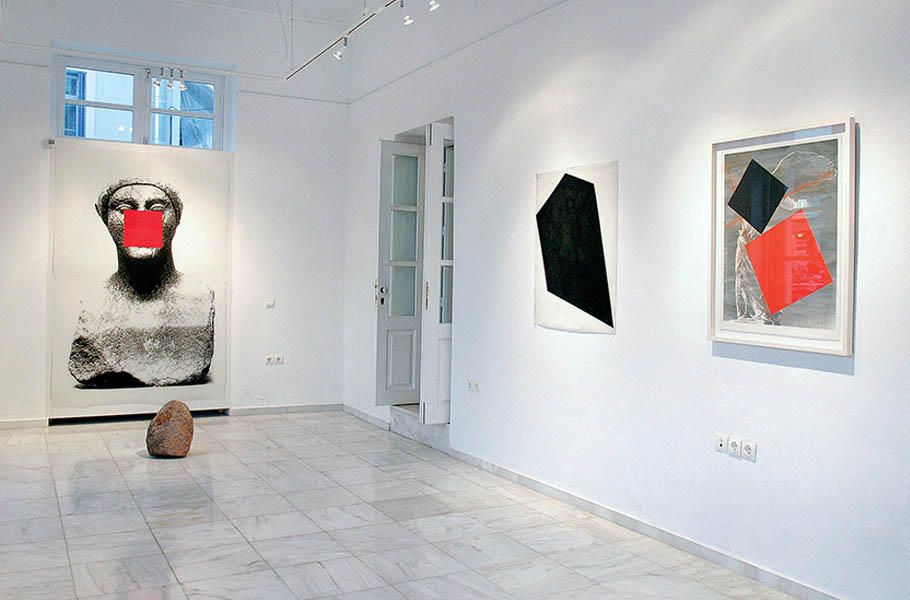
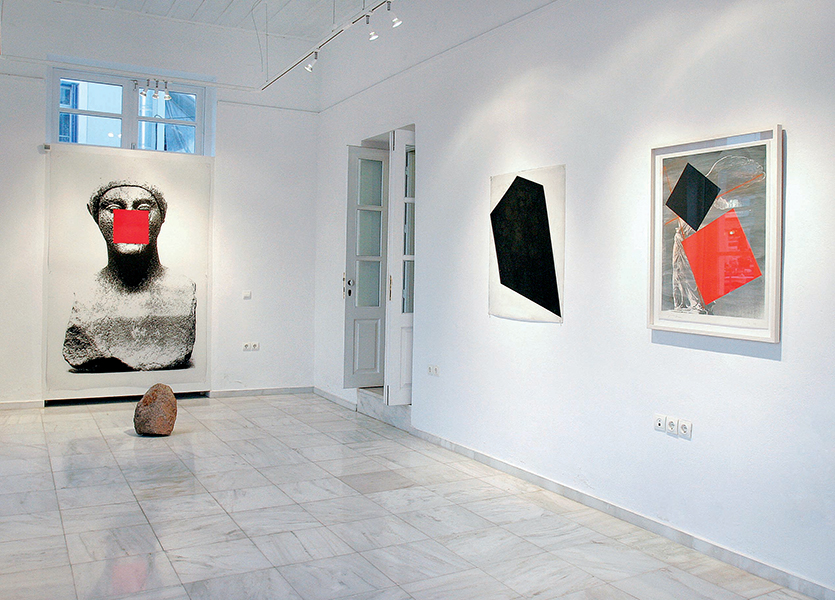
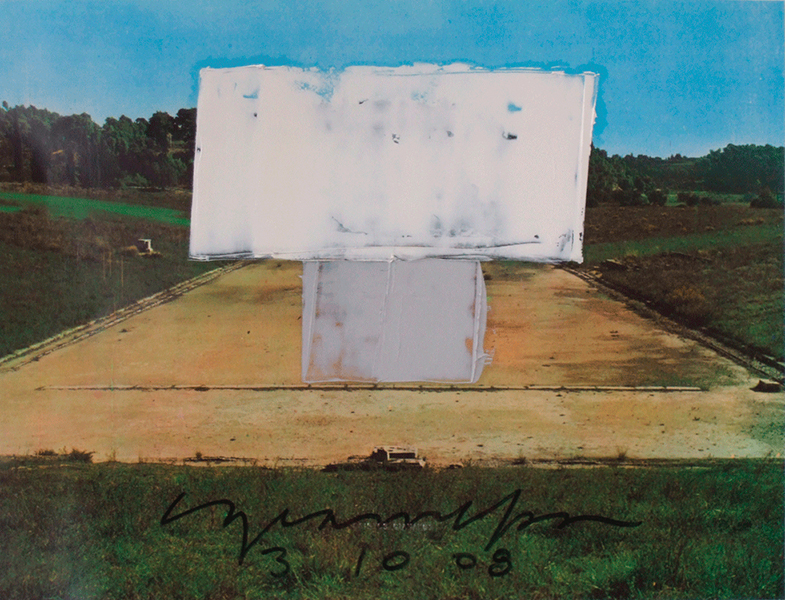
Gianakos was always attracted by the timeless quality of ancient art and has had a longstanding interest in geometric forms and classical proportions. In the early 1990s, in parallel to his photographic alterations of archaeological sites, he reused photographic images of ancient art works. In Alpha Series, 1991, the solarized image of the head of an archaic kouros was first printed on mylar at a monumental scale (220x145 cm). The work is characterized by a linear precision and a rude massiveness, expressing the original contours of the block. Gianakos superimposed a red square covering the nose and the mouth, hiding the famous archaic smile. The resulting collage emphasizes the blocklike form of the kouros. The partial reversal of tone of the solarized image, with its almost apparitional quality, is dramatically juxtaposed to the form of the solid red square. Nothing could have been more different from the monolithic monumentality of the kouros head than the Hellenistic statue of the Victory of Samothrace with its tempestuous movement of the body and the power of the outstretched wings.

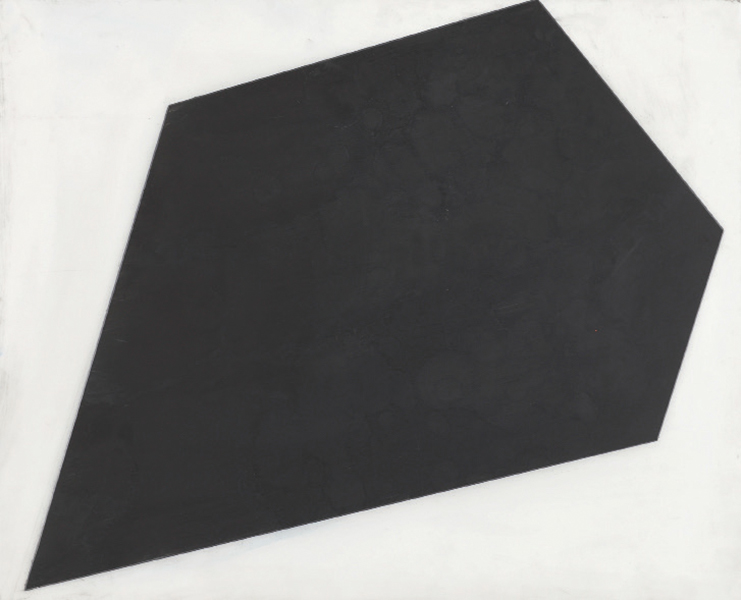
That famous statue has been the raw material of a whole series of Gianakos’s works, each one exploring different aspects. In Niki of Samothrace with Blue and White Squares, he first draws two diagonal red lines to indicate the center of movement and then places two heavy square forms (a blue and a white) creating an alternative sense of movement and rotation. In Niki of Samothrace with Two Rectangles, 2000, he creates two shadow rectangular areas, one corresponding to the headless body and the other to the stretched wings, tracing the stone blocks out of which the statue was carved. The artist playfully reencloses the statue in a geometrical solid block and at the same time reveals the process of sculpting out, bringing to our attention the fundamental aspect of carving and visually echoing Michelangelo’s saying that the work of art preexists in the marble block and the sculptor simply “liberates the figure from its marble prison

Artworks