loading icon

My Caves

Panos
Famelis
My Caves
October 20 - November 26, 2022
Athens

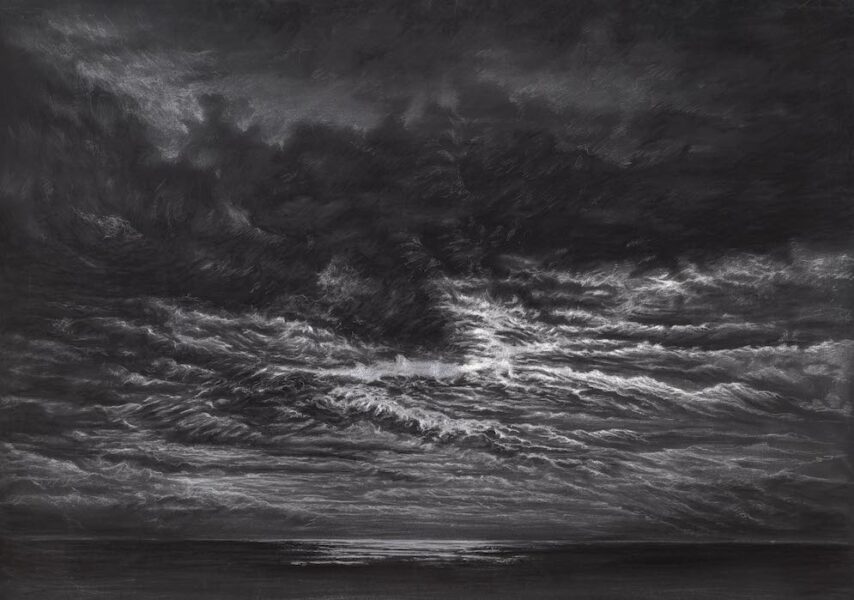
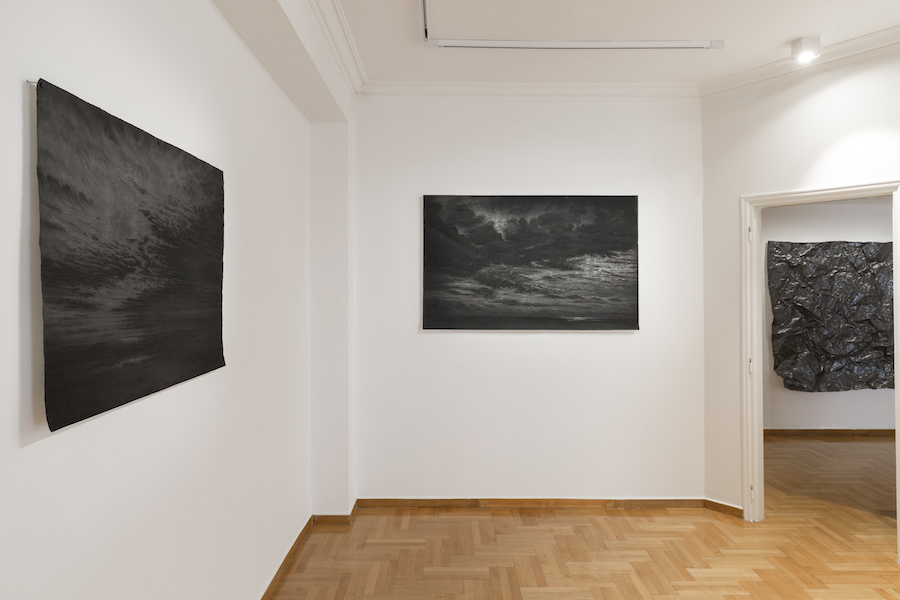
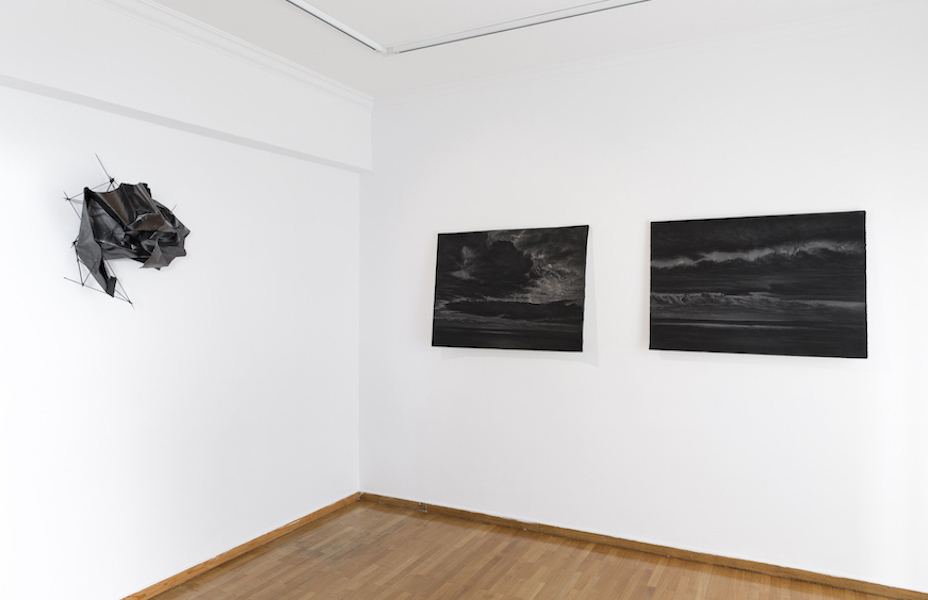
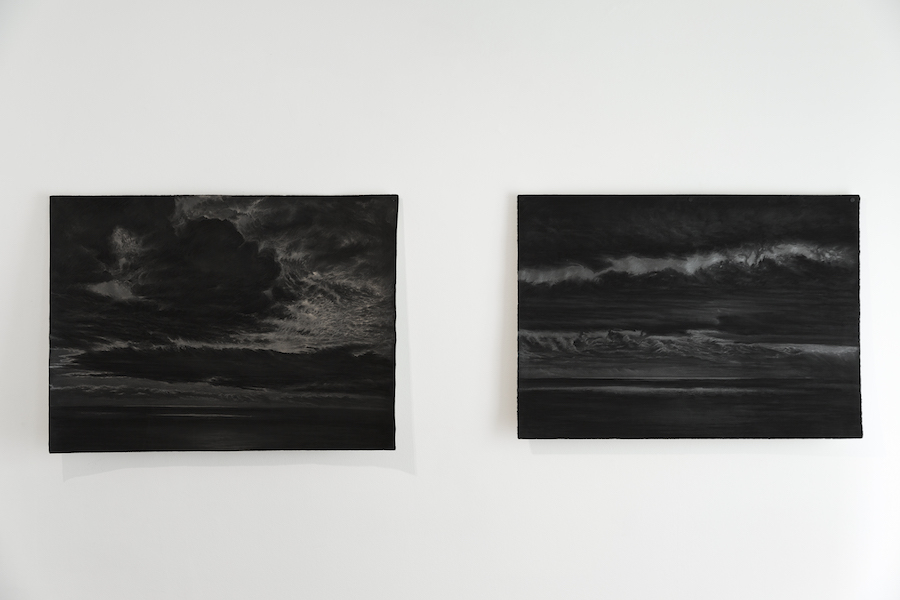
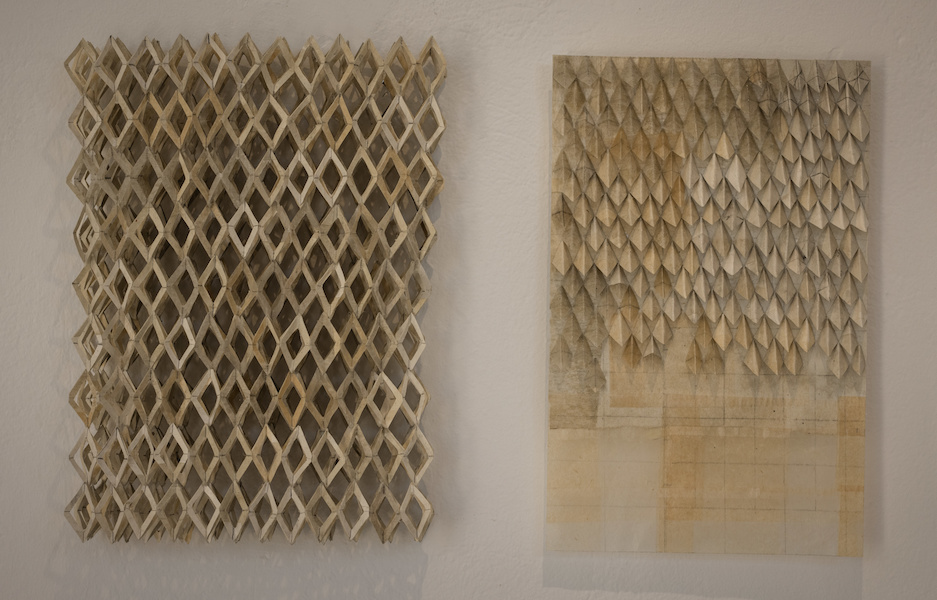
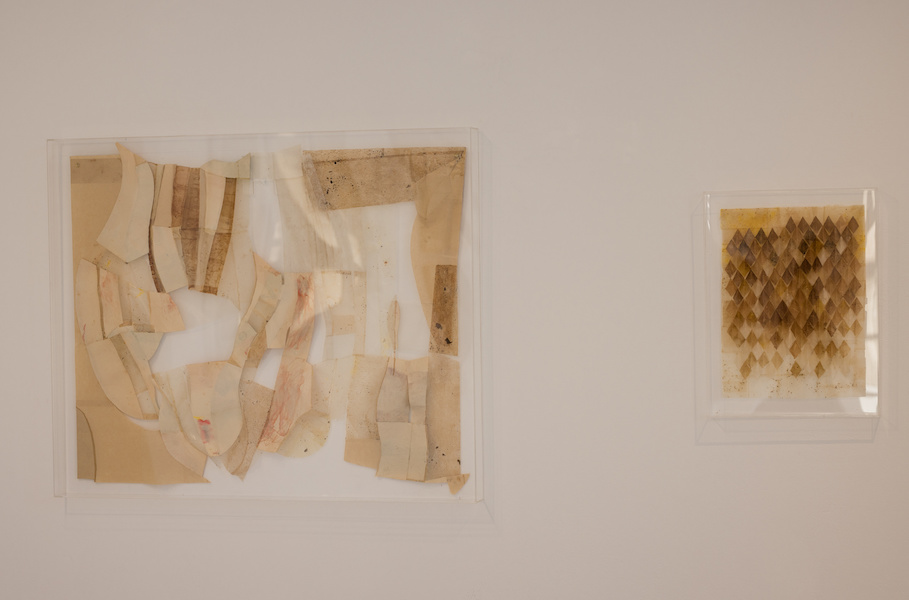
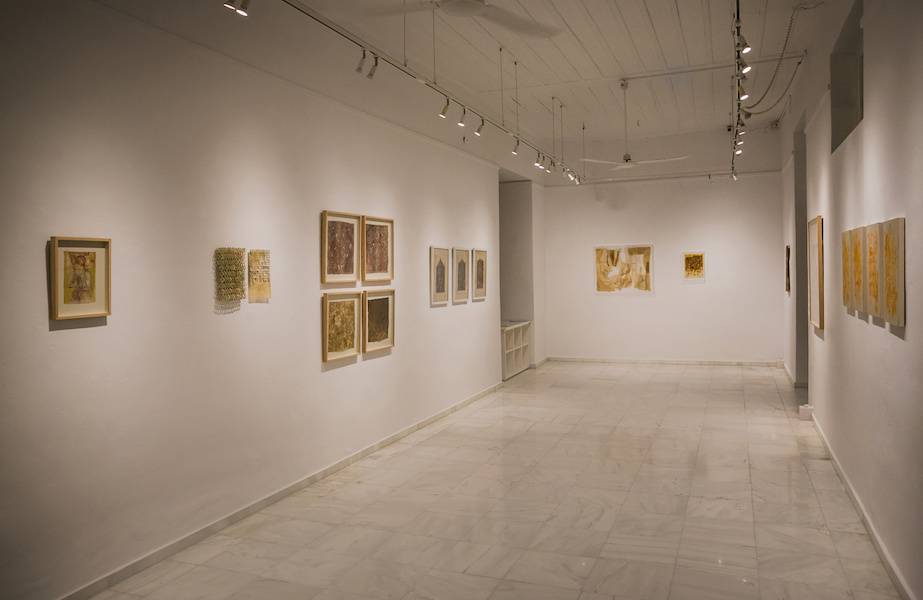
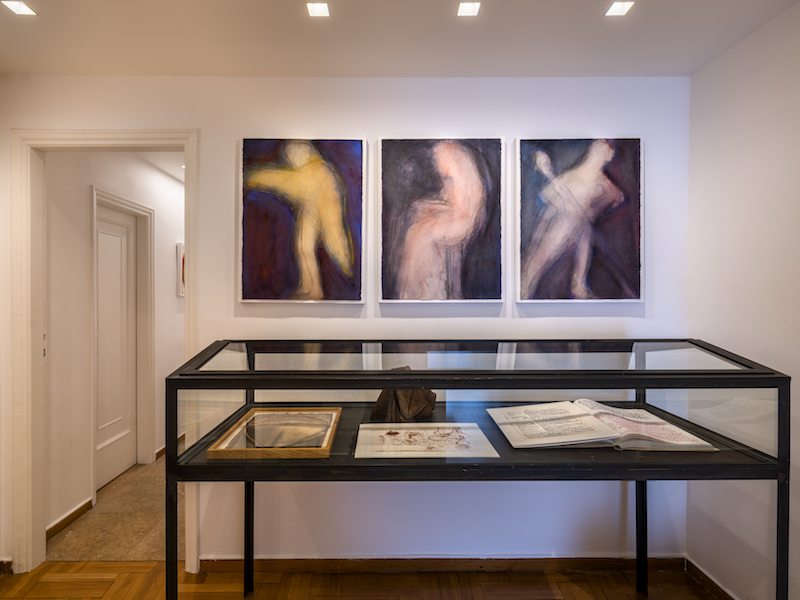
The solo exhibition of Panos Famelis "My Caves" includes a series of "landscapes" and sculptures in abstract forms. In this group of artworks, the artist exclusively uses pencils, graphites, charcoal and dry pastels on paper.

It concerns a study on writing and drawing "on paper", which was formed over the last three years. Through a cluster of representations and abstract forms, an "eerie" image is created, between a realistic and a transcendental world.

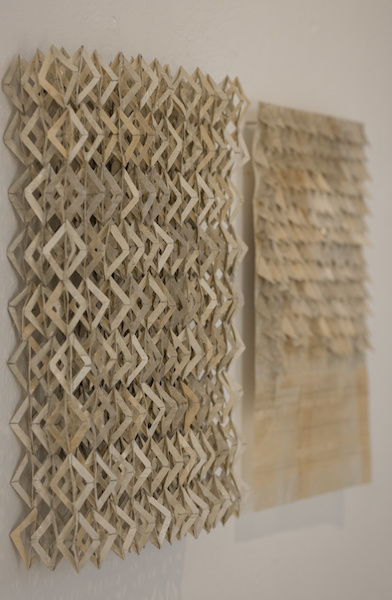
Landscapes of horizons and skies (skyscapes) are combined with wall sculptures made of paper, which the artist defines as "sculptural drawings". In this way, he emphasizes his visual research in regards to the relationship between abstraction and representation and, mainly, the relationship between two and three dimensions, which characterizes almost all aspects of his works.

These works remain in an intermediate place between sculpture and painting, mainly between time and space. Essentially, this body of work imprints timeless and colorless moments which potentially are day and night together; when the visible light comes simultaneously from the sun and the moon. There are moments when light becomes dark and vice versa.

The main stimulus for the creation of this particular series is music and poetry. They shape the conceptual essence of the works, as well as the pulse-rhythm which is emitted through the gesture of writing.

This writing is born through something paradoxical, a black imprint. It is like the trace left by the pencil which, when applied with a manual insistence, results in producing luminous surfaces and in a sense, becomes "self illuminating". It is, in other words, a mental and physical process of friction within the black, which creates flashes of light.

Artworks

Who Will Fight the Dragon?

Who Will Fight
the Dragon?
Group exhibition
July 23 - September 20, 2022
Poros

Alekos Kyrarinis
Nikos Podias

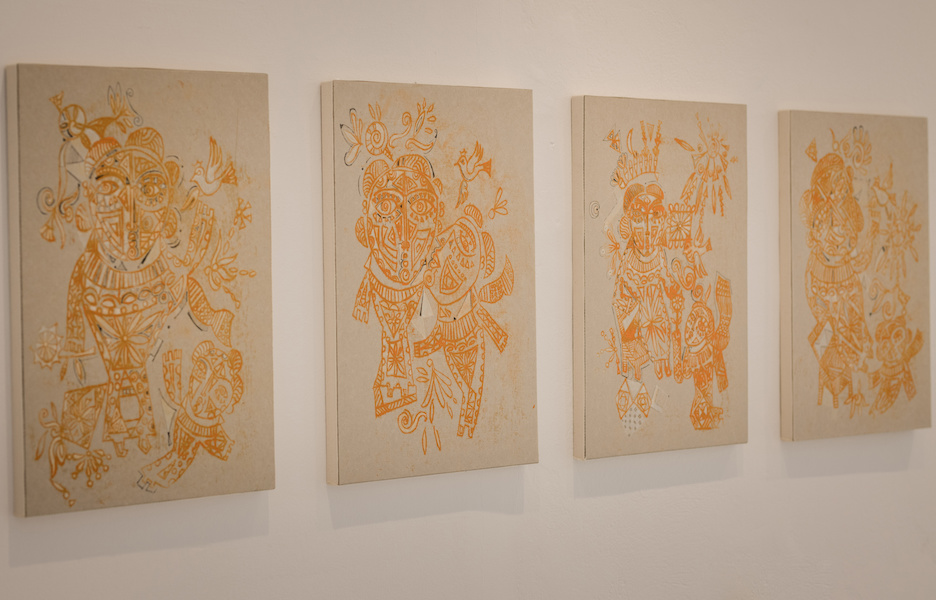
Alekos Kyrarinis and Nikos Podias draw from the shared references of their youth and meet up in a joint exhibition, a visual consonance with the dragon as its theme. The motive and the aim of this exhibition is to highlight these two visual worlds, which, albeit clearly dissimilar as regards the circumstances, can be seen as one. And this living circumstance interacts with this visible affinity.

Their works are a blend of visual coincidences and divergences. In the context of this coexistence, it is worth mentioning that they also converge on issues that define them from the very beginning. It is all about the correlation and the quota of the essence of charm and the uncanny. This is their meeting point and reveals a united stance against the archetypical.

“I’m deep down a matter of light,” wrote George Seferis (On a Winter Sunbeam, IV). Alekos Kyrarinis builds light as a kind of geography. He persistently produces correlations of forces that organise our vision like calligraphic spreads. Nikos Podias’ works meet the light and go beyond reciprocally. They weave the finest visual flair. At their center is the handicraft itself, which is filtered through feeling and turns into philosophy.

Artworks

In(de)finite Selfhoods II

In(de)finite
Selfhoods II
Group exhibition
July 14 - October 15, 2022
Athens

Chiderah Bosah Samuel
Panos Charalampous
Léllé Demertzi
Nicole Economides
Panos Famelis
Courage K. Hunke
Cédric Kouamé
Alekos Kyrarinis
Ebenezer Nana Bruce
Dessislava Terzieva
Adonis Volanakis
Emmanuel Kwaku Yaro

The group exhibition In(de)finite Selfhoods was initiated by CITRONNE Gallery as a research project to detect and bring forth new voices of contemporary, emerging, international artists. The point of departure for the dialogue were matters of identity, collectivity, cultural background, local and global genealogies of thought and creation, art movements and art histories.

The routes of communication and collaboration that create linkeages between the 12 international and Greek artists led to the first installment of the exhibition In(de)finite Selfhoods (4 June – 18 July), which inaugurated the gallery's Summer Program in Poros. The exhibition which assembled artworks in a variety of media spanning from painting to photography and installations, bridged discourses from different cultures, geographical locations, generations, singularities, artistic investigations and practices. The show in Poros provided for many of the artists the opportunity to meet, to share and to exchange, to be inspired from each other, and to construct in-between spaces.

The osmosis between the artists leads to the conceptual yet organic continuation of the exhibition in Athens, as a sequence that expands, broadens and delves into the artistic dissents. With the experience of the first show, a new series of artworks wishes to illmuminate and to decipher the realms, the roots, the causes, and the aspirations of our “glocal” collectivity.

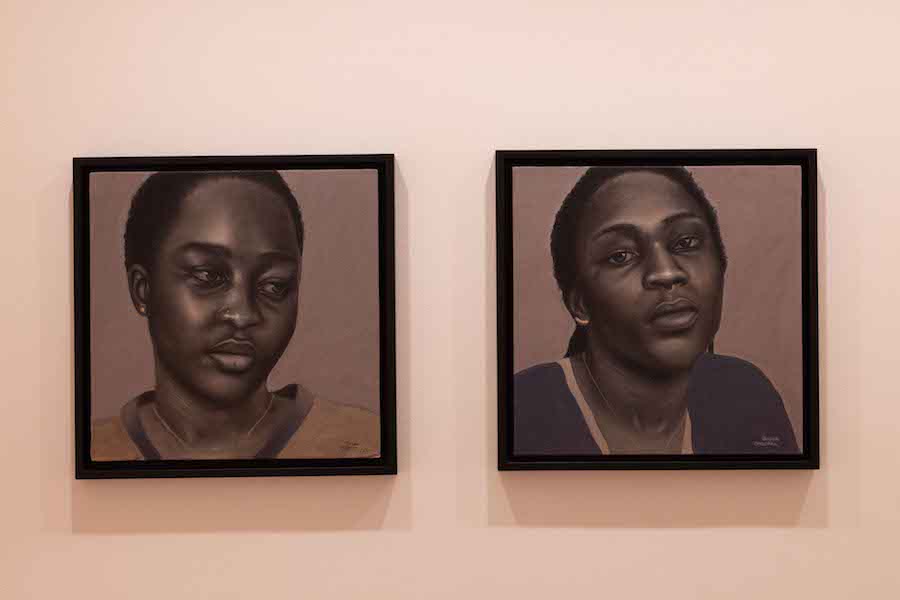
Chiderah Bosah (NI) contributes two female portraits in pale purple hues that allude to the daily struggles and the resilience of Nigerian youth. Matters of representation motivate the practice of the young artist, who aims to spolight the underrepresented and invisible voices. Interpreting the stereotype of “the strong black woman”, Bosah either directs Sonia's gaze right towards the onlooker, challenging them with her strength, or he averts Daisy's gaze by portraying her tender and more vulnerable side. Despite the darker composition of colours, a light shines from within his subjects, who are inspired by his close social circle.

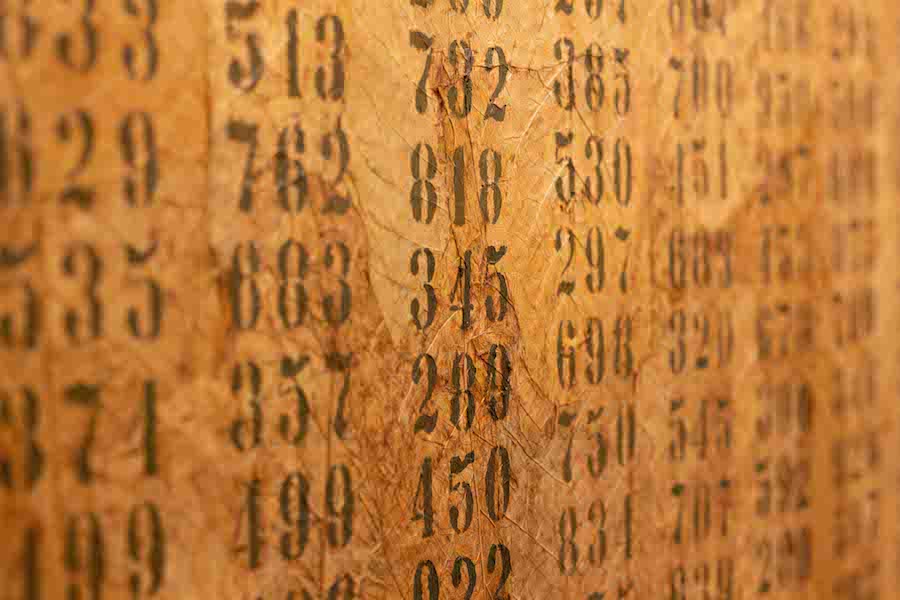
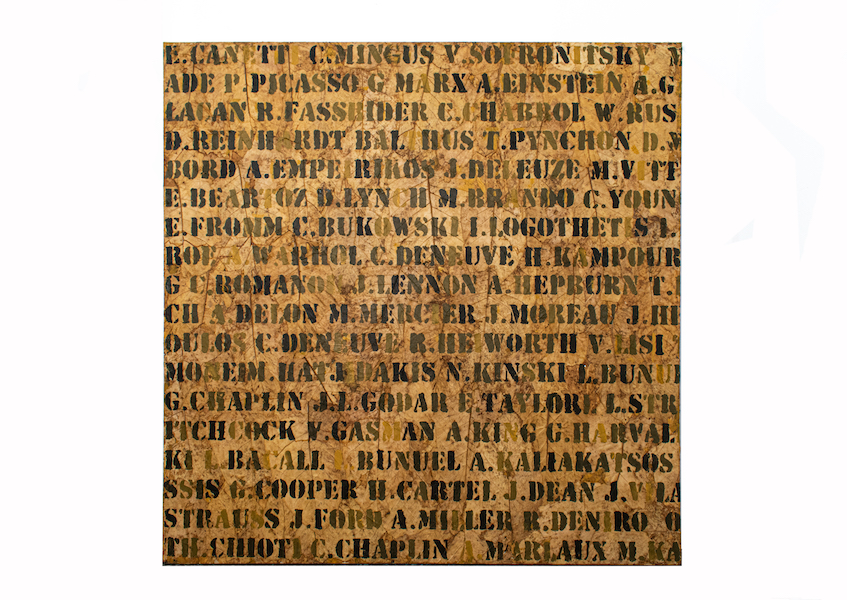
The series Tobacco Archive by Panos Charalampous (GR) functions as a collage of material inner landscapes, of “dry gardens”, which testify on the economic power of tobacco trading in Greece, that faded out half a century ago. The artist paints names, numbers, calculations, and dates on tobacco leaves in order to highlight the everyday labor, both physical and mental, of local tobacco producers, relating to the cultivation, the processing, the exportation and the circulation of tobacco.

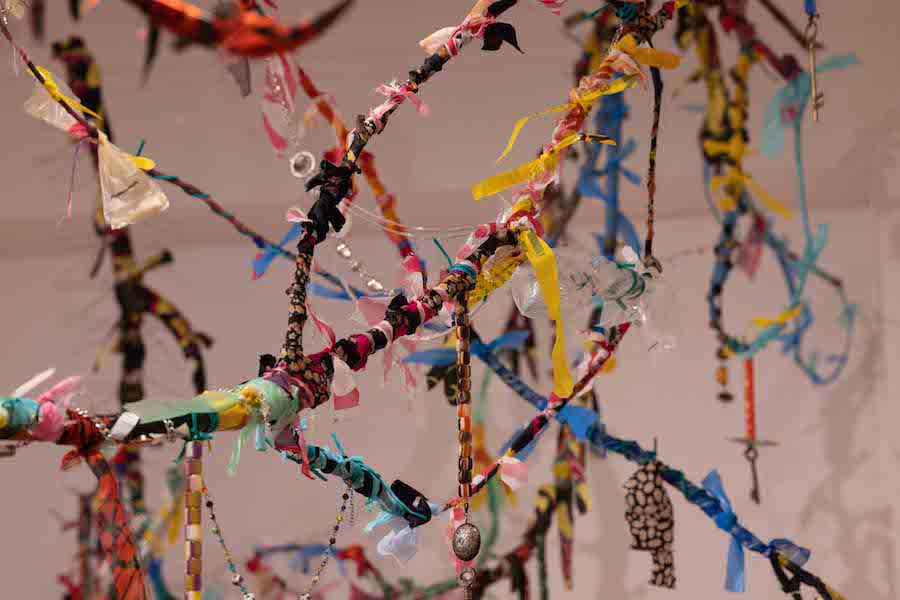
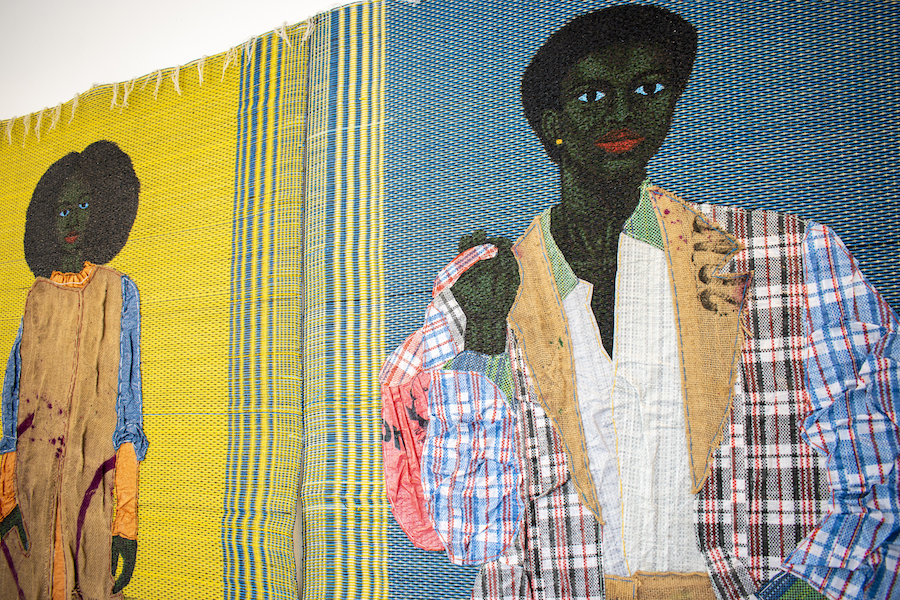
The exploitation and exportation of local natural resources through globalized trading routes is also pivotal in Kwaku Yaro's (GH) work, who resorts to upcycling and repurposing of materials including mats, plastic bags, and jutsacks, frequently used in the trading of cocoa and coffee beans. For the artist, upcycling is a means to contribute to his community Labadi in Accra with managing the volumes of plastic waste. His subjects, members of this community, are dressed in a westernized manner, influenced by the social media and the popular culture. Yaro calls into question the practices of fast fashion that lead to mass waste in West African coasts, and wonders what is the position of his country in the contemporary geopolitical landscape.

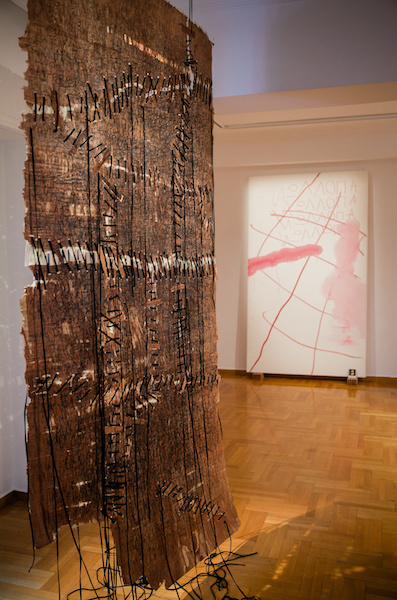
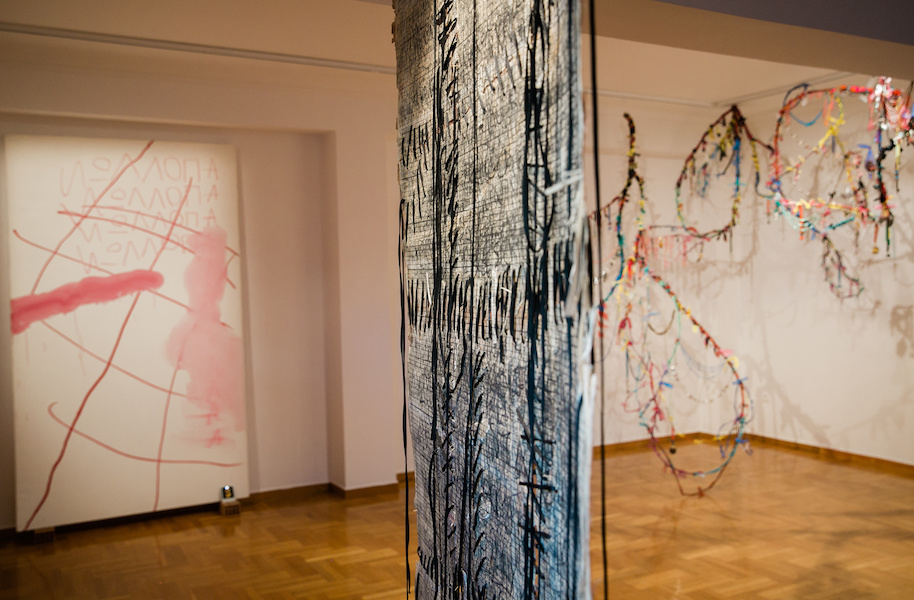
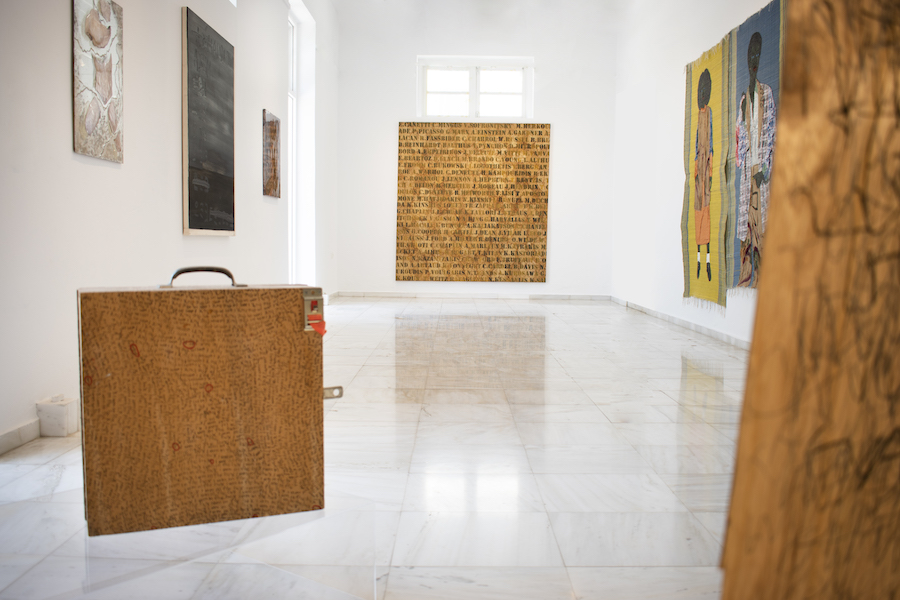
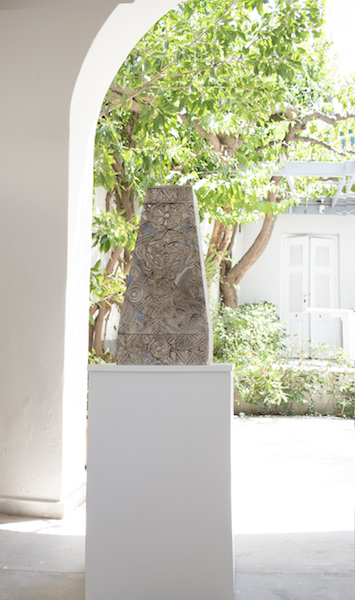
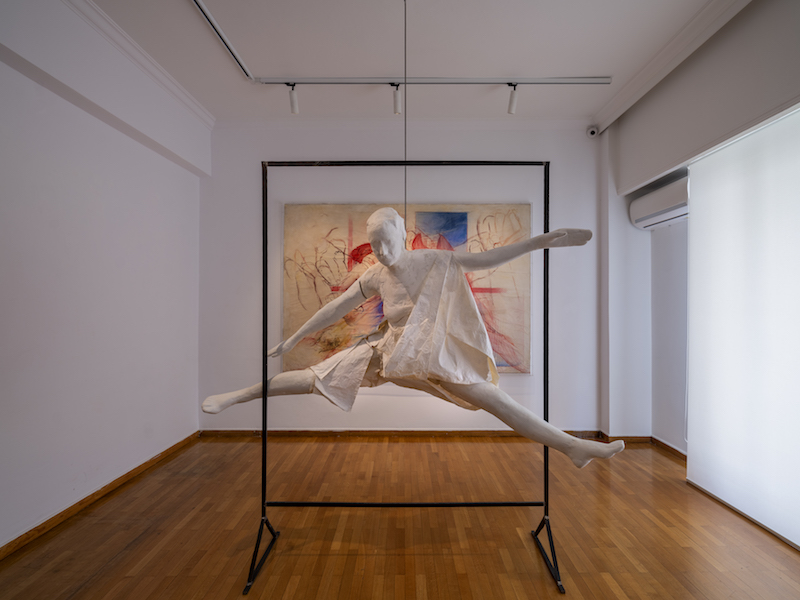
Means of production and protocols of trade also become the backdrop in the installation of Panos Famelis (GR). The “sculptive drawings” A Frankenstein made of charcoal and sulfur | Stitch me up and put me in a wire fence of words employs a wooden cargo surface, where codes and protocols of transport are still visible behind the writing. The multi-layered automated transcription of poems renders the writing illegible and drives language towards abstraction: it becomes image and rhythm. Famelis contrasts the personal with the social, and he asks how these two frequencies coexist in the formation of a subjective identity, in a moment of crisis. The sewing of the different parts not only reminds of Yaro's seam lines, but also echoes an internal effort to put together the pieces of a fragmented whole.

The art practice of Dessislava Terzieva's (BU/USA) that combines collages, sculptures, and installations, becomes a conceptual anchor for this show. Terzieva draws from the tension between the attractive and the repulsive, the established and the precarious. She celebrates the aging of materials, the decay of public infrastructure, as well as the improvisational practices within a balkan household that stem from scarcity. Leading personal narratives towards abstraction, she re-contextualizes objects, material cultures and traditions with humor. For the needs of the show, the artist was invited on a residency by Citronne Gallery to procude a site-specific installation inspired by the genius loci of the city. The juxtaposition between materials and objects sourced from athenian flea markets and second-hand scarfs and textiles from her hometown evince the continuity of a shared historical and cultural Balkan experience.

Meanwhile, Nicole Economides' (GR/USA) practice handles the concepts of memory and monumentality (μνήμη/μνημ-ειακότητα), as well as the relation between personal and national identity through symbols and images of nostalgia. The painting Apollo touches on the appropriation of Greek mythologies by western modern painters and serves as an act of reclaiming her ancestral history. The use of language and erasure reflect on the in-between spaces of her dual citizenship. On the bottom of the work, the polaroid of Apollo's protome from the MET points out the access to transnational histories in universal museums and the ambiguous motives of the agents in the preservation and “safeguarding” of cultural heritage.

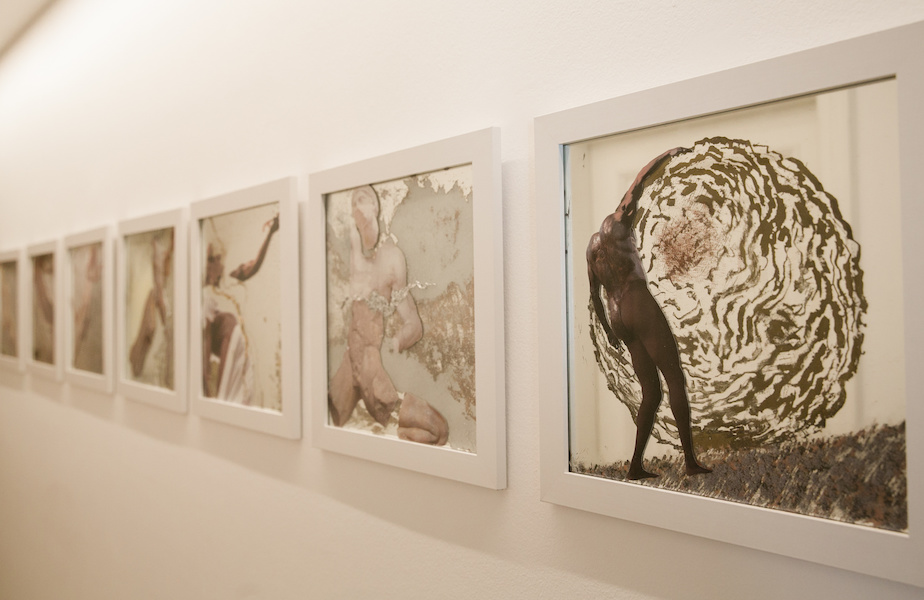
Abstraction is also the vehicle of Léllé Demertzi's (GR) hybrid collages on mirrors, which are inspired by the Greek mythology and Ovid's Metamorphoses in particular. The melding of sculptural and physical bodies, through photographs taken in metropolitan museums around the world, alludes to the diaspora of artefacts and people. Through the reassembling of dismembered bodies, the series aspires to reiterate and embody eternal traits of the human nature, and to empower through the consciousness of our incompleteness. The use of mirror invites the onlooker to become part of the artwork, to identify with the narratives of mythical creatures, deities and mere mortals, and to allow the trauma transform into scars (and stars).

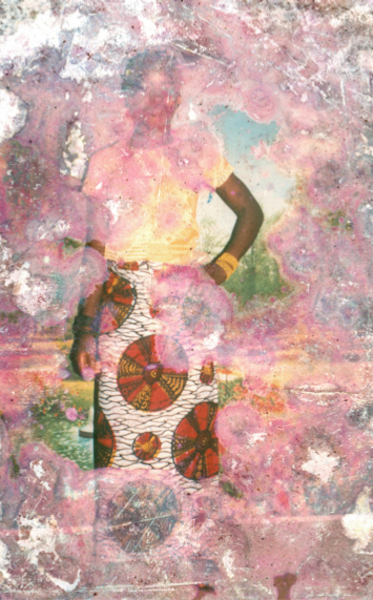
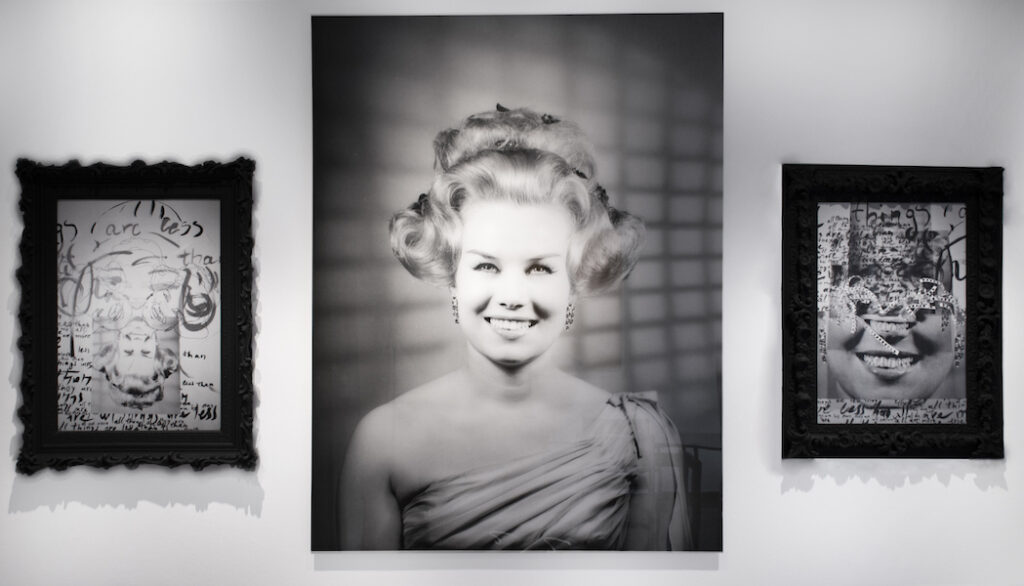
The ravages of time and decay inspire the Ivorian mutli-disciplinary artist Cédric Kouamé (CI) in his ongoing project Gifted Mold. He collects and recomposes vintage photographs in order to materialize the passing of time by superposing layers of history that coexist in post-independence Abidjan. His premise is that no matter the degree of distortion of the photographic material, the image still conveys a sensation by implying the personal story of its subject. A similar point of departure gives breath to the triptych All is less by Adonis Volanakis (GR) which is based on an archive of glass films from Brussels by unknown photographer and provenance. The juxtaposition of the female figure with the grating shade (which reminds of a prison cell) comments on the glorification of beauty, elegance and ornament. The side panels derive from the verses by Paul Celan “All things are less than they are. All are more” and refer to the paradox between self and self-representation.

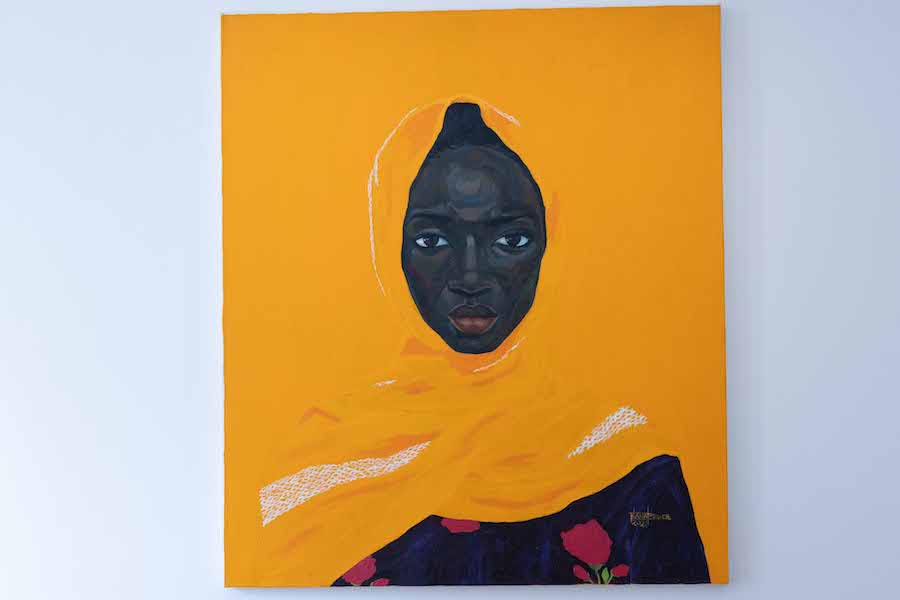
Ebenezer Nana Bruce (GH) also focuses on female portraiture with a larger-than-life stirkingly bright-coloured painting. The female form emerges from the monochromatic flat background with thick strokes of paint and is captured as a numinous being. The title of Yellow Shawl points to the unmediated realness of the woman behind her appearance, and thus beyond religious beliefs, social and economic status or personal taste. Ebenezer is motivated by matters of representation and manifests the essence of his subjects in all their frequencies and shades.

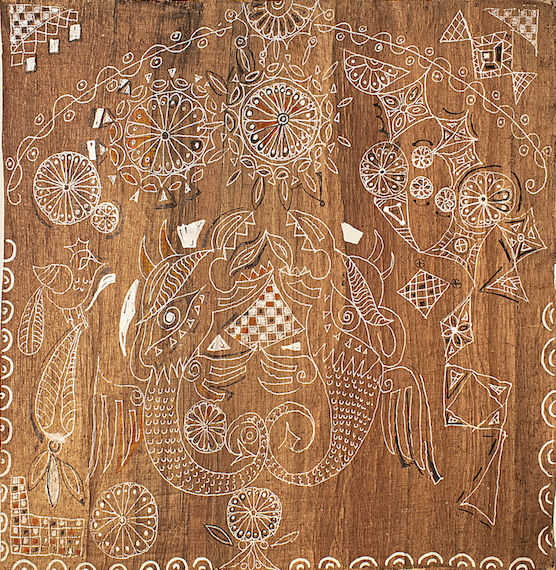
Alekos Kyrarinis (GR) is inspired in terms of form by byzantine iconography, folklore and the chistian tradition. His themes descent from archetypical narrations and scriptures. His practice spanning from marble sculture to painting, reinterprets intertemporal symbols in the here and now. The artwork Battle of Worlds II belongs to a larger series exploring Eastern traditions. The illusion of bas-relief, as well as the blending of figures and decorative patterns remind of the votive function of inscriptions, oblations, and offerings. In Kyrarinis' work, the figuration and the adornment, the physical and the metaphysical, the concepts of Good and Evil, and Human merge.

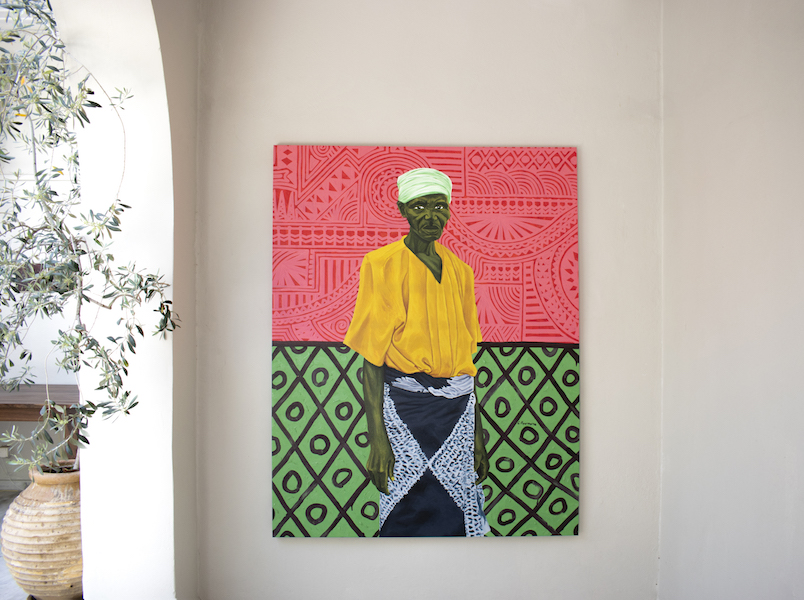
Finally, Courage Hunke's (GH) portrait draws the attention to one of the obscurest facets of the deeply religious Ghanaian society. Hunke aims to create awareness for the international community around the oppressing practice of stigmatizing any deviation from the societal norm, any form of resistance, and any expression of mental health disorder, and ostracizing it from the community, particularly in Northern Ghana. The artist traveled to these camps, the “safe spaces” where (disproportionally female) victims of this superstision are logged and documented their personal stories. His paintings are a living testimony of all these marginalized people.

Artworks

In(de)finite Selfhoods

In(de)finite
Selfhoods
Group exhibition
June 4 - July 18, 2022
Poros

Chiderah Bosah Samuel
Panos Charalampous
Léllé Demertzi
Nicole Economides
Panos Famelis
Courage K. Hunke
Cédric Kouamé
Alekos Kyrarinis
Ebenezer Nana Bruce
Dessislava Terzieva
Adonis Volanakis
Emmanuel Kwaku Yaro

The swift progress of technology as a trademark of our time has gone beyond facilitating communication to a de facto abolishment of borders and the annihilation of distances. Ideas, people and goods, tangible or intangible, travel freely and bring closer together all of humankind's aspects and traditions.

At the other end of this leveling -globalizing- development, individual places put up their defense. They act variously with resistance in an attempt to preserve traditions, identities and the systems of values which have marked and determined the major or latent histories of each region.
It is this spirit, this differentiated view of the world that CITRONNE Gallery wishes to showcase. The exhibition "Proximities and Distances" brings onto the artistic scene a multiple reading of the world. The continents are distinct but come together in the context of art—which, in any case, transcends by definition the perceptible world.

In the works on show visitors can observe these 'local' viewpoints. The works span within a broad spectrum, from a figurative to an abstractive approach to History and its interpretation. The selective images of the artists feature the memories of place, either as origins and distant references or as continuous experiences.

The curator of the show L. Demertzi notes “Uniting the local and the global, identity emerges as a palimpsest of both worlds, inhabiting their in-between space. It is proposed that identity is constantly in flux, shaping and being shaped by our positioning within the world. Aspiring to decipher the realms of our contemporary “glocal” collectivity, the exhibition assembles artworks in a variety of media spanning from painting to photography and installations, emphasizes on the resonances of experience, and celebrates the divergences and dissents of different cultures, geographical locations, singularities, and artistic practices.

The coexistence of these works does not necessarily create a synthesis. What it does generate is the strong and clear impression of a world in which the artistic gaze has the license and the power to synthesize the present without betraying the past; to unify space without erasing its special character.

Artworks

Epigrafomena

Panos
Charalampous
Epigrafomena
May 27 - October 31, 2022
Archaeological Museum of Poros

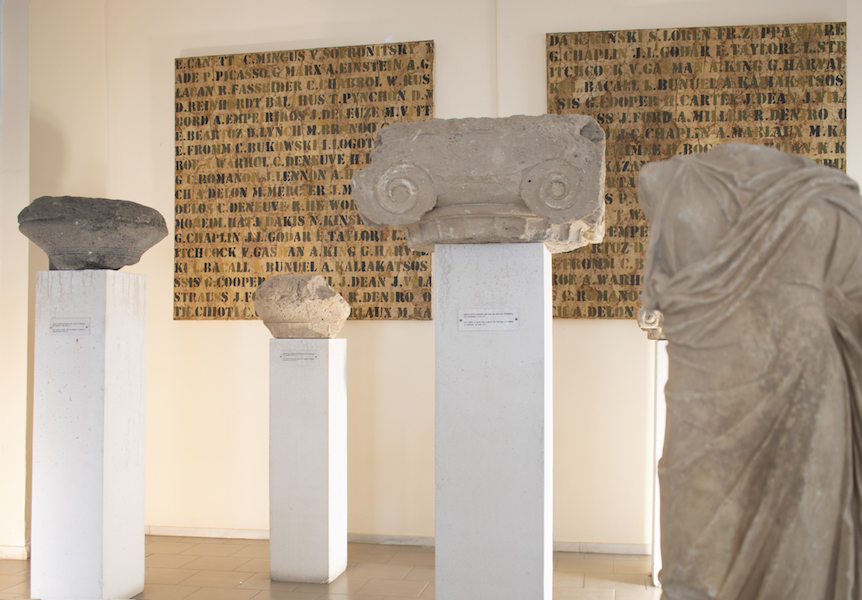
This year’s cooperation of CITRONNE Gallery with the Archaeological Museum of Poros focuses on and refers to the memory of the in-scription, through the eyes of artist Panos Charalambous. Throughout the centuries, in-scriptions have always constituted a solid reflection of personal and collective human memory; from the written laws of the Republic, the epitaphs and the votive offerings to the Oracles of Classical Antiquity to medal engraving and the names on tombstones of our era.

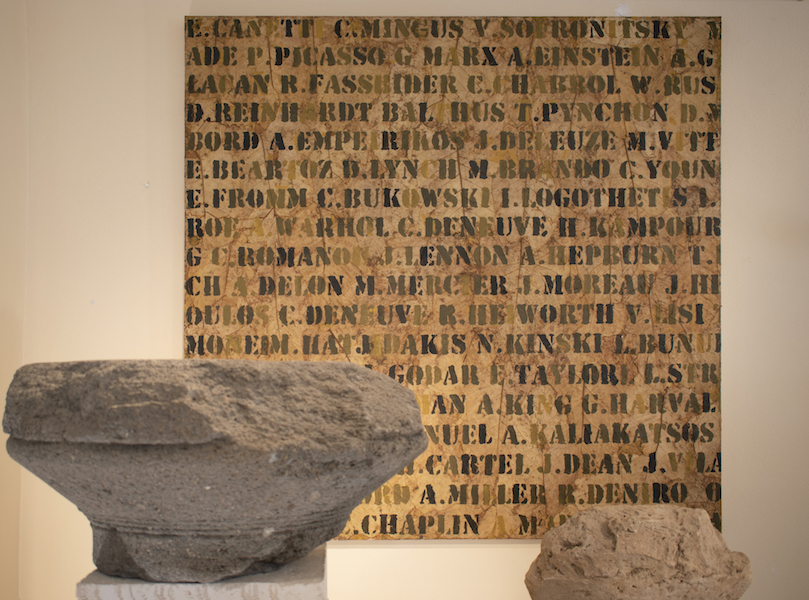
Artist Panos Charalambous uses tobacco leaves as his engraving surface. This fragile raw material, in sheer contrast with the resilient materials of the Antiquity, produces inscriptions which are fluid, fleeting, perishable and stillborn. The current reality does not leave much room for permanence and eternity as regards speech – the same applies to the persons inscribed. The ever-quickening pace of history is not subject to permanent references. Thus, the inscriptions on the tobacco leaves are devoid of longevity and act in a mandatory and temporary topicality.

At the same time, however, perhaps as a counterweight, the artist reminds us of the continuation, the durability: he makes an intentional reference to the traditional cultivation of tobacco and its products, which have left their cultural mark on the everyday life of not just the Greeks.
"Inscriptions" generate a functional archive of our memory and of the ephemerality of our era, whose elements look more like "words in the wind" than "a possession for all time”.

Tatiana Spinari-Pollalis
Ph.D. (Art History) - Citronne Gallery, Director

This year, Panos Charalambous’ temporary exhibition entitled “Inscriptions” (or Epigrafomena) is hosted at the Archaeological Museum of Poros in the context of the events organised by the Hellenic Ministry of Culture and Sports for International Museum Day. This exhibition, organized in association with Citronne Gallery, comprises a group of artworks which feature writing elements on surfaces made of tobacco leaves.
The names of prominent people, mainly artists and writers, have been inscribed on a delicate plant matter, namely a substrate of tobacco, as a reference to the perishability of the earthly world. Charalambous’ works are exhibited in contrast with the ancient inscriptions on display at the Museum of Poros, which, in turn, feature the names of people who claim their place in an illusion of eternity through their tombstones, their votive offerings to the gods or as benefactors honoured by their city. Nonetheless, while those people of the Antiquity chose to carve their names on solid stone surfaces which remained unchanged over time, in the works of Charalambous, the importance of key exponents of modern culture is valued on ephemeral organic materials and is measured against the fragility of human nature.

Maria Giannopoulou Ph.D. (Archaeology) - Ephorate of Antiquities of Piraeus and the Islands

Artworks

To Her

Vana
Xenou
To Her
May 10 - June 10, 2022
Athens

“The twentieth century, more than any other, liberated the perception of both sexes as regards the gender and the body. It examined their identity against the female - male polarity and its role should not be dissociated from the very Nature of Art” - Vana Xenou

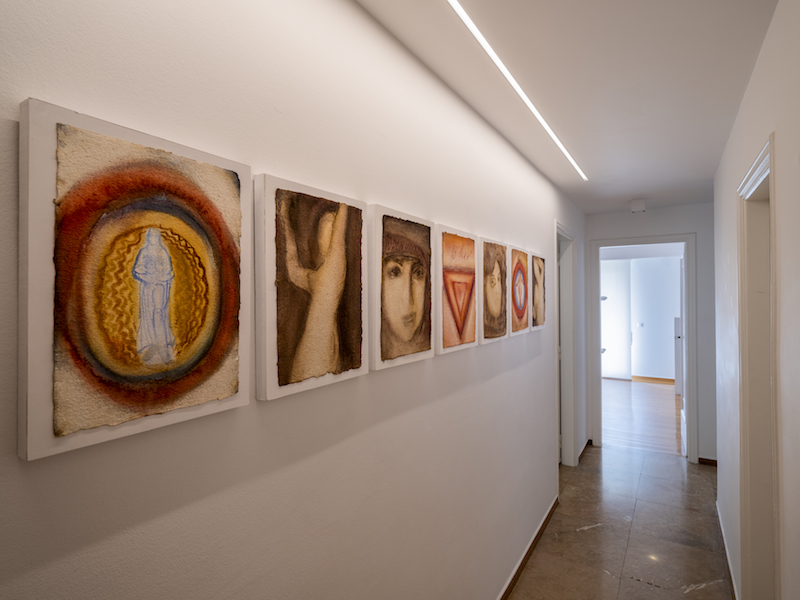
The artistic trajectory of Vana Xenou pursues the female presence. Taking the female nature as their starting point, her works move about through history. The artist goes deep into forms and symbols that have left an indelible mark on historical memory and social subconscious. She shapes the female archetypal figure, as is the case with the primordial Gaia-goddess in the depths of religious consciousness. She watches the different faces or masks, as they have been shaped by imagination and defined by the “adventure” of the antiquity and the “destruction” of tragic drama.

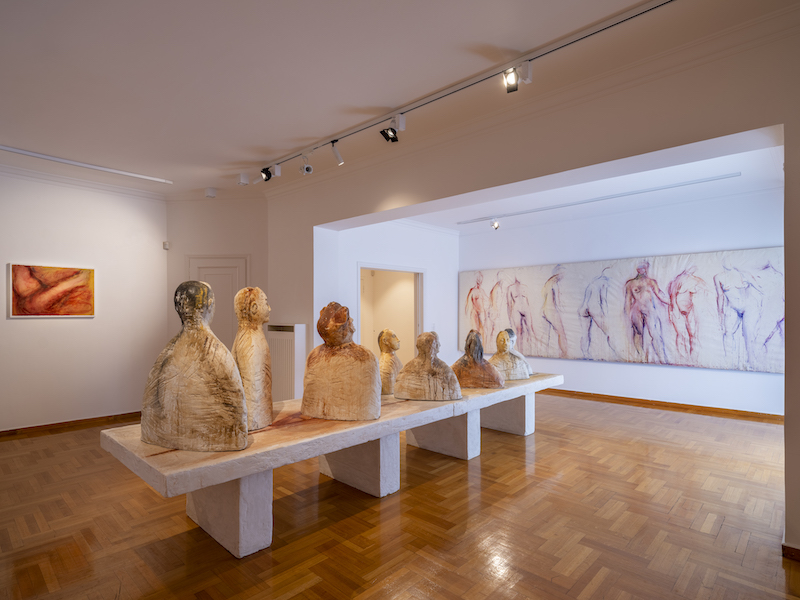
Her figures sometimes project the archetypal Mother-Daughter image and sometimes, just like young girls, they hint at or even foretell their transition to female maturity. The little girls in Lewis Carroll's photos put this child-woman duality on display. At the big table with the deities of the earth, viewers get the feeling that they are witnessing transformations of the original model which is perhaps found in the depths of the earth - where the occult and dark Eleusinian Mysteries used to take place.

Vana Xenou seeks the truth that is hidden in the body —naked or not— through myth and history, the course and the experience of women through the centuries. It is the large frieze with the lined-up bodies, which, most likely, is a reference to the friezes of ancient Greek temples.

From Demeter and Persephone of the Eleusinian myth to Eve of the book of Genesis, from Judith of the painting Judith Slaying Holofernes by Artemisia Gentileschi to Lucretia by Lucas Cranach and to Hildegard of Bingen, Vana Xenou introduces us to the depths and the mystery of an ever-transforming identity.

Artworks