loading icon

Ars Longa

Ars Longa
Group exhibition
October 2 - October 17, 2020
Athens

Yiannis Adamakos
Cris Gianakos
Makis Theofylaktopoulos
Alekos Kyrarinis
George Lappas
Nikos Markou

Citronne gallery Athens presents a selection of artworks by six artists as a preview of its participation in the forthcoming online "Art Athina, 2020".
"Ars Longa", Citronne gallery’s starting point in terms of subject, exhibits and brings together contemporary artworks - painting, sculpture, construction, photography.

The art media used are diverse, the artists come from different eras and backgrounds; however, they form a palimpsest of ideas and creativity which hovers above time and space. What we are trying to demonstrate, to prove, is that Art transcends human limits, and the finite human life.

In our days, humanity is undergoing a great, unforeseen ordeal which is dominated by the fear of the unknown. In parallel or even against this distress, Art raises protective and defensive walls, breaks free from the neurotic rationalism of our days and guarantees the value of continuity, the immortality of Creation.
Yiannis Adamakos and his abstractions, Cris Gianakos of the Diaspora , the transcendental Makis Theofylaktopoulos, Alekos Kyrarinis and his Byzantine obsessions, the post mortem multifaceted George Lappas and photographer Nikos Markou give life to this creative spirit.

Ars Longa is a wakeup call against the current nightmare. Between bloom and wear, between the brevity of life - vita brevis and the longevity of memory, Art had and still has the power to go beyond sensible limits and to withstand time, surpassing human dimension, human state and human boundaries.

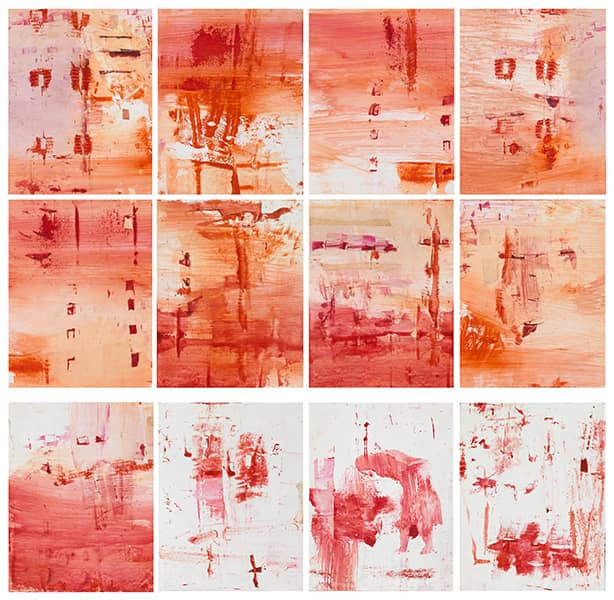
Yiannis Adamakos seeks to exhaust the boundaries between the sensible world and the subjective-subconscious reception of reality. He dredges up and explains the traces of memory. He demonstrates that the limits between present and past are forged in Memory. Similarly, the limits between light and darkness, noise and silence, dream and experience, nature and fantasy fuse into colour.

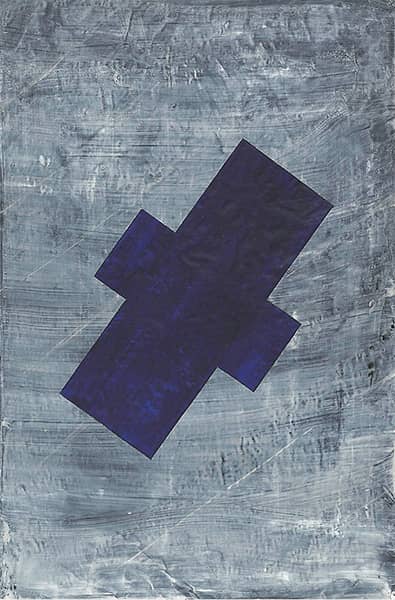
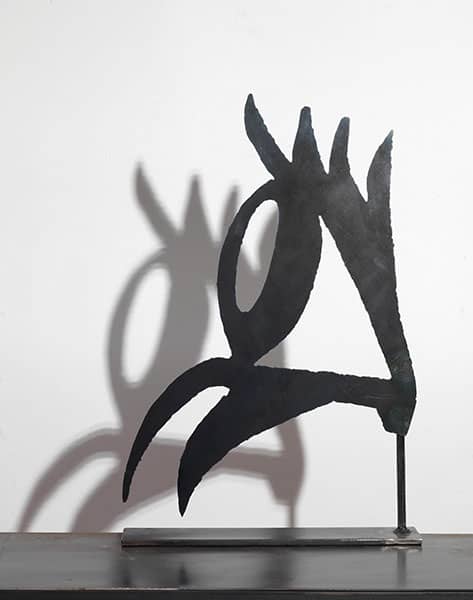
Cris Gianakos, a well known visual artist of the Greek Diaspora. He is interested in architecture, ancient civilisations and human behaviour. He is fascinated by geometrical forms and classical proportions as well as their cultural and spiritual aspect. With the dynamic composition of clear geometric levels, such as the Cross and the Diagonal, it hints at the supremacy of pure emotions.

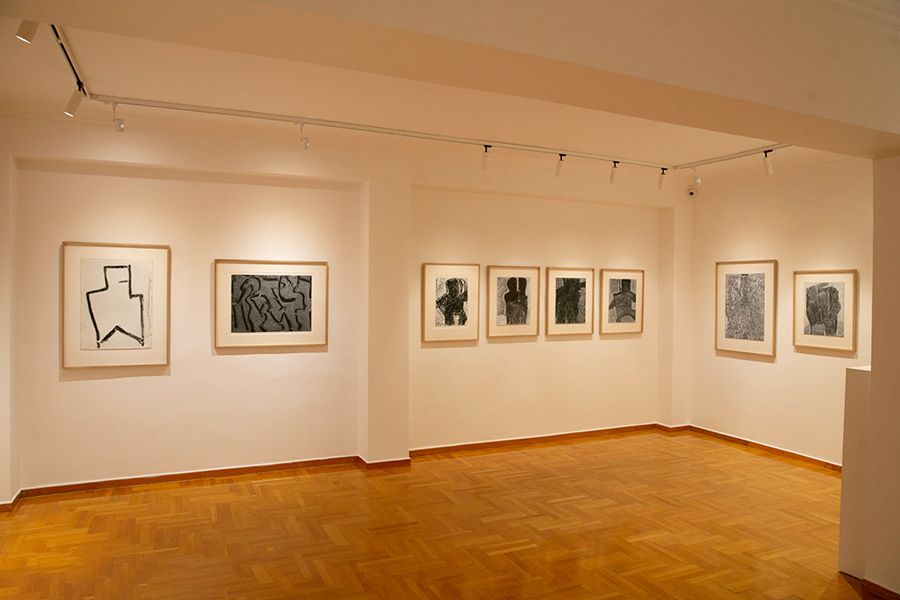
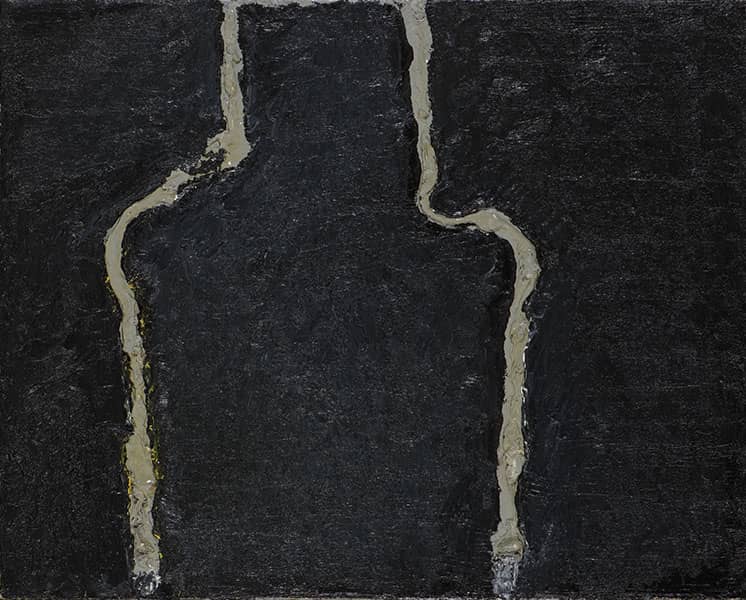
Makis Theofylaktopoulos, representing Greek expressionism, has created a soaring universe of painting excellence and existential depth, at the centre of which lies the human or human-like form. Given that he constantly reinvents his technique anew, he goes from representation to an almost autobiographical abstraction as it seeks "artistic emission", that is, the power of painting to pulsate irrationally within its viewer With a constantly reinvented technique, he goes from the representation of the form to an almost autobiographical abstraction, in search of the "artistic emission" - that is, the possibility of the painting pulsating horses inside its viewer. The image of a solitary, urban person in such a difficult world, concerns human existence per se.

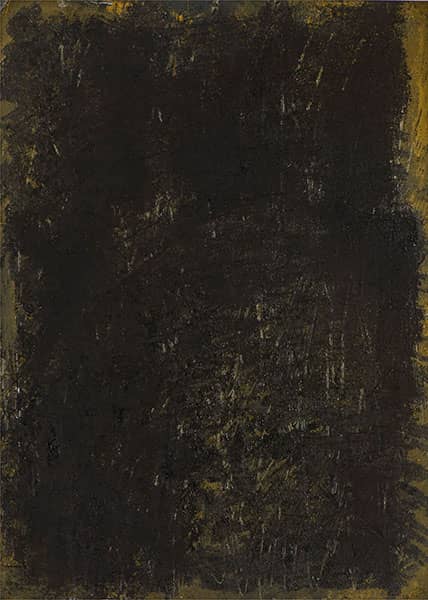
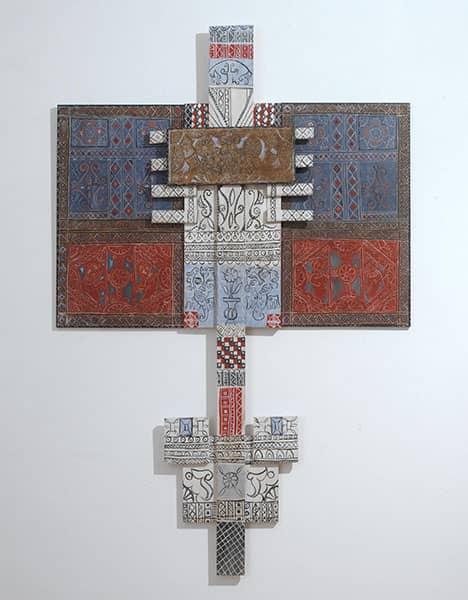
Alekos Kyrarinis, with a varied visual signature, with personal meanings and collective memories, he continues with his complex, strictly personal quest. Kyrarinis’ painting is a fascinating amalgam of influences that have been so utterly assimilated that they have become difficult to distinguish - from Byzantine semantics to Islamic calligraphy and contemporary visual artists, from Greece or abroad. Space in his works is overwhelmed by varied decorative motifs which stem from a very large time frame ranging from the late antiquity to the byzantine and post-byzantine era moving on to popular marble sculpture and woodcarving. All motifs play an instrumental part in the composition because their use is the result of Kyrarinis’ profound awareness of their symbolism and visual importance.

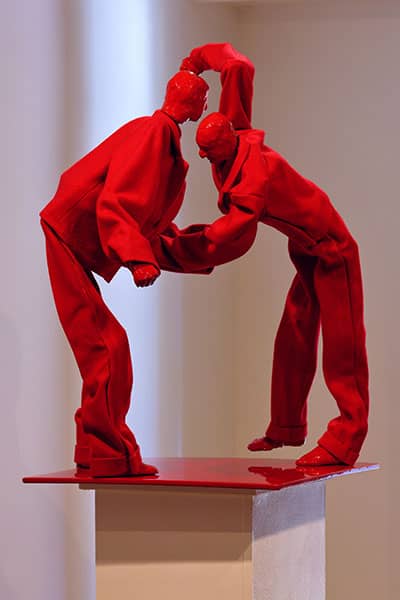
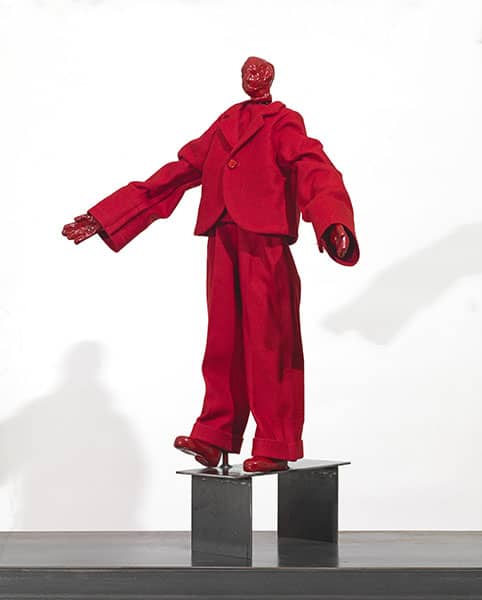
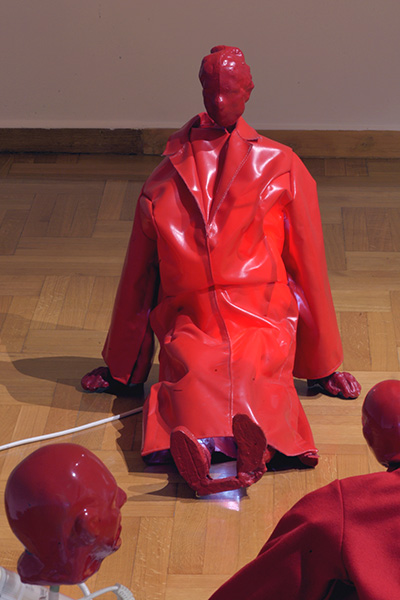
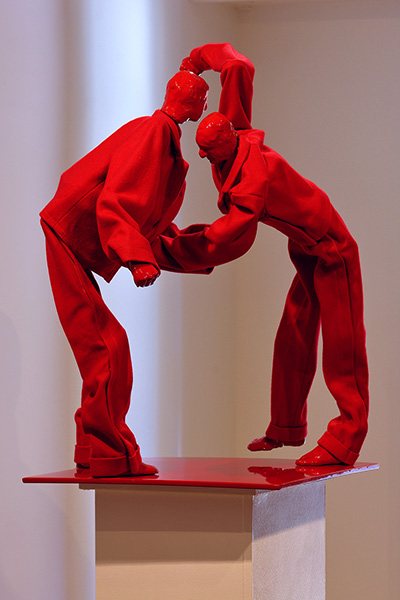
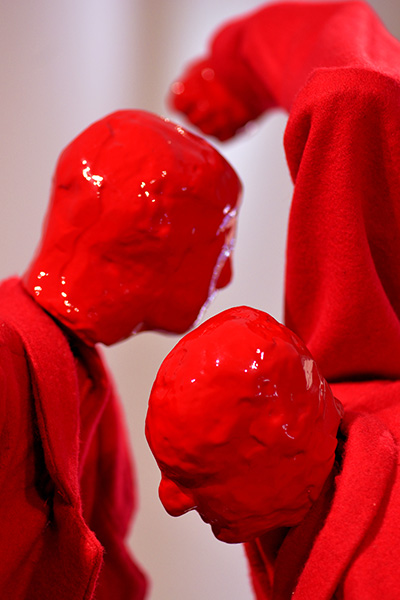
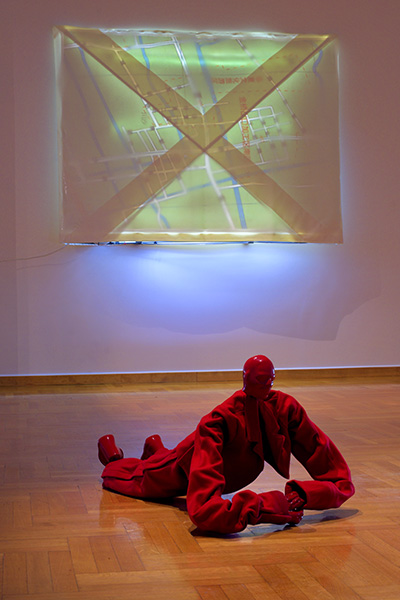
George Lappas rejects limitations; he is indifferent to "rationality." He is characterised by and expresses the eternal desire of man to exceed limits. His world is composed of metal, plastic fabric, electric lamps. These unexpected materials create a sense of paradox, of the uncanny, which evokes subconscious oneiric connections, and hard-to-apprehend associations. After all, Lappas defies limitations, he is indifferent to rationality. The physical body is abolished; thought, memory and narration work exclusively in their internal rationale. His works are first and foremost a study of the relationship between body and space and time, a reflection on the relations of the past and the future of sculpture, the structural parameters of plastic arts and architecture in relation to location, but also a dive into aspects of the human soul.

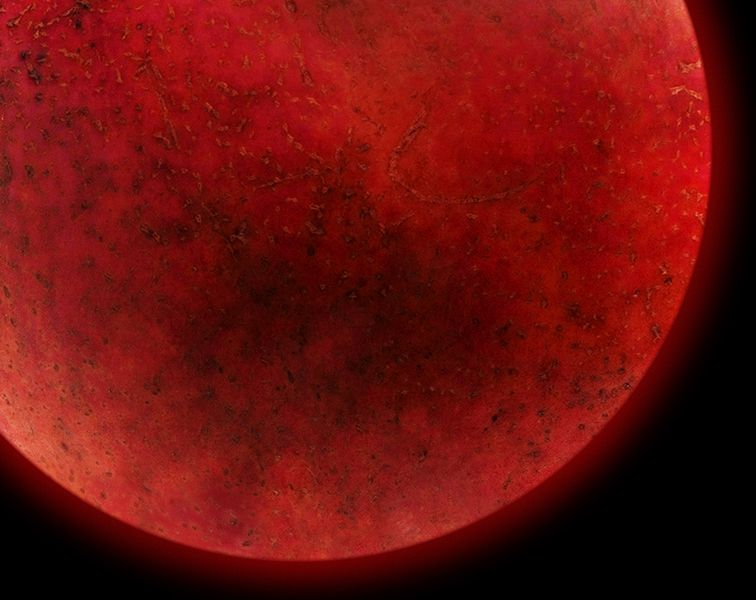
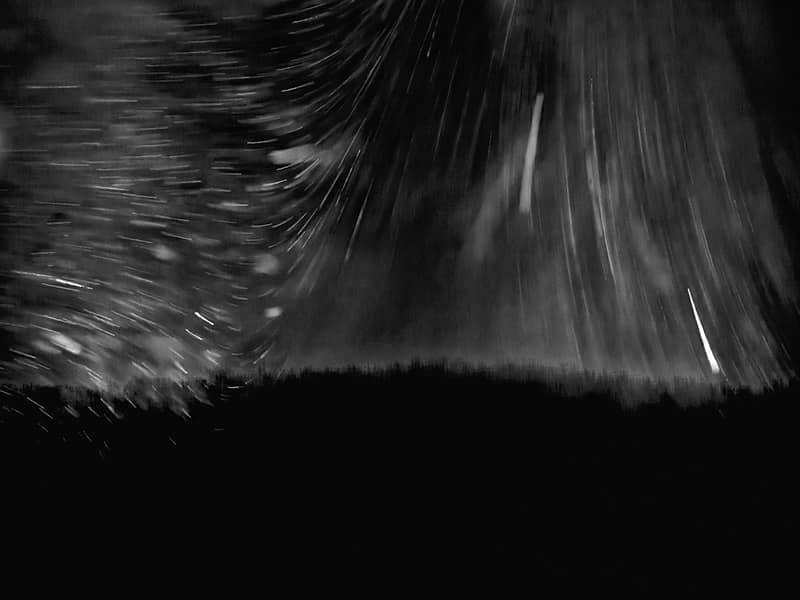
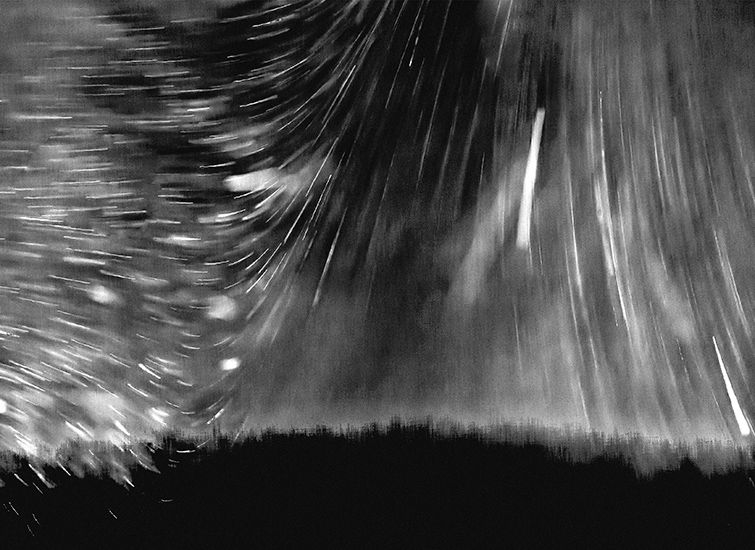
Nikos Markou provides a photographic definition of an inner world, an Inner Space. From selected landscapes he shifts to an inner reality. Moreover, from natural rendering he moves to technical mutative treatment. The end result leads the viewer to a “fabricated” reality. These photographs are no longer photographs of landscapes or people, but interior landscapes- namely a transcendent reconstruction whose starting point is assimilated through the photographer’s decisive and subjective interpretation.
Artworks

TOPOS

Nikos
Markou
TOPOS
June 27 - September 13, 2020
Poros

Photographer Nikos Markou selects spaces which he defines as a personal "Topos" — a private point of reference.

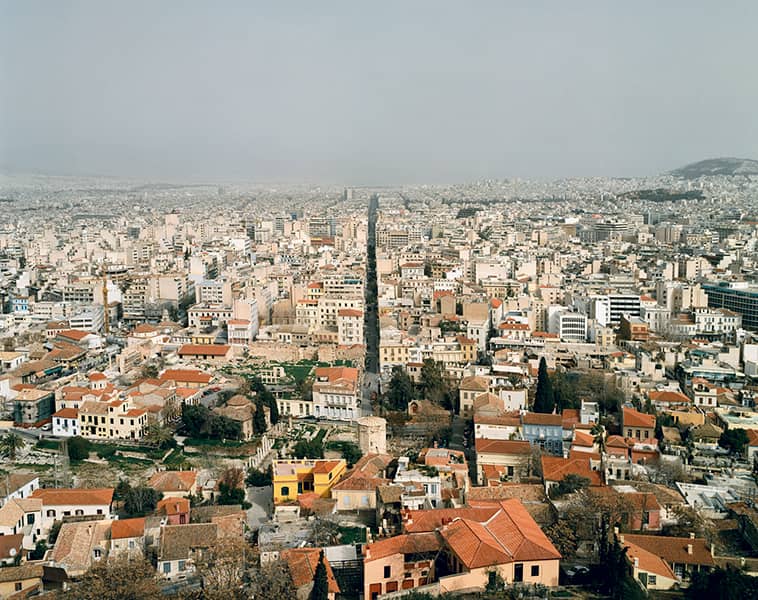
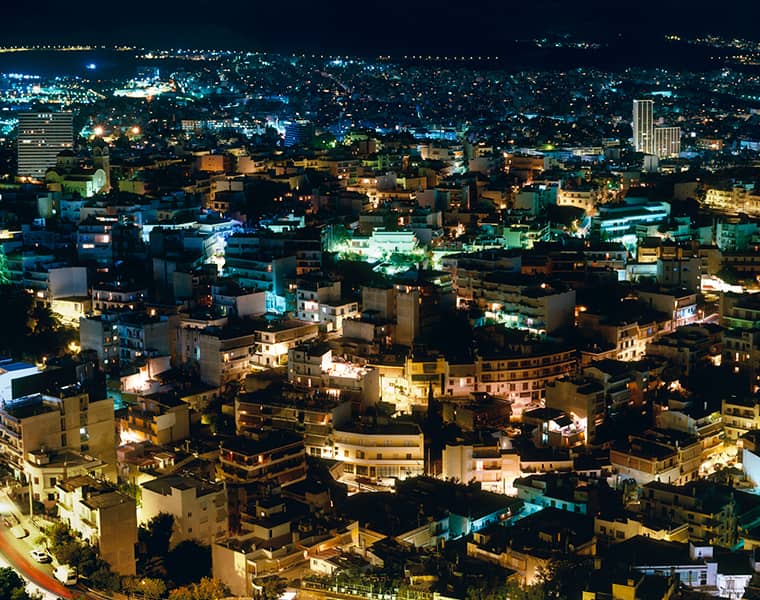
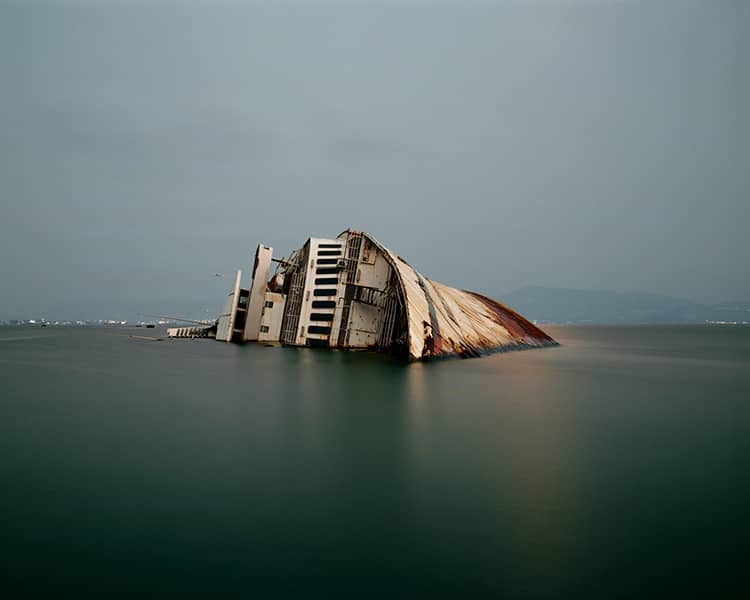
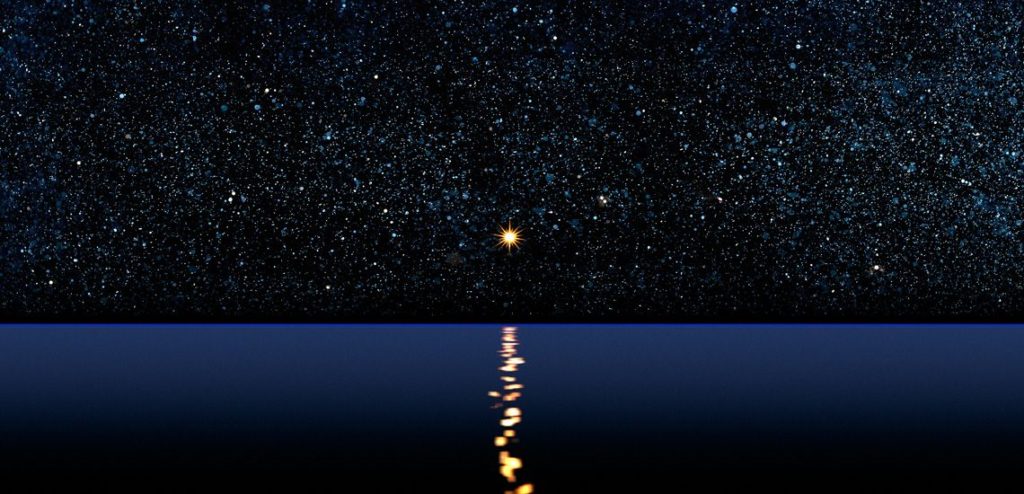
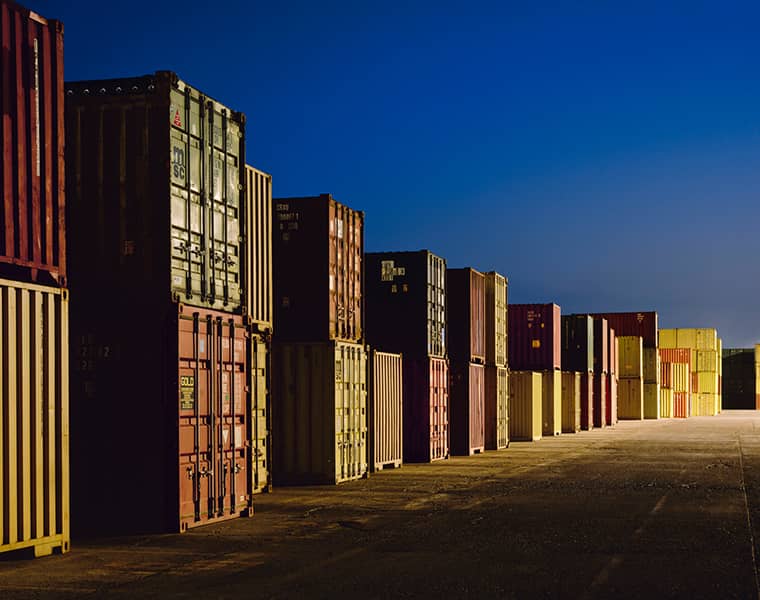
His Topos of urban or other decontextualized landscapes leads towards a clear or unclear horizon which renders them deliberately finite. The human presence is either nonexistent or merely hinted at—but its impact is all too visible: pollution, environmental destruction, deterioration of nature, distortion of the physiognomy of the place. In the images of Athens, degradation has evolved into an everyday experience, but similar elements can be discerned out of town, such as the half-sunken ship that dissects the horizon and the sea in Eleusis. Even the lotus flowers in the Corinthian landscape hint at the loss of memory more than at blossoming and bounty.

Here the photographer aims to generate a semi-objective impression as he invisibly intertwines natural and artificial elements. His “topos” is constructed via the framing of his chosen subject.

Artworks

GREECE AND WRITING CODES

Constantin
Xenakis
GREECE AND WRITING CODES
June 27 - October 4, 2020
Poros

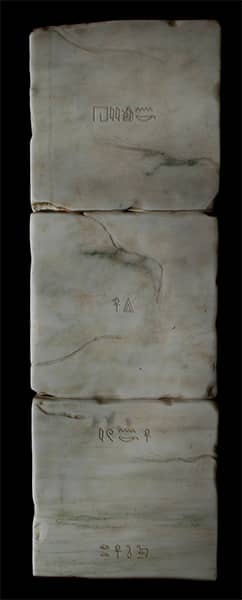
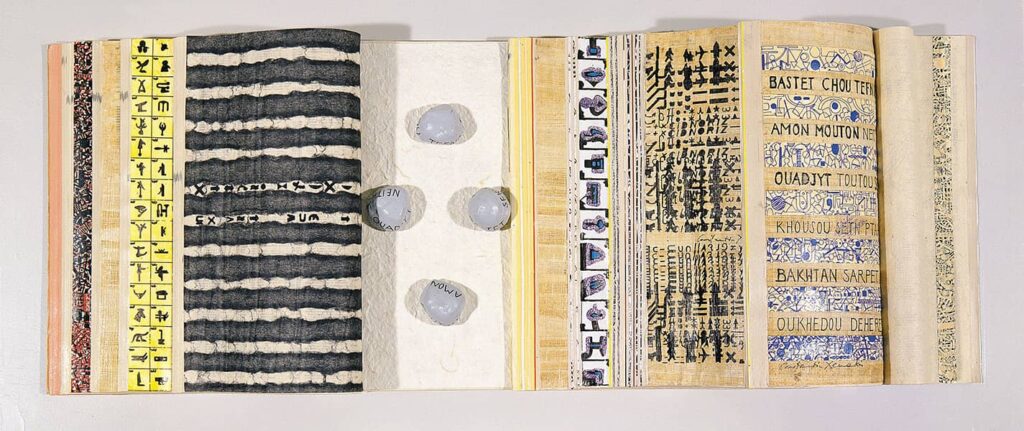
The multifaceted visual idiom of Constantin Xenakis is inspired by signs and symbols that span the spectrum from the ancient worlds of Egypt and Greece to contemporary reality: urban structures, computer systems, the chaotic internet. He charts and codifies, combines elements from past and present, documents and denounces the impasses of communication, the lack of understanding, the contemporary world's failure to connect.

His works unify time and space, since questions like these have always engendered a universal preoccupation. They unfold along an axis of repetition / juxtaposition / layering, a codified image of contemporary culture. In this way the artwork becomes a means of ideological critique to the current sociopolitical system.

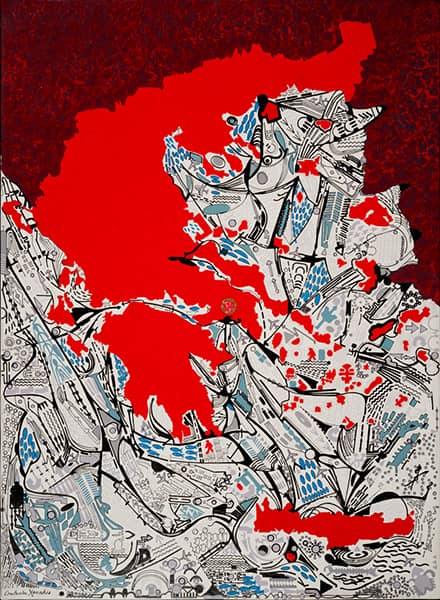
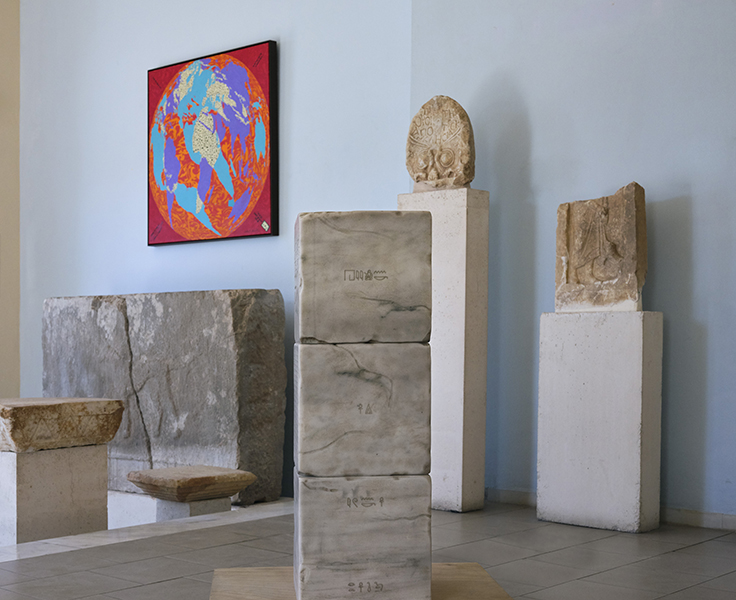
The emblematic work in the series at the Museum is a map of Greece, a chart of the sea—"la mer grecque". As always in the mapping works of Xenakis, the objective documentation is chaotically mingled with symbols-references that are personal or cultural in a broader sense. The charted Aegean Sea is presented as a "mosaic of shipwrecks"; a Greek sea that acts as both an intercultural cradle and a hub of Greek tragedy. It must be remembered that the Aegean is the predominant marine point of reference throughout Greek history, political and cultural alike, and hence a timeless element of Greek and Greek-born identity.

Artworks

Inner Space

Nikos
Markou
Inner Space
February 26 - June 27, 2020
Athens

In his solo exhibition “Inner Space” at CITRONNE Gallery, Nikos Markou presents a new photographic series as sequel to his show “Monumenta Naturalia” (2012).

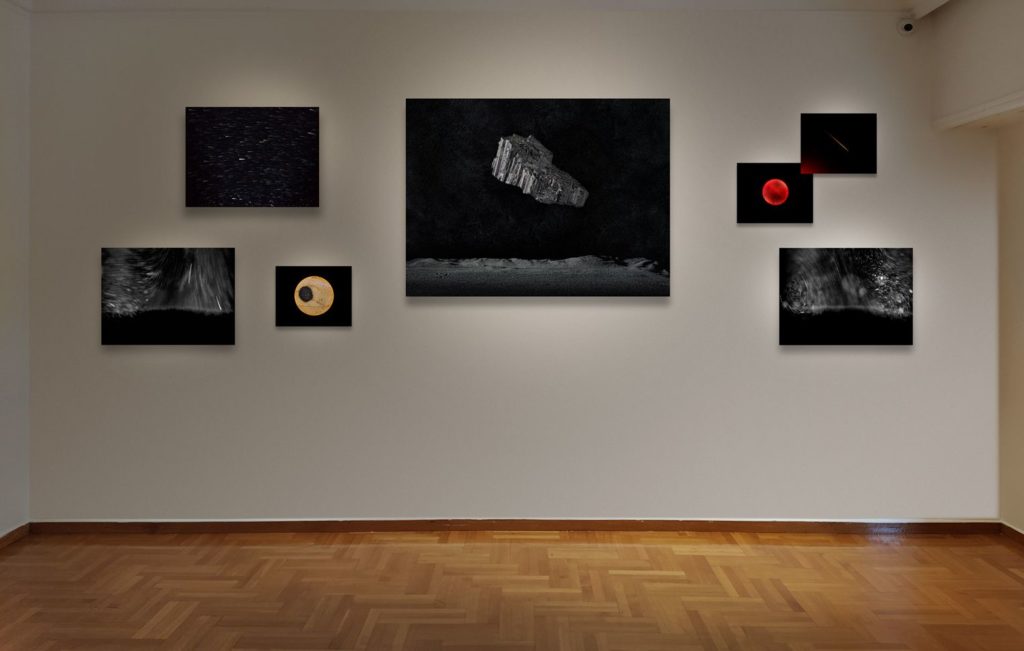
Nikos Markou observes, composes and records the "cosmos"—a Greek term whose etymology and evolution over time gives it various interpretations: universe or outer space but also embellishment, humanity, space... In this latest series the photographs on display record and make up a testimony that reflects an inner world; an "Inner Space". The artist "stages" his photographs as composite "landscapes". They depict from the inside the gloom of night, the light of day, the omnipresent nature on Earth as in heaven. They represent the "cosmos", but it is a fictitious, constructed cosmos. The viewer is the receiver who is called upon to decode a photographic language which may be often arcane but is always open to mental associations.

To this end, Nikos Markou uses "objets trouvés", i.e. random elements such as rocks, earth, paper or marbles; he removes these objects from their context, appropriates them, modifies them, stages them and finally he photographs them. The result is a reality that is virtual, immobile and finite. It is a visual exercise between the natural and the artificial, derived from the photographer's own imagination.

The "Inner Space" series is presented at the CITRONNE Gallery as a dialogic sequel to his previous series "Topos" and "Nature Monuments". The exhibition features also a series of videos by Nikos Markou in which the moving image engages in dialogue with the photographs and functions as a link between the artist's latest and previous series of works.

Artworks

New Works

Makis
Theofylaktopoulos
New Works
November 28, 2019 - February 22, 2020
Athens

Makis Theofylaktopoulos, one of the most important contemporary Greek painters, presents twenty-one new works at Citronne Gallery that radically renew his painterly language and provide a unique example of reflective impulse, risk and experimentation. In this new cycle, Theofylaktopoulos measures himself against hitherto unexpected materials such as indelible marker pens, conquers their textures and tonalities and organically incorporates them into an oeuvre he has developed with artistic consistency and personal anxiety for over fifty years now.
Artworks

Sculptures and Light Installations

George
Lappas
Sculptures and Light Installations
October 4, 2019 - November 15, 2019
Athens

The exhibition "Sculptures and Light Installations" presents ten of George Lappas' best known sculptures and installations. George Lappas' work occupies a special place in Greek art of the second half of the twentieth century. It accomplishes the transition from the pure sculpture of modernism to the critical reflexivity and relationality of contemporary art. His works represent a study of the relationship of the body with space and time, a reflection on the relationships of the past and future of sculpture, and the structural parameters of the plastic arts and of architecture in relation to place.

Large and small-size figures of fabric, plastic, neon lights and steel make up his sculptural world. These figures are 'in motion' or stationary. The natural body is abolished; thought, memory, and narration work according to an inner logic, without perceptible consequences. The unexpected materials create a sense of paradox, of the uncanny, recalling unconscious dream connections and indecipherable associations.

Artworks