loading icon

Re-emergence

Yiannis
Adamakos
Re-emergence
July 15, 2017 - September 4, 2017
Poros

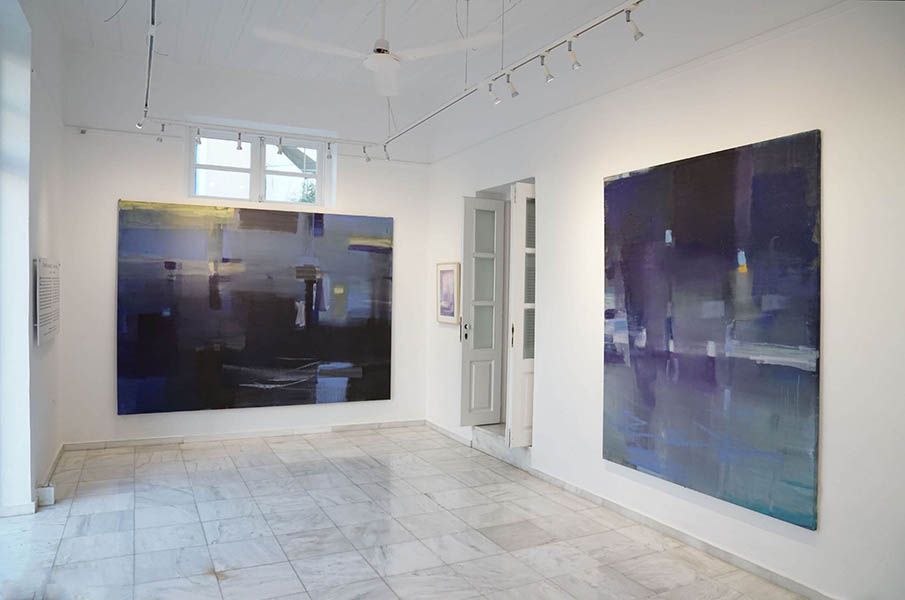
Starting from the same point of departure, Yiannis Adamakos always heads for the same destination. His ‘Frontier of Memory’ seeks to exhaust the boundaries between the sensible world and the subjective-subconscious reception of reality. It dredges up and explains the traces of memory. It describes surrounding nature and its basic element of the sea; not only because the liquid element is governed by a latent uniformity and is boundless, but also because it brings to mind primordial memories and various correlations.

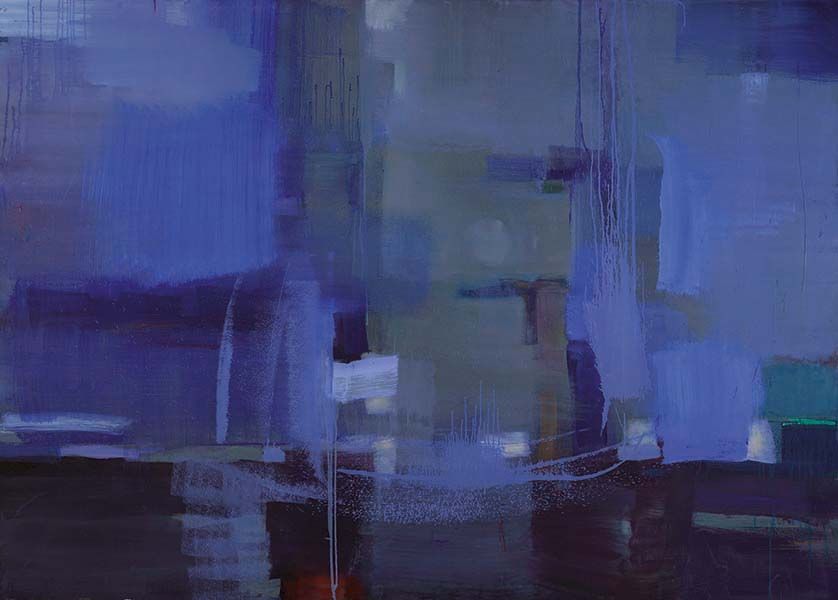
This years’ exhibition is made up of large-size oils and small aquarelles. The large works aim at extending into space, not allowing, that is, the viewer any latitude for being distracted from the painting, from the work. The small aquarelles function independently but at the same time as designs-studies for the large works, as if in security for the future. In his recent works Yiannis Adamakos also introduces a new element, the geometric organisation of pictorial space. Yet it is this element that belongs to the context of an abstract visual idiom: as always, the painter at first seeks to create an atmosphere freely, without being bound by realistic restrictions. This choice can be traced through time in all of his creations. The visual trajectory of the artist begins with expressionism, that is, with creations-cries and incrementally ends in dreamlike immobility, in silent creations. The works under display move on the notional frontier between muffled sound and ear-splitting silence.

Yiannis Adamakos defines himself and sets himself within the limits of landscape—a landscape however that is not necessarily recognisable. He passes from light to darkness and vice versa; the ‘frontier’ is the shadows. The same palindromic movement is represented between dream and experience, nature and fantasy. The sea, water, provides the artist with a valuable medium, since it reflects and simultaneously refracts the optical angle of the landscape. The night, even when (poorly) lighted, makes this sensation more pronounced, because it flutes the volume, homogenising heteroclite elements and beautifying the environment. Visually speaking, human beings are absent; but they exist by allusion since the landscape and atmosphere are products of the subconscious and associative memory. The midpoint, the ‘frontier’ between the existent and the fantastic is defined by colour, a deep blue with nuances that again recall memories, personal or collective.

The visual point of view, the interpretation of human reality is based in greatest measure on a series of associations and subjective references. The truth—aletheia—of Yiannis Adamakos fetches to mind its original meaning, namely the banning of forgetfulness, the triumph of memory.
Artworks

Figures and Rucksack with Ears

George
Lappas
Figures and Rucksack with Ears
May 19, 2017 - July 11, 2017
Poros

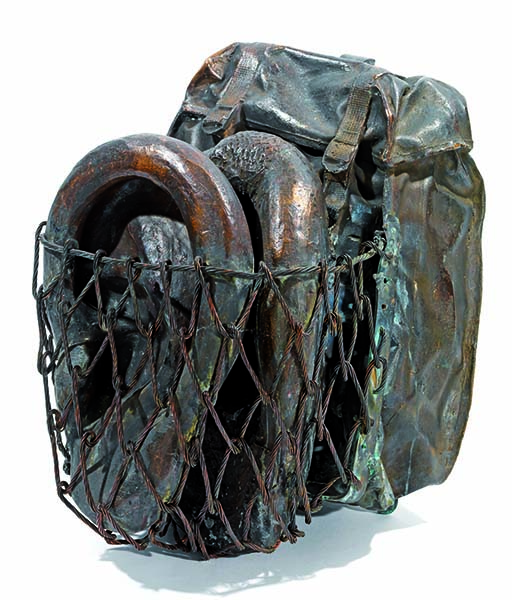
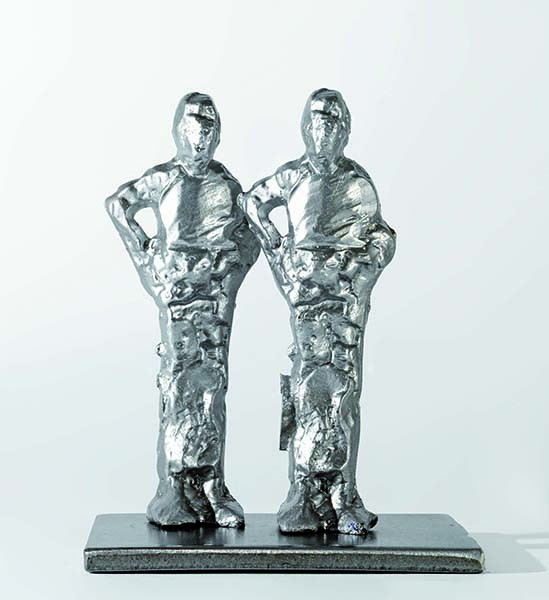
George Lappas’ posthumous one-man show presents thirty four works, sculptures, studies, and drawings covering the period 1977-2016. These works comprise a unity that focusses first and foremost on the human figure, the principal theme of his creation as a whole. The unity is disrupted or even elaborated by seemingly exogenous elements, which however signal a functional peculiarity of the artist: George Lappas’ starting point and idiosyncrasy are those of a traveller, a voyager. His trajectory has no boundaries, geographic, cultural or national; in similar fashion his resulting artistic creations transcend sensory reality. The trademark of this search to the ends of the known or conceivable world is the emblematic ‘rucksack with ears’, an indispensable accessory that enables the traveller to hear the merest sound in the human universe.

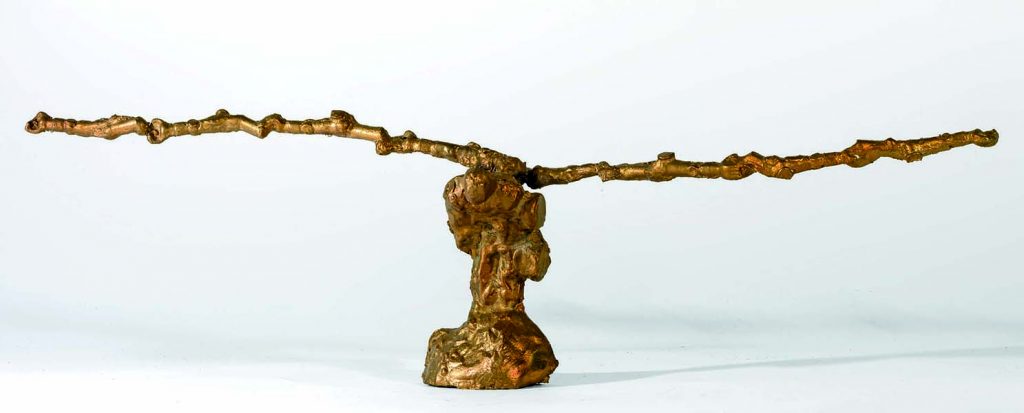
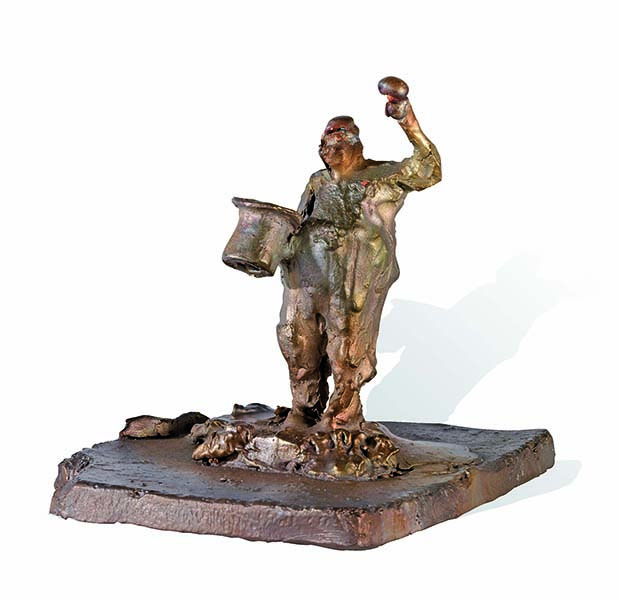
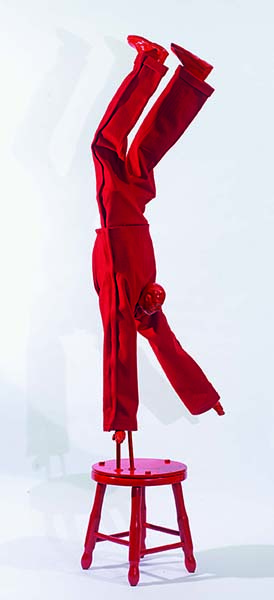
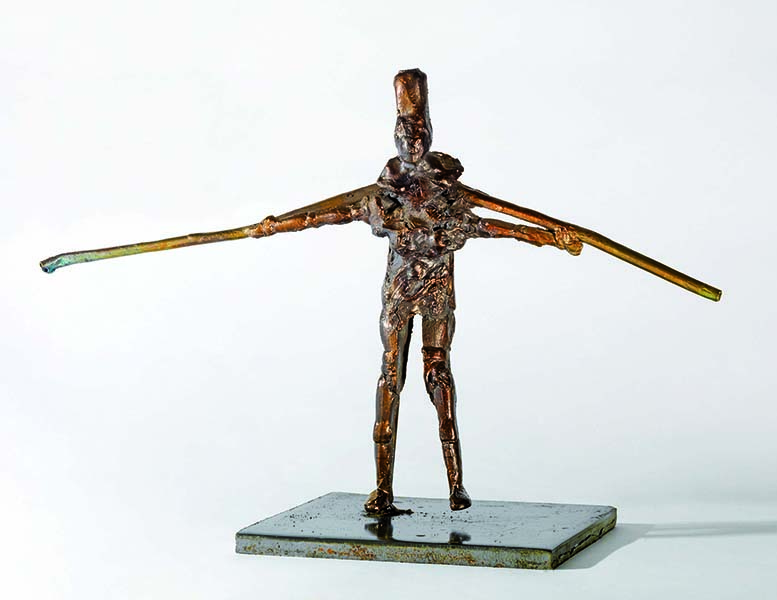
Large and small-size figures of bronze, aluminium, fabric, plastic, neon lights, make up the sculptural world of George Lappas. They are framed by the exhibition space, which serves as part of a traditional local house. There the ‘Artist with his Thoughts’ converses with shamans, tightrope walkers, jugglers, magicians, divinities. These figures are ‘in motion’ or stationary at the edges of reality, oblivious of the laws of physics and equilibrium. The natural body is abolished; thought, memory, and narration work according to an inner logic, without perceptible consequences. Unexpected materials create a sense of paradox, of the uncanny, recalling unconscious dream connections, undecipherable associations. The dialogue between the Egyptianised Solon relaxing on the banks of the Nile and the figures of his fellow travellers is unpredictable for the viewer, and is based on thematic references that go back to the multiple recognisable starting points of the artist.

East and West operate artistically with distinct traits, though in an original, archetypal composition. The sculptures fetch to mind Egypt and hieroglyphics, India and Brahman temples; they bring out the paradoxical and hint at magic—indications perhaps of nostalgia for the ‘metaphysical’ past at work in the countries of the East. The West, on the contrary, imposes a rationalist tyranny that causes the artist ‘grief of space’. The only antidote for this is the work of Art, the only way to bridge antitheses, to appropriate the unfamiliar—that is, to bring to completion the ‘foreign world’. Not only the shamans and conjurors, the tightrope walkers and acrobats, but also the one- legged men and the hanging gardeners narrate through performance the perpetual desire of man to surpass each time his frontiers, whether of the physical world surrounding him or of finite intelligence and knowledge. Under the same transcendental attitude a seat or a star may balance over the head of a figure, extending the borders and the resilience of the body and freely reinterpreting the visible symbiosis of human being and object.

This exhibition attempts to give the most complete picture possible of the complex personality of George Lappas and his long and painful search. He was an artist who ‘saw many cities of men and learned their way of thinking’ (Odyssey 1.3). He gained this experience and conveyed it with mastery and insight throughout his entire artistic journey.

Artworks